Travel Risk: Bed Bug Bites on Air India flights

Air India grounded 2 of its planes after passengers complained of being covered in gruesome bedbug bites after flights

AIR INDIA Boeing 787-8 lands at Frankfurt airport.

AIR INDIA Boeing 787-8 lands at Frankfurt airport.
shutterstock/Vytautas Kielaitis
  • Air India grounded two aircraft operating between Mumbai and Newark after passengers complained of being bitten by bedbugs on two flights last week.
  • Passengers posted pictures and vented their frustrations on Twitter.
  • The airline said that affected aircraft have been fumigated and its upholstery overhauled.

Air India temporarily grounded two aircraft operating between Mumbai and Newark Liberty International Airport in New Jersey after passengers complained of being bitten by bedbugs last week.

Business class passengers on board Flight 144 reported bedbug bites on two separate segments last week.

Air India was not immediately available for comment on the matter. However, in a statement to NBC News, the airline said that it is “deeply concerned with a few reports of ‘bugs’ causing inconvenience to its esteemed passengers.”

“The issue has been viewed seriously and every possible step is being taken to closely inspect and further strengthen our system at every level to ensure that such isolated incidents of passenger discomfiture do not affect our consistent performance,” the airline added.

While the origin of the insects on the plane is not yet known, Air India has worked to exterminate them from its aircraft.

“Experienced experts have carried out extensive service on the aircraft from fumigation to overhaul of the upholstery, seat covers, carpets etc to ensure that passengers keep enjoying their in-flight experience with us as always without any complaint of inconvenience,” the airline said in a statement.

Two aircraft used to operate the Mumbai-Newark route were grounded one day each, an airline official told the Hindustan Times.

Multiple Air India passengers took to Twitter to express both their frustration and disgust of being bitten by the insects while flying.

“Just arrived in New York on Air India 144 business class with family. All our seats infested with bed bugs,” one passenger complained.

Another passenger wrote that his wife and three children were on Air India 144 from Newark to Mumbai and “have bedbug bites all of their body.”

“Is this what we paid $10,000 for?” the passenger complained.

Air India, which is India’s national airline, has been looking for a buyer since being put up for sale by the Indian government in March.

The airline hasn’t turned a profit since 2007 and has 27,000 employees along with $5 billion in debt. While a deadline has been extended to facilitate a purchase, a buyer has yet to emerge.

Reported by Business Insider on 26 July 2018.
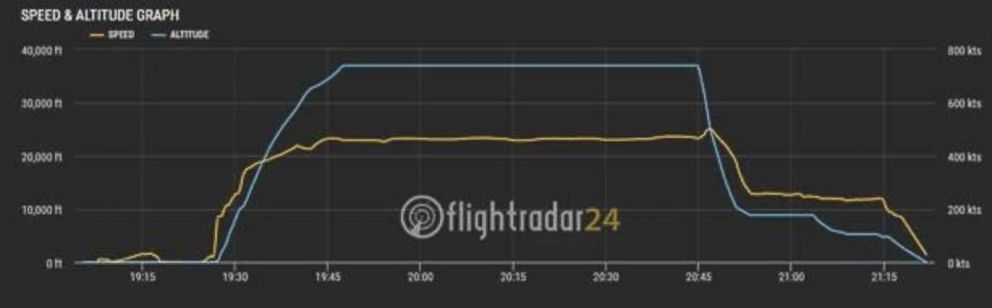
Travel Risk: Inflight Depressurisation causes Ryanair flight to plummet 28,000 feet

Ryanair flight FR7312 from Dublin to Dublin to Zadar, Croatia was forced to make an emergency landing at Germany’s Frankfurt-Hahn airport after the plane’s cabin lost pressure.

33 passengers hospitalized after Ryanair flight plummets almost 30,000 feet

Over 30 passengers were hospitalized, with some complaining about bleeding from their ears, after a Ryanair flight plummeted 28,000 feet in less than 10 minutes on Friday, according to authorities and flight tracking software.

“I can safely say it was the most terrifying thing I ever experienced,” passenger Roxanne Brownlee told ABC News.

A spokesperson from Ryanair said an “inflight depressurization” on the plane, which was carrying 189 people, from Dublin, Ireland, to Zadar, Croatia, caused oxygen masks to deploy. The plane made an emergency landing at Frankfurt-Hahn Airport in Germany.

“The oxygen masks just fell down in front of us — we were given no context, there was no announcement,” said Brownlee. “We were all kind of scrambling trying to put the oxygen masks on and people were screaming, crying and shouting.”

When the plane began to plummet, Brownlee and another passenger, Sara Sihelnik, said they had no updates from the hostesses or captain.

“It was that moment we were plummeting that we were thinking, ‘This is it, we’re going to die,’” said Brownlee.

Once the plane arrived at the airport, 33 people were taken to the hospital “to be treated for headaches and earaches and nausea,” according to authorities. Sky News reported that some people complained they were bleeding from their ears.

Brownlee and Sihelnik described the treatment they received after landing as “disgraceful.”

“They brought in about 100 burgers, for 189 of us there. They said elderly and families with small children can sleep on cots in the basement, the rest of us was just sort of left floating around,” said Brownlee. “So we were all awake upwards of 36 hours of the entire ordeal — just completely exhausted, shattered and I would just say shocked with the treatment that we received from Ryanair.”

The flight path shows the plane falling thousands of feet in altitude.Courtesy of FlightRadar24.com

According to a Ryanair spokesperson, “Customers were provided with refreshment vouchers and hotel accommodation was authorised, however there was a shortage of available accommodation.”

On Saturday, another Ryanair flight took a majority of the passengers to their destination in Croatia. Out of the 33 people admitted to the hospital, 22 were released and bused to Croatia because they were told not to fly.

Reported by ABC News on 15 July 2018.

Ryanair is Europe’s largest airline by passenger numbers, according to the International Air Transport Association. It flies in 37 countries and carried 130 million passengers last year.

Pilot smoking an e-cigarette causes Air China flight to plunge 6,500 meters

‘Vaping’ pilot caused Air China plane to plunge 6,500m

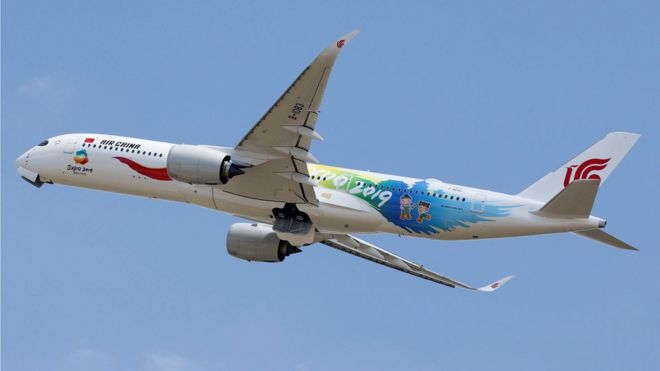
Air China AirbusImage copyright: REUTERS

A co-pilot smoking an e-cigarette on an Air China flight caused the plane to start a rapid emergency descent, investigators have said.

They say he tried to hide the fact that he was smoking but accidentally shut off the air-conditioning, causing oxygen levels to fall.

The crew on Tuesday’s flight from Hong Kong to the city of Dalian released oxygen masks and brought the plane more than 6,500m (21,000ft) lower.

It later returned to cruising altitude.

An initial probe by China’s Civil Aviation Administration in China has shown that the co-pilot tried to turn off a fan to stop smoke reaching the passenger cabin without telling the captain, but turned off the air-conditioning unit instead.

Passengers say they were told to fasten their seat belts as the plane had to descend.

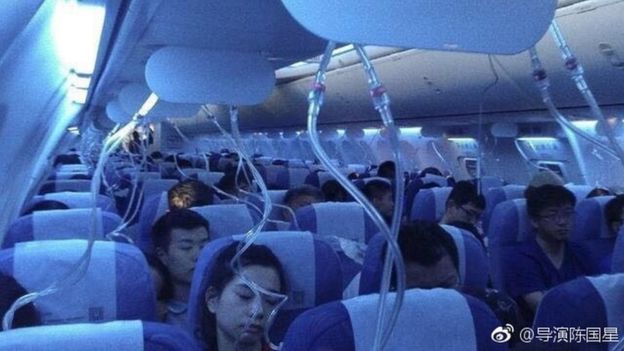
Aircraft passengers with oxygen masks droppedImage copyright: WEIBO Image caption: People posted images online of the dropped oxygen masks on the flight


The regulator’s safety officer Qiao Yibin said the crew had to perform emergency measures, dropping oxygen masks until they could figure out the problem.

If a plane loses cabin pressure, the pilot has to bring the aircraft to a lower altitude to keep crew and passengers safe.

Once they saw that the air conditioning had been turned off, they reactivated it and brought the flight back to its normal altitude.

Authorities are reportedly investigating the cause “in greater detail”, examining both the flight data recorder and the cockpit voice recorder to determine precisely what caused the incident.

The airline promised a “zero-tolerance” approach to crew misbehaviour on Chinese social media site Weibo.

Chinese flight regulations prohibit all flight crew from smoking, and banned passengers from using e-cigarettes on board in 2006.

But there have been accusations of pilots smoking on board other Chinese flights, including in 2015 when the state-run radio spoke to passengers on a Hong Kong-Beijing flight who claimed to smell strong smoke coming from the cockpit.

Reported by BBC on 13 July 2018.

Travel Risk from Refuelling Error of Singapore Airlines Boeing 777-200ER

The Singapore Transport Safety Investigation Bureau inquiry points out that: while too little fuel risks starvation, excessive fuel can result in incorrect calculations for take-off speeds, higher fuel-burn, or reduced controllability.

Refuelling crew foxed before SIA 777 turnback

Investigators have described as fortunate a refuelling error involving a Singapore Airlines Boeing 777-200ER because the aircraft, unknown to the crew, departed with a large surplus of fuel rather than a deficiency.

The aircraft was being fuelled at Singapore ahead of a service to Johannesburg. Its crew had calculated the jet needed to carry 86t of fuel.

For reasons that could not be determined, the aircraft’s internal fuel-quantity indicator had registered the aircraft as a 777-200, which features a smaller centre fuel tank than the -200ER. This caused the aircraft’s instruments to under-measure the amount of fuel on board.

Although the aircraft’s cockpit and refuelling-panel indicators showed total fuel of 86t, the refuelling had taken longer than expected, and the ground personnel found that the dispenser had apparently delivered 121.5t to the aircraft.

The ground team was uncertain about the discrepancy, initially believing that the fuel-flow counter might not have been reset before the fuel was dispensed.

In order to check the quantity of fuel on the aircraft, the team’s lead technician performed a ‘magnastick’ check – a manual reading using floating gauges. This was only carried out on the centre tank, because the two wing tanks were assumed to be full as a result of the way the refuelling system was programmed.

From the lead technician’s readings, and the wing-tank assumption, the certifying technician calculated that the fuel quantity on board was 86t.

But the Singapore Transport Safety Investigation Bureau inquiry says that, despite the apparent match in the calculated figure, the magnastick readings were “grossly inaccurate”. The technicians, it says, had “limited” experience in performing the check and that the magnastick readings were “likely not correct”.

Combined with the 5.5t of fuel which had remained on the 777 from the previous flight, the uplift of 121.5t meant the aircraft departed with 127t of fuel on board – some 41t above the intended figure of 86t.

“It was fortuitous that the aircraft had been fuelled with much more fuel than it needed,” says the inquiry. “Had the magnastick reading errors been in the other [direction], the aircraft could have ended up in a fuel starvation situation in flight.”

The aircraft was fitted with a programme switch module which had been correctly configured for a 777-200ER.

But investigators believe a fault in the module – the nature of which could not be established – resulted in its incorrectly interpreting the aircraft as a 777-200, which meant that the fuel-quantity processor did not take into account eight fuel sensors in the enlarged centre tank. This meant the aircraft was under-reading the actual quantity of fuel on board.

About 1h into the flight the aircraft’s crew received an alert stating that the amount of fuel on board – based on burn-off calculations – was less than the figure on the fuel-quantity indicator, and that the discrepancy was increasing. The crew opted to turn around and return to Singapore where, after landing, the fuelling error was discovered.

The inquiry points out that, while too little fuel risks starvation, excessive fuel can result in incorrect calculations for take-off speeds, higher fuel-burn, or reduced controllability.

Investigators state that the crew did not experience handling difficulties. The aircraft involved (9V-SVC) was undamaged during the 16 April 2014 flight and none of its occupants was injured.

Reported by FlightGlobal on 26 June 2018.

Travel Risk – aircraft cockpit window blows out during flight

Pilot lands passenger jet safely after windshield shatters
By Luo Wangshu

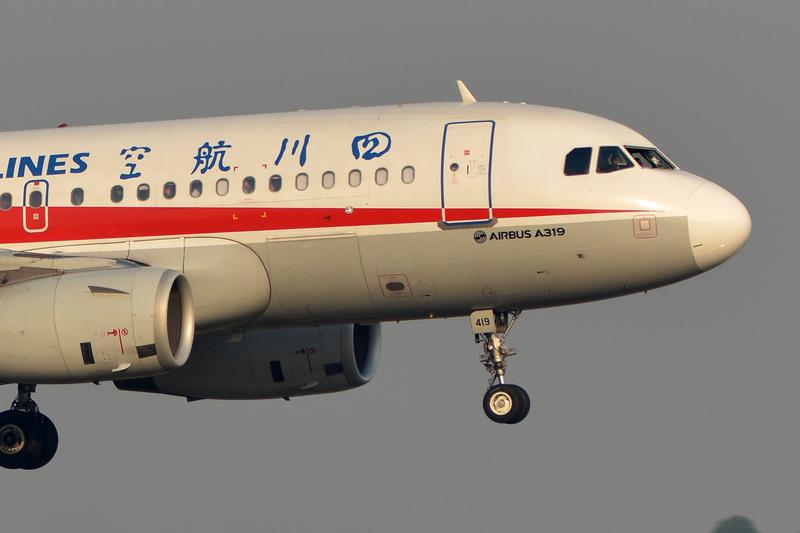
Sichuan Airlines Flight 3U8633 prepares to land in Chengdu with a damaged cockpit windshield (circle) on May 14, 2018. (WAN BI / XINHUA)

Captain Liu Chuanjian’s heroic actions moments after a cockpit windshield blew out on Monday, nearly pulling his co-pilot from the Airbus A319, has won him praise from flight professionals and internet readers for saving over 100 people onboard.

Liu had just leveled his aircraft at a cruising altitude of 32,000 feet when a deafening sound tore through the cockpit. He looked over and saw the right side of the windshield gone.

There was no warning sign. Suddenly, the windshield just cracked and made a loud bang. The next thing I know, my co-pilot had been sucked halfway out of the window

Liu Chuanjian,caption

“There was no warning sign. Suddenly, the windshield just cracked and made a loud bang. The next thing I know, my co-pilot had been sucked halfway out of the window,” Liu told Chengdu Economic Daily after making an emergency landing, saving the lives of all 119 passengers.

“Everything in the cockpit was floating in the air. Most of the equipment malfunctioned … and I couldn’t hear the radio. The flight was shaking so hard I could not read the gauges,” he said.

Calls to Liu’s cellphone by China Daily went unanswered on Monday evening.

Sichuan Airlines Flight 3U8633 had taken off as scheduled from southern China’s Chongqing Jiangbei International Airport at 6:26 am and was due in Lhasa, capital of the Tibet autonomous region, at 9:05 am.

The windshield shattered about 7 am at least 100 kilometers into the journey. The aircraft, which had been traveling at 800 to 900 k/hr, went into a nosedive that lasted five to six seconds, according to the newspaper.

The cabin crew had been handing out breakfast to passengers when the plane pitched forward.

Passenger Zeng Jun described the scene in an interview with Chengdu Economic Daily as “too scary and too dangerous”. People were screaming, while bags and trays were flying everywhere, he said.

He recalled grabbing one of the oxygen masks that fell from overhead as a flight attendant began telling passengers to trust in the flight team. “When we finally landed, some of the women were in tears,” he said.

The co-pilot, who was pulled back into the cockpit and buckled into his chair, suffered a cut to his face and a sprained wrist, and a flight attendant received minor injures, the Civil Aviation Administration of China’s Southwest Regional Administration said.

Liu, who joined Sichuan Airlines after leaving the military in 2006, was able to right the plane quickly and made an emergency landing at Chengdu Shuangliu International Airport at 7:46, about 45 minutes after the windshield blew out.

After landing, most passengers were transferred to another flight to Lhasa, but 29 passengers were sent to the hospital, one with a sprain and another with bruising, China Central TV reported.

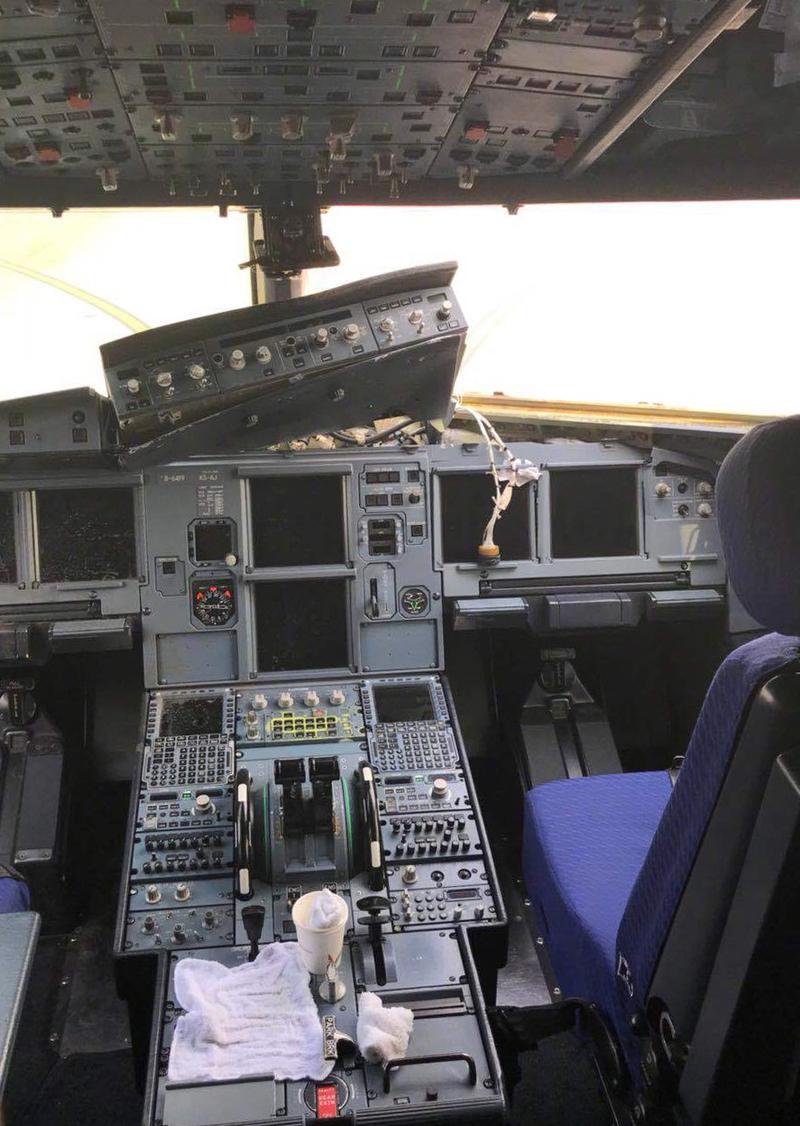
The Airbus A319 aircraft’s flight controls were damaged in the incident happened on May 14, 2018. (SCREENSHOT OF CCTV VIDEO)

The aviation administration’s Southwest Regional Administration said the crew handled the emergency correctly.

Liu later said the accident reminded him of a similar incident with British Airways in 1990, when a windshield separated from its frame, and the captain was sucked out of the plane. With the captain pressed against the window frame for 20 minutes, the co-pilot made a safe landing.

Li Xiaohu, head of safety for the aviation administration’s Southwest Regional Administration, said an investigation has begun and the reason the windshield shattered will be looked into.

Zhang Wei, a council member of the Chinese Society of Aeronautics and Astronautics, said the broken windshield could have damaged the aircraft’s structure, causing it to be unable to fly or causing more serious problems if it does.

“The broken window in the cabin causes a loss of pressure. It leads to a loss of air in the cabin and the oxygen masks will fall,” he said.

The cockpit windshield is a very important part of an aircraft and may be the strongest glass on the craft. It consists of multiple layers and is very hard to break. This incident is very strange and only further investigation will lead to a resolution, Zhang added.

Reported by China Daily on 16 May 2018.

BACKGROUND DATA

The A319 was purchased by Sichuan Airlines in 2011 and had flown 19,912 hours.

On 10 June 1990, shortly after British Airways Flight 5390 left Birmingham Airport in England for Málaga Airport in Spain, an improperly installed windscreen panel separated from its frame, causing the plane’s captain to be blown partially out of the aircraft. With the captain pressed against the window frame for twenty minutes, the first officer managed to land at Southampton Airport with no loss of life.

Travel Risk: Engine Metal Fatigue

The Federal Aviation Administration (FAA) issued an Emergency Airworthiness Directive (EAD) that requires operators to inspect fan blades on certain CFM56-7B engines within 20 days.

The directive is based on a CFM International Service Bulletin issued today and on information gathered from the investigation of Tuesday’s Southwest Airlines engine failure. The inspection requirement applies to CFM56-7B engines.

Specifically, engines with more than 30,000 total cycles from new must complete inspections within 20 days.  The EAD becomes effective upon publication. The engine manufacturer estimates today’s corrective action affects 352 engines in the U.S. and 681 engines worldwide.

The engine fan blades are used on Boeing 737-600, 700, 800 and 900 jets.

The USA National Transportation Safety Board (NTSB) believes one of the blades snapped on the Southwest flight 1380 on Tuesday 17 April 2018, flying at about 30,000 feet, hurling debris that broke a window.  The incident killed one passenger who was sucked part way out of the plane and injured seven others. The plane, a Boeing 737 bound from New York to Dallas with 149 people aboard, made an emergency landing in Philadelphia.

NTSB investigators said one of the engine’s fan blades broke off from the hub during the flight. The broken edge of the blade showed crack lines consistent with metal fatigue.

NTSB QUESTION: Why didn’t the ring do its job?

NTSB investigators are taking the Southwest engine apart to understand what happened and will look at maintenance records for the engine. There’s a ring around the engine that’s meant to contain the engine pieces when this happens, and in this case it didn’t, which is the big focal point for the NTSB.

Engine failures occur from time to time as engines are being pushed to produce as much power as possible, many expert believe engines are right on the edge, and consequently sometimes engines fail, and that’s why the containment ring is there.

The engine failure was reminiscent of a similar event on a Southwest Boeing 737-700 jet in August 2016 as it flew from New Orleans to Orlando, Florida. Shrapnel from the engine left a 5-by-16-inch hole just above the wing. Passenger oxygen masks dropped from the ceiling. Pilots landed the plane safely in Pensacola, Florida.

Reported by the USA Federal Aviation Administration (FAA) and National Transportation Safety Board (NTSB).


Inflight entertainment satellite antenna catches fire on Qatar Airways A321 Aircraft

  • Qatar Airways A321 Badly Damaged in fire at Doha Airport
  • Inflight entertainment satellite antenna caught fire

On 8 December 2017 a Qatar Airways A321 was undergoing maintenance at a remote stand at Doha’s Hamad International Airport, and apparently the inflight entertainment satellite antenna caught fire.

The A321 with the tail number A7-AIB, which took its first flight in July 2010, so it’s still a fairly new plane.

Here’s the statement from the airline regarding this: “At 06:50am today a Qatar Airways Airbus A321 aircraft positioned at a remote stand experienced a fire whilst under maintenance at Hamad International Airport (HIA). The fire inside the cabin was promptly contained and extinguished. Whilst there was some damage to the aircraft there were no injuries. A full investigation is being conducted by the local authorities to establish the cause. Traffic at HIA was not affected and is running as normal.”

Pictures of the burnt plane have been circulating on Facebook, and it’s not pretty (and certainly looks worse than “some damage”):

I’m curious whether Qatar Airways plans to write off the plane, or if there’s anyway a plane with this much damage can still be fixed.

At least this happened while the plane was undergoing maintenance, rather than while the plane was in service…

(Featured Image: Konstantin von Wedelstaedt)

Reported by OneMileataTime.com on 9 December 2017.

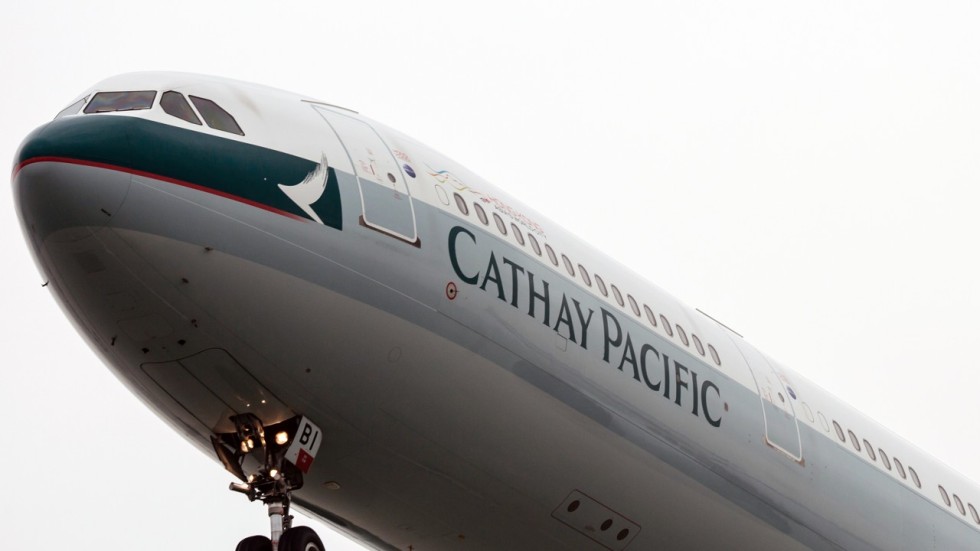
Risk of Turbulence during flight – 7 persons injured on Cathay Pacific flight CX157

One passenger and six crew injured after turbulence hits Brisbane-bound Cathay Pacific flight

Cathay Pacific CX157 diverted to Manila so victims could get medical attention

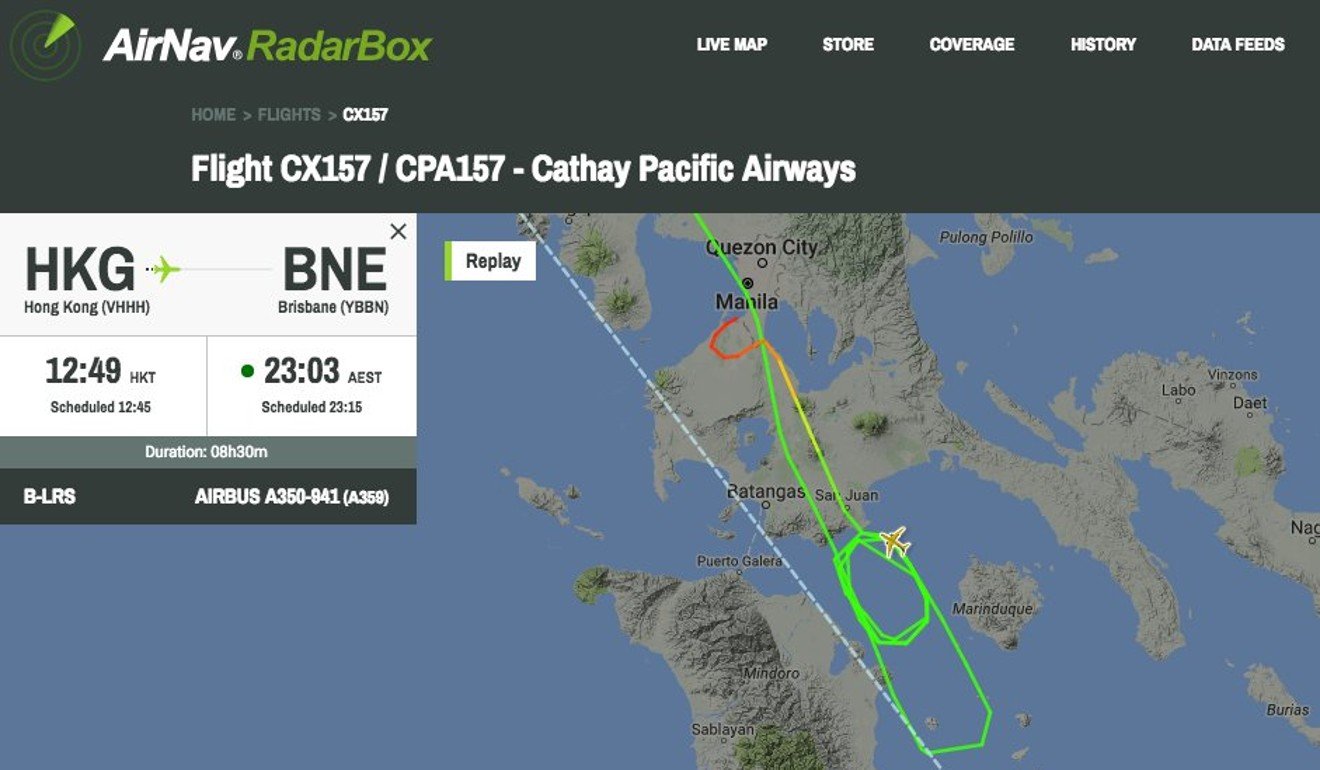
A passenger and six cabin crew members on a Brisbane-bound Cathay Pacific Airways flight were injured when the aircraft hit severe turbulence on Monday ( October 2017.

Flight CX157 left Hong Kong International Airport at 12.49pm for the eastern Australian city and reportedly encountered the bumpy conditions about an hour into the journey, as staff were serving meals.

The cabin reportedly shook for 10 minutes, during which crew members were thrown up and hit the ceiling.

The Airbus A350, carrying 264 passengers, 11 crew and three pilots, diverted to Manila, in the Philippines, so the injured could get medical attention, an airline spokeswoman said.

The plane landed in Manila at 3.48pm local time. The injured have since been discharged.

All non-injured passengers departed on the plane for Brisbane at 6.29pm

Reported by South China Morning Post on 10 October 2017.

Air France A380 Makes Emergency Landing After Engine Blows Apart

  • French aviation agency, Airbus investigate ‘serious incident’
  • Arrangements made to get 497 passengers to Los Angeles
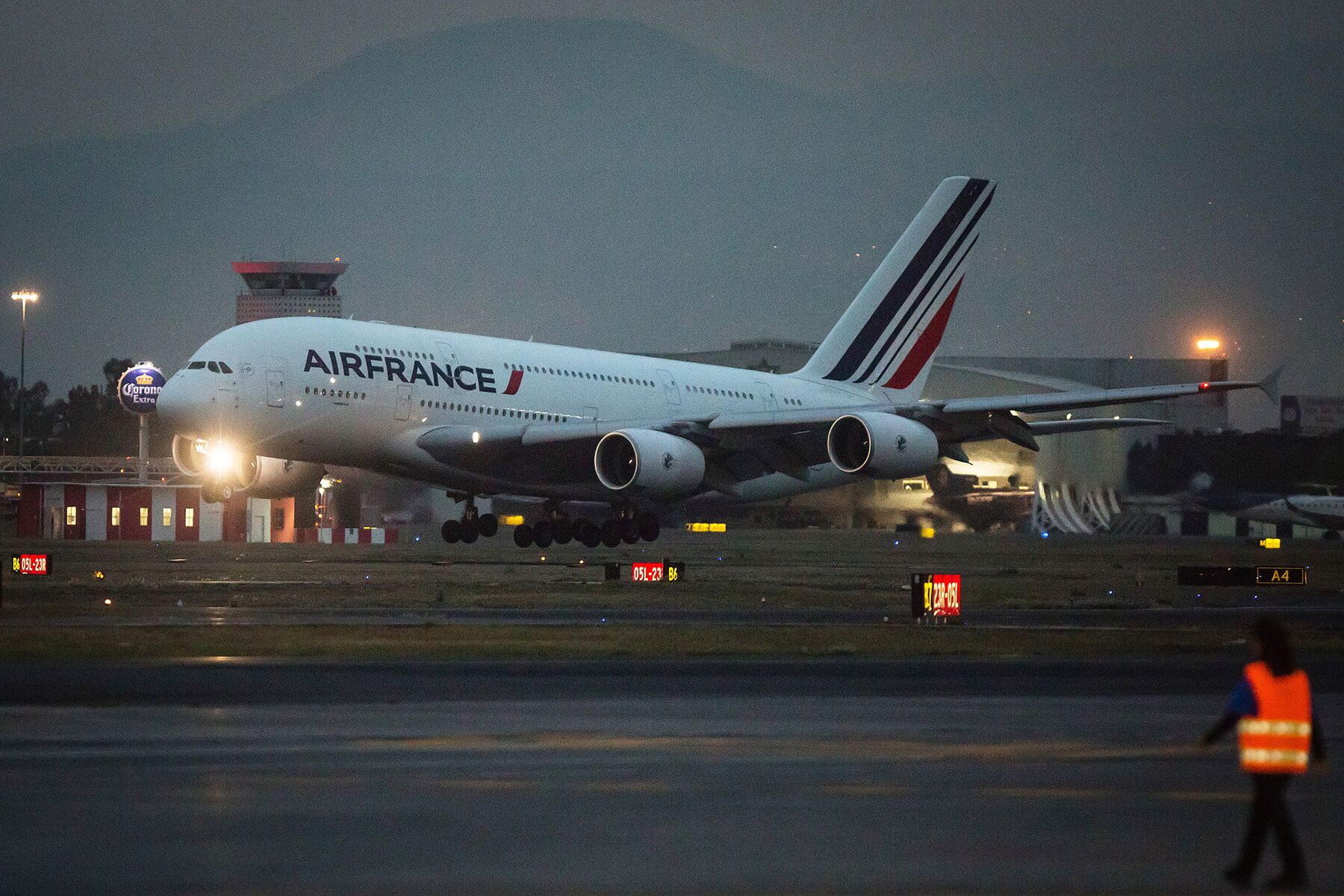
An Air France A380Photographer: Manuel Velasquez/Anadolu Agency/Getty Images)

An Airbus SE A380 superjumbo operated by Air France was forced to make an emergency landing in eastern Canada after one of its four engine broke apart over the Atlantic Ocean.

The aircraft was flying from Paris to Los Angeles when the “serious incident” occurred, prompting the pilots to land in Goose Bay, Labrador, the airline said Sunday in a statement. No one on Air France Flight 66 was hurt and arrangements have been made to get the 497 passengers to California, the airline said. Airbus and France’s BEA air-accident investigation bureau dispatched a team of experts to Canada to investigate the aircraft, they said.

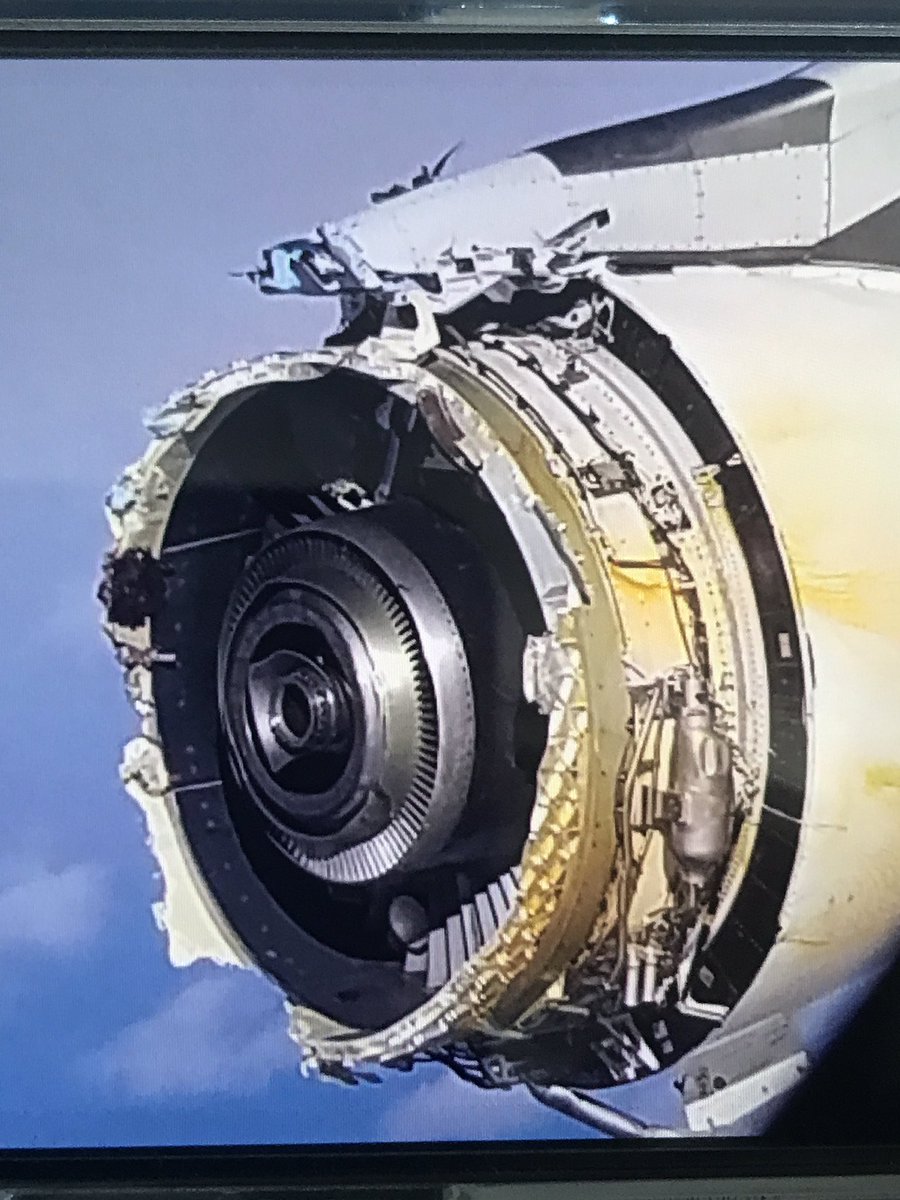
While engine malfunctions aren’t uncommon, so-called uncontained failures, when the protective outer part of the power plant known as the cowling rips apart, are. Such explosions are more serious because it can cause catastrophic damage to the wing holding fuel or the hydrolics that control the flaps. The Air France plane’s jet turbines are made by Engine Alliance, a joint venture of General Electric Co. and Pratt & Whitney Corp. The Alliance said on Twitter that it is aware of the Saturday incident and looking into it.


Photos posted by passengers online showed the outer of the two engines under the right wing with extensive damage, and the entire frontal ring of the cowling missing. Pratt & Whitney is owned by United Technologies Corp. and the manufacturer also equips the Airbus A320neo with upgraded engines, while GE and partner Safran SA offer a rival product.

The incident is the most severe since Qantas Airways Ltd. in 2010 grounded all six of its A380 aircraft after an inflight explosion on one of the plane’s engines. Those power plants were made by Rolls-Royce Group Plc, whose Trent 900 model is the other engine of choice on the A380. The Qantas jet was out of service for 18 months for repairs and retestesting.

The A380 is among the increasingly rare breed of airliners powered by four engines. The other two aircraft still in use are the Boeing 747, as well as the A340, which is no longer produced. Airlines now favor two-engine models because they are more fuel efficient, and twin-turbine aircraft have become more reliable even after a malfunction of one engine. Aircraft like the Airbus A350 are certified to fly for several hours on just one engine to reach the next airport for emergency landings.

After a decade in service Airbus has slowed output of the A380, the world’s biggest passenger aircraft, to just one plane a month. Air France operates 10 of the aircraft. The biggest user of the double decker is Emirates, which uses mainly Engine Alliance turbines for the plane, but has switched lately to the Rolls-Royce model.

Reported on 1 October 2017 by Bloomberg.

Air Passengers in Australia are never matched with ticket and baggage

"In Australia you need a photo ID to enter a licensed venue, but not to board a flight!" Roger Henning, Founder, Homeland Security Asia Pacific

Letters: Airport security, the constitution and the NBN

A visible presence, but the holes in security are obvious.
A visible presence, but the holes in security are obvious. Justin McManus
by Letters

Basic steps to tighten airport security

When will the government implement the necessary protective security measures to minimise the risk of a terrorist attack on civil aviation, and require airlines to assure the travelling public as to who and what is flying on their aircraft.

Anyone at our city and regional airports can board a domestic aircraft without ever producing identification. Simply check in online or at an electronic kiosk (including checked baggage), obtain your boarding pass, pass through security screening, and proceed to the boarding gate then onto the aircraft!  Or, simply hand your boarding pass to one of the thousands of people in the sterile area, many of whom are not flying.

You, and your ticket and baggage, are never matched.

The bottom line is that our domestic carriers cannot guarantee who or what is travelling in their aircraft.

There are six basis steps to improving aviation security that should be implemented at all domestic airports immediately:

•Automated passenger profiling from the point of ticket purchase (national database interfaced with select government agencies and all airlines).

•Ticket-passenger verification (photo ID) prior to screening – only flying passengers permitted to proceed to the sterile concourse area.

• Scalable risk-based security screening (not everyone presents the same risk) incorporating automated full body scanning.

 • Secondary ticket/passenger verification (photo ID) at the boarding gate.

• Replace the low-paid private security personnel working at our airports with a competent and highly motivated government aviation security force forming part of our border protection force. We do this for customs and quarantine inspection, why not security?

• Replace the Aviation Security Identification Card issued to employees, concessionaires and contractors working at our airports with biometric access control and ID –start tracking the person, not the card.

Anything less is simply a cost-driven politically expedient approach to our safety.

Mike Carmody, Former chief of security, Sydney Airport, Forde, ACT

Reported by the Australian Financial Review on 1 August 2017.