A change in Boeing’s 737 MAX manufacturing process that was insufficiently vetted caused an electrical system problem.
In this change, fasteners were used to hold a backup electrical power unit in place, rather than rivets. Fasteners did not provide a complete electrical grounding path to the unit.
What’s at stake with new 737 MAX electrical issues
After the events of the past few years it’s no surprise that when the 737 MAX has an issue, it receives a lot of coverage. And the latest 737 MAX headlines concerning potential electrical problems are no doubt a big headache for Boeing and its operators alike. It’s bad publicity at the worst possible time for the 737 MAX, when everyone involved will have been hoping for a smooth and quiet reintroduction to service. But it also raises new questions and concerns, on top of many already existing ones, about Boeing’s manufacturing processes and corporate culture. So just what is going on here, and what’s at stake?
To be clear, this appears completely unrelated to the issues that caused two fatal crashes of the type prior to its worldwide grounding. So just how serious are these new electrical problems?
The Seattle Times published an in-depth piece on what the actual issue is last week. According to that article, a “A minor change in Boeing’s 737 MAX manufacturing process that was insufficiently vetted caused an electrical system problem.” It seems that in this change, fasteners were used to hold a backup electrical power unit in place, rather than rivets. Boeing has said that it discovered the issue while building a new MAX and that, according to the Seattle Times article, the fasteners “did not provide a complete electrical grounding path to the unit.”
The 737 MAX remains grounded in China, where regulators have yet to say when they expect to re-certify the plane.
American has been making good use of its 737 MAX since reintroducing the type. It has had to ground several for inspections because of the latest issues.
Boeing did recently begin delivering 787s again. And aside from this issue the 737 MAX has had a relatively smooth rollout with dozens of airlines sending them back into the skies and it being mostly a non-event outside of avgeek circles. Indeed it seems that the expected public mass anxiety about getting back on a 737 MAX was greatly exaggerated, and most people aren’t even noticing that they’re on one.
But the fundamental issues at Boeing remain an ongoing concern, and even as the company fixes aircraft problems as they come up, many are wondering just how deep these problems go, and whether we’ve now seen the end of them. This latest 737 MAX issue only feeds those concerns.
Airline software super-bug: Flight loads miscalculated because women using ‘Miss’ were treated as children
Weight blunder led to wrong thrust used on takeoff, says UK watchdog
A programming error in the software used by UK airline TUI to check-in passengers led to miscalculated flight loads on three flights last July, a potentially serious safety issue.
The error occurred, according to a report [PDF] released on Thursday by the UK Air Accidents Investigation Branch (AAIB), because the check-in software treated travelers identified as “Miss” in the passenger list as children, and assigned them a weight of 35 kg (~77 lbs) instead of 69 kg (~152 lbs) for an adult.
The AAIB report attributes the error to cultural differences in how the term Miss is understood.
“The system programming was not carried out in the UK, and in the country where it was performed the title Miss was used for a child, and Ms for an adult female, hence the error,” the report says.
The Register asked TUI where the system programming was done, but the company ignored that question in its response to our inquiry.
“The health and safety of our customers and crew is always our primary concern,” a TUI spokesperson said in an emailed statement. “Following this isolated incident, we corrected a fault identified in our IT system. As stated in the report, the safe operation of the flight was not compromised.”
Potentially fatal math
Flight load miscalculations have the potential to affect aircraft handling and to create serious safety issues: the figures are used for figuring out fuel levels, altitude, takeoff thrust, and so on. The 2018 fatal crash of Cubana de Aviación Flight 972, for example, has been attributed to excessive load, as has the 1997 crash of Fine Air Douglas DC-8 cargo flight.
According to the AAIB, the software issue was first spotted on July 10, 2020, when three adult passengers identified as Miss were checked in as children. Airline personnel caught the discrepancy and proceeded to make adjustments manually.
On July 17, the developer(s) working on the check-in application “adapted a piece of software, which changed the title of any adult female from Miss to Ms automatically.”
Alas, the revised code could only convert honorifics for passengers prior to check-in. Bookings made with the title Miss that had already checked in, including those checking in online 24 hours prior to departure, could not be changed.
“On 20 July, 2020, the programmer was making enhancements to the program to improve its performance,” the report says. “This should not have stopped the program from working, but as this was a ‘fix,’ it could not be known for sure. A combination of the [TUI] teams not working over the weekend [to make manual corrections] and the ‘online’ check-in being open early on Monday 20 July, 24 hours ahead of the flight, meant the incorrectly allocated passenger weights were not corrected.”
On 21 July, 2020, three TUI Airways flights departed from the UK with inaccurate load sheets as a result of the software issue, which would not be fixed until July 24, 2020.
The first of these, and the only one detailed in the report, was TUI Airways flight BY-7226, a Boeing 737-800 with the registration G-TAWG. The plane travelled from Birmingham International Airport in the UK to Palma de Mallorca in Spain, carrying 167 passengers and 6 crew.
The 737-800 departed with a takeoff weight that exceeded the load sheet (the projected weight) by 1,244 kg (~2743 lbs) because the load sheet listed 65 children on board, compared to the 29 children expected from the flight plan – which includes the actual weight. The load sheet also varied from the flight plan due to errant baggage weight calculations.
The result of all this was that the plane used less thrust to take off than it should have – 88.3 per cent instead of 88.9 per cent given its actual takeoff weight and environmental conditions. Fortunately, this was “marginally” more than the minimal regulatory requirements – 88.2 per cent – and the flight made it to its destination safely.
It’s suggested this won’t happen again: “An upgrade of the system producing load sheets was carried out to prevent reoccurrence,” the report concludes. ®
Boeing 737 Sriwijaya Flight 182 Crashed in Indonesia Just After Takeoff on 9 January 2021.
Did the downturn of air travel caused by COVID-19 contribute to this crash?
The Sriwijaya 737 aircraft had been in storage for 9 months in Surabaya and was inspected on 14 December 2020 and since 19 December 2020 operated 132 flights.
Storage may have been a factor in the crash, aircraft must be kept operating otherwise they deteriorate. Mothballed planes pose a safety risk.
Boeing whistleblower raises doubts over 787 oxygen system
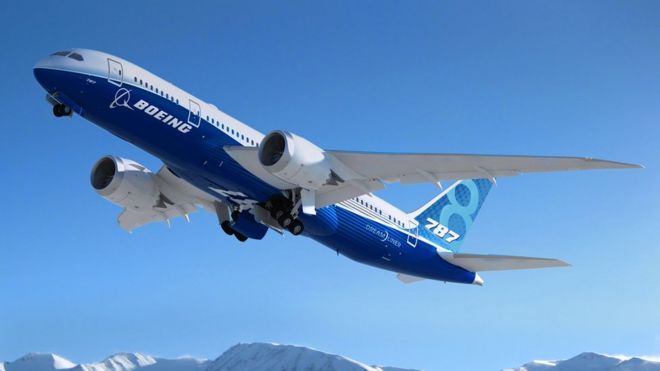
Image copyright BOEING – A Boeing whistleblower has claimed that passengers on its 787 Dreamliner could be left without oxygen if the cabin were to suffer a sudden decompression.
John Barnett says tests suggest up to a quarter of the oxygen systems could be faulty and might not work when needed.
He also claimed faulty parts were deliberately fitted to planes on the production line at one Boeing factory.
Boeing denies his accusations and says all its aircraft are built to the highest levels of safety and quality.
The firm has come under intense scrutiny in the wake of two catastrophic accidents involving another one of its planes, the 737 Max.
Mr Barnett, a former quality control engineer, worked for Boeing for 32 years, until his retirement on health grounds in March 2017.
From 2010 he was employed as a quality manager at Boeing’s factory in North Charleston, South Carolina.
Image copyrightJOHN BARNETT John Barnett is a former quality control engineer at Boeing.
This plant is one of two that are involved in building the 787 Dreamliner, a state-of-the-art modern airliner used widely on long-haul routes around the world. Despite early teething problems following its entry into service the aircraft has proved a hit with airlines, and a useful source of profits for the company.
But according to Mr Barnett, 57, the rush to get new aircraft off the production line meant that the assembly process was rushed and safety was compromised. The company denies this and insists that “safety, quality and integrity are at the core of Boeing’s values”.
In 2016, he tells the BBC, he uncovered problems with emergency oxygen systems. These are supposed to keep passengers and crew alive if the cabin pressurisation fails for any reason at altitude. Breathing masks are meant to drop down from the ceiling, which then supply oxygen from a gas cylinder.
Without such systems, the occupants of a plane would rapidly be incapacitated. At 35,000ft, (10,600m) they would be unconscious in less than a minute. At 40,000ft, it could happen within 20 seconds. Brain damage and even death could follow.
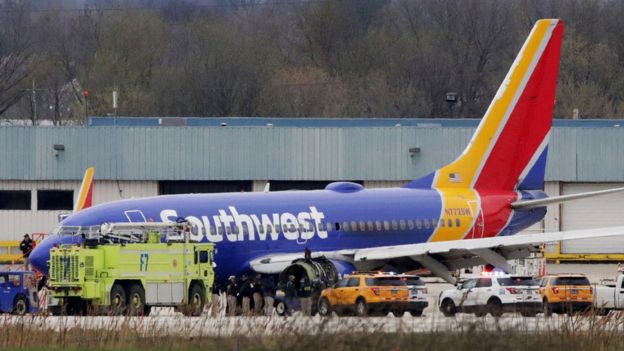
Although sudden decompression events are rare, they do happen. In April 2018, for example, a window blew out of a Southwest Airlines aircraft, after being hit by debris from a damaged engine. One passenger sitting beside the window suffered serious injuries and later died as a result – but others were able to draw on the emergency oxygen supplies and survived unharmed.
Image copyrightGETTY IMAGESImage captionA window blew out of this Southwest Airlines aircraft after being hit by debris from a damaged engine – causing a loss of cabin pressure
Mr Barnett says that when he was decommissioning systems which had suffered minor cosmetic damage, he found that some of the oxygen bottles were not discharging when they were meant to. He subsequently arranged for a controlled test to be carried out by Boeing’s own research and development unit.
This test, which used oxygen systems that were “straight out of stock” and undamaged, was designed to mimic the way in which they would be deployed aboard an aircraft, using exactly the same electric current as a trigger. He says 300 systems were tested – and 75 of them did not deploy properly, a failure rate of 25%.
Mr Barnett says his attempts to have the matter looked at further were stonewalled by Boeing managers. In 2017, he complained to the US regulator, the FAA, that no action had been taken to address the problem. The FAA, however, said it could not substantiate that claim, because Boeing had indicated it was working on the issue at the time.
Boeing itself rejects Mr Barnett’s assertions.
It does concede that in 2017 it “identified some oxygen bottles received from the supplier that were not deploying properly. We removed those bottles from production so that no defective bottles were placed on airplanes, and we addressed the matter with our supplier”.
Image copyright BOEING – Boeing’s Dreamliner made its maiden flight in 2009 and over 800 are in service with airlines around the world
But it also states that “every passenger oxygen system installed on our airplanes is tested multiple times before delivery to ensure it is functioning properly, and must pass those tests to remain on the airplane.”
“The system is also tested at regular intervals once the airplane enters service,” it says.
This is not the only allegation levelled at Boeing regarding the South Carolina plant, however. Mr Barnett also says that Boeing failed to follow its own procedures, intended to track parts through the assembly process, allowing a number of defective items to be “lost”.
He claims that under-pressure workers even fitted sub-standard parts from scrap bins to aircraft on the production line, in at least one case with the knowledge of a senior manager. He says this was done to save time, because “Boeing South Carolina is strictly driven by schedule and cost”.
On the matter of parts being lost, in early 2017 a review by the Federal Aviation Administration upheld Mr Barnett’s concerns, establishing that the location of at least 53 “non-conforming” parts was unknown, and that they were considered lost. Boeing was ordered to take remedial action.
Since then, the company says, it has “fully resolved the FAA’s findings with regard to part traceability, and implemented corrective actions to prevent recurrence”. It has made no further comment about the possibility of non-conforming parts making it onto completed aircraft – although insiders at the North Charleston plant insist it could not happen.
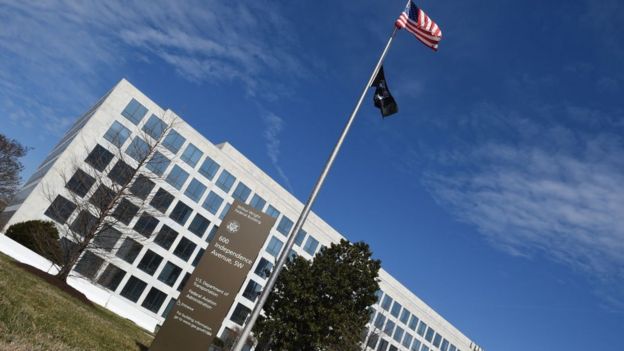
Image copyright GETTY IMAGES – In 2017, a review by the Federal Aviation Administration ordered Boeing to take remedial action
Mr Barnett is currently taking legal action against Boeing, which he accuses of denigrating his character and hampering his career because of the issues he pointed out, ultimately leading to his retirement. The company’s response is that he had long-standing plans to retire, and did so voluntarily. It says “Boeing has in no way negatively impacted Mr Barnett’s ability to continue in whatever chosen profession he so wishes”.
The company says it offers its employees a number of channels for raising concerns and complaints, and has rigorous processes in place to protect them and make sure the issues they draw attention to are considered. It says: “We encourage and expect our employees to raise concerns and when they do, we thoroughly investigate and fully resolve them.”
But Mr Barnett is not the only Boeing employee to have raised concerns about Boeing’s manufacturing processes. Earlier this year, for example, it emerged that following the Ethiopian Airlines 737 Max crash in March, four current or former employees contacted an FAA hotline to report potential issues.
Mr Barnett believes that the concerns he has highlighted reflect a corporate culture that is “all about speed, cost-cutting and bean count (jobs sold)”. He claims managers are “not concerned about safety, just meeting schedule”.
That’s a view which has support from another former engineer, Adam Dickson, who was involved with the development of the 737 Max at Boeing’s Renton factory in Washington state.
He tells the BBC there was “a drive to keep the aeroplanes moving through the factory. There were often pressures to keep production levels up.
“My team constantly fought the factory on processes and quality. And our senior managers were no help.”
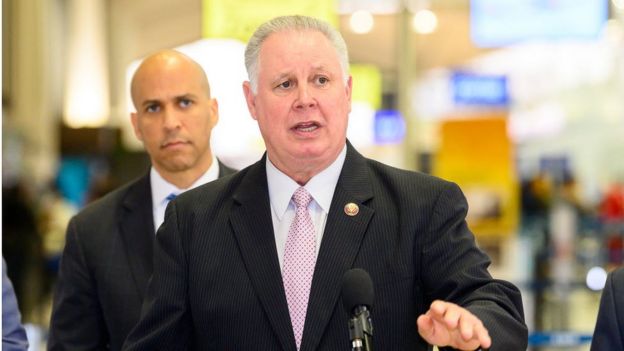
Image copyright GETTY IMAGES – In October, Democratic congressman Albio Sires asked Boeing’s CEO Dennis Muilenburg about production pressures with the 737 Max
In it, the manager complained about workers being “exhausted” from having to work at a very high pace for an extended period.
He said that schedule pressure was “creating a culture where employees are either deliberately or unconsciously circumventing established processes”, adversely affecting quality.
For the first time in his life, the email’s author said, he was hesitant about allowing his family aboard a Boeing aircraft.
Boeing says that together with the FAA, it implements a “rigorous inspection process” to ensure its aircraft are safe, and that all of them go through “multiple safety and test flights” as well as extensive inspections before they are allowed to leave the factory.
Boeing recently commissioned an independent review of its safety processes, which it says “found rigorous enforcement of, and compliance with, both the FAA’s aircraft certification standards and Boeing’s aircraft design and engineering requirements.” It said that the review had “established that the design and development of the [737] Max was done in line with the procedures and processes that have consistently produced safe airplanes.”
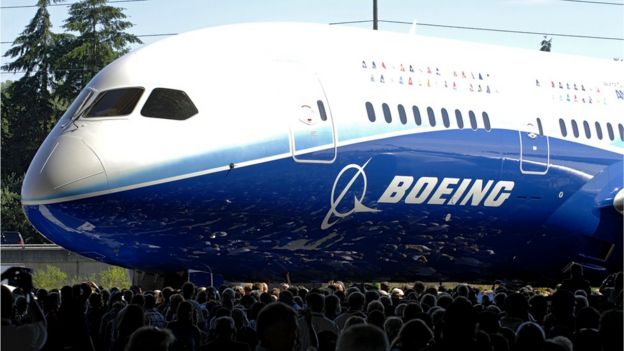
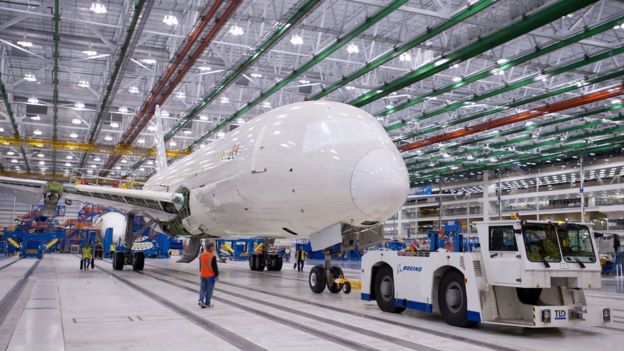
Image copyright BOEING – Boeing’s North Charleston factory in South Carolina is one of two involved in building the 787 Dreamliner
Nevertheless, as a result of that review, in late September the company announced a number of changes to its safety structures. They include the creation of a new “product and services safety organization”.
It will be charged with reviewing all aspects of product safety “including investigating cases of undue pressure and anonymous product and safety concerns raised by employees”.
Mr Barnett, meanwhile, remains deeply concerned about the safety of the aircraft he helped to build.
“Based on my years of experience and past history of plane accidents, I believe it’s just a matter of time before something big happens with a 787,” he says.
“I pray that I am wrong.”
Reported by BBC News on 6 November 2019 by By Theo Leggett, Business correspondent.
Arlington, Virginia — An American Airlines mechanic appeared in a Miami court Friday after being charged with sabotaging a jetliner. The aircraft was filled with passengers and set to take-off.
At 10:30 a.m. on July 17th, American Airlines flight 2834 pulled out of gate 49 at Miami International Airport headed for the Bahamas. But pilots noticed a problem and as the plane, with 150 people aboard, moved into position on the runway, they were forced to turn around.
According to investigators, American Airlines mechanic Abdul-Majeed Marouf Ahmed Alani, who appeared in a Florida court Friday, was seen on surveillance video tampering with the plane’s navigation systems just an hour before it was scheduled to depart. Alani, who’s worked for American since 1988, said he tried to sabotage the plane because he was upset about a stalled contract dispute between his union and American Airlines and that it had affected him financially.
Captain Laura Einsetler said had the plane taken off, it could have been catastrophic.
“It is significant. Any time we reject a takeoff, that’s a big deal,” she said.
Alani said he hoped sabotaging the plane would allow him to get overtime pay to fix it. American Airlines called it a disturbing event and said that it has been cooperating with the investigation.
Pilot Who Hitched a Ride Saved Lion Air 737 Day Before Deadly Crash
Jumpseat rider played critical role in Indonesian cockpit
Pilot actions show multiple errors required to crash 737 Max
An off-duty pilot saved the 737 Max from a crash. The next day, the same plane on flight JT610 crashed into the sea.
As the Lion Air crew fought to control their diving Boeing Co. 737 Max 8, they got help from an unexpected source: an off-duty pilot who happened to be riding in the cockpit.
That extra pilot, who was seated in the cockpit jumpseat, correctly diagnosed the problem and told the crew how to disable a malfunctioning flight-control system and save the plane, according to two people familiar with Indonesia’s investigation.
The next day, under command of a different crew facing what investigators said was an identical malfunction, the jetliner crashed into the Java Sea killing all 189 aboard.
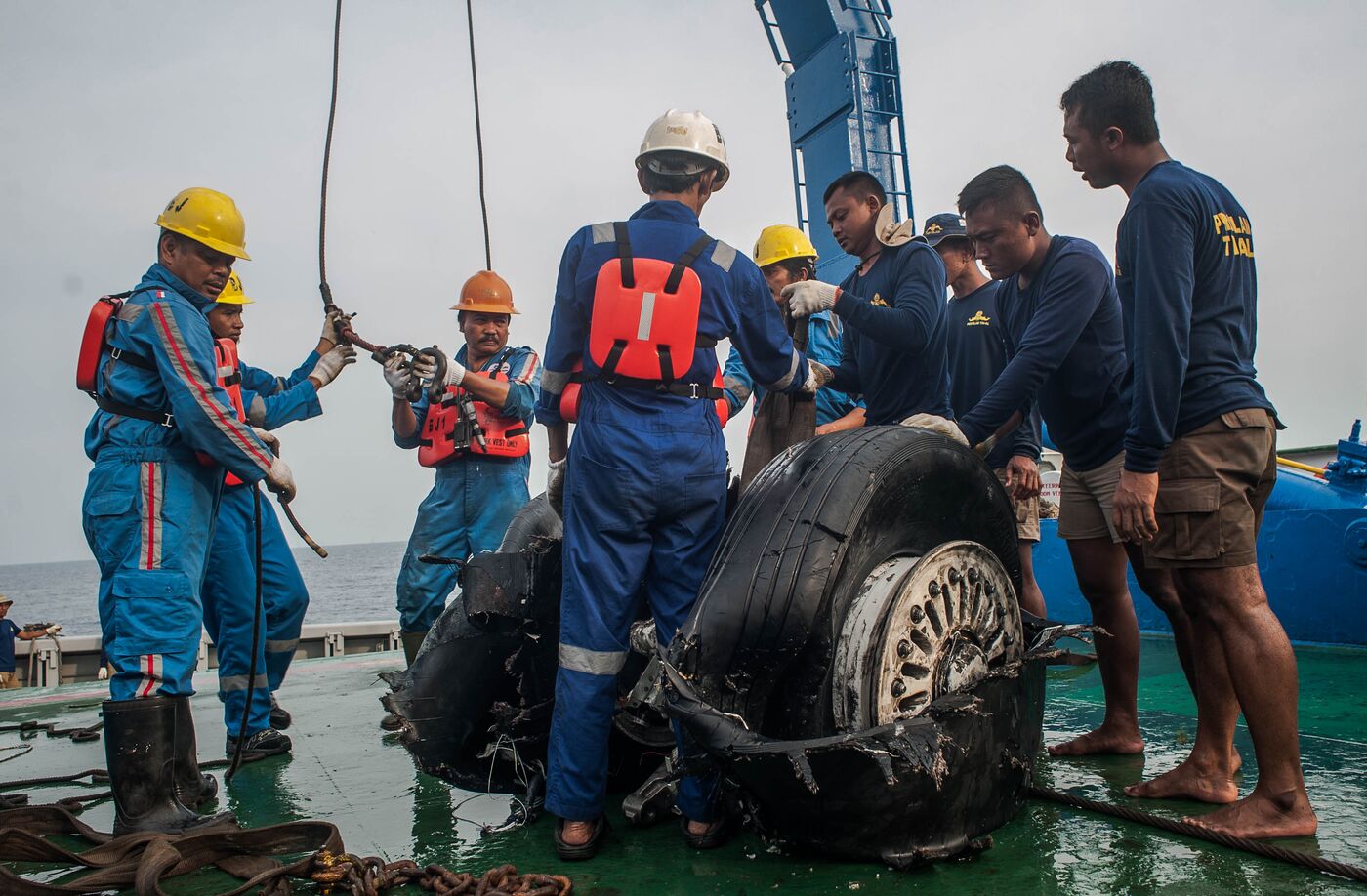
Rescuers recover the wheels of flight JT610 on Nov. 4.
Photographer: Fauzy Chaniago/EPA-EFE
The previously undisclosed detail on the earlier Lion Air flight represents a new clue in the mystery of how some 737 Max pilots faced with the malfunction have been able to avert disaster while the others lost control of their planes and crashed. The presence of a third pilot in the cockpit wasn’t contained in Indonesia’s National Transportation Safety Committee’s Nov. 28 report on the crash and hasn’t previously been reported.
The so-called dead-head pilot on the flight from Bali to Jakarta told the crew to cut power to the motor in the trim system that was driving the nose down, according to the people familiar, part of a checklist that all pilots are required to memorize.
By contrast, the crew on the flight that crashed the next day didn’t know how to respond to the malfunction, said one of the people familiar with the plane’s cockpit voice recorder recovered as part of the investigation. They can be heard checking their quick reference handbook, a summary of how to handle unusual or emergency situations, in the minutes before they crashed, Reuters reported, citing people it didn’t name.
Lion Air spokesman Danang Prihantoro declined to comment on the role of a third pilot, saying, “All the data and information that we have on the flight and the aircraft have been submitted to the Indonesian NTSC. We can’t provide additional comment at this stage due the ongoing investigation on the accident.”
The Indonesia safety committee report said the plane had had multiple failures on previous flights and hadn’t been properly repaired.
Airline mechanics tried four times to fix related issues on the plane starting Oct. 26, according to the Indonesia preliminary report. After pilots reported issues with incorrect display of speeds and altitude in the two prior flights, workers in Denspasar, Bali, replaced a key sensor that is used by the Boeing plane to drive down its nose if it senses an emergency.
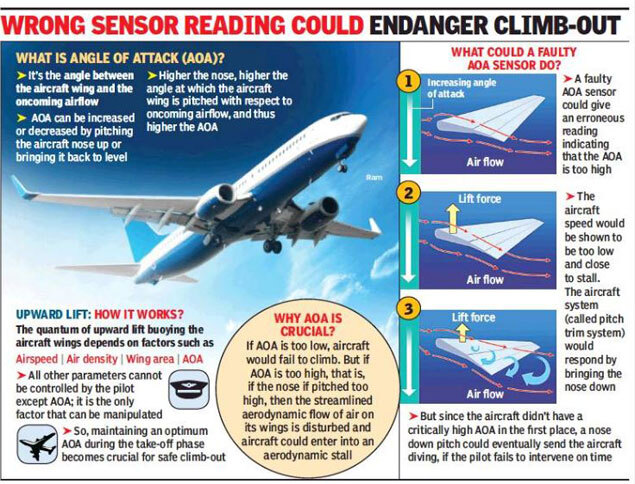
Flight data shows the sensor, called the “angle of attack” vane, which measures whether air is flowing parallel to the length of the fuselage or at an angle, was providing inaccurate readings after that.
However, the pilots on the harrowing Oct. 28 flight from Bali to Jakarta didn’t mention key issues with the flight after they landed, according to the report.
Their request for maintenance didn’t mention they had been getting a stall warning since about 400 feet after takeoff as a result of the faulty angle-of-attack sensor. It was still giving false readings the next morning on the flight that crashed, according to flight data.
Representatives for Boeing and the Indonesian safety committee declined to comment on the earlier flight. Boeing rose 1.1 percent to $377.59 at 12:03 p.m. in New York. The company’s market value tumbled about $28 billion through Tuesday after the Ethiopian Airlines crash.
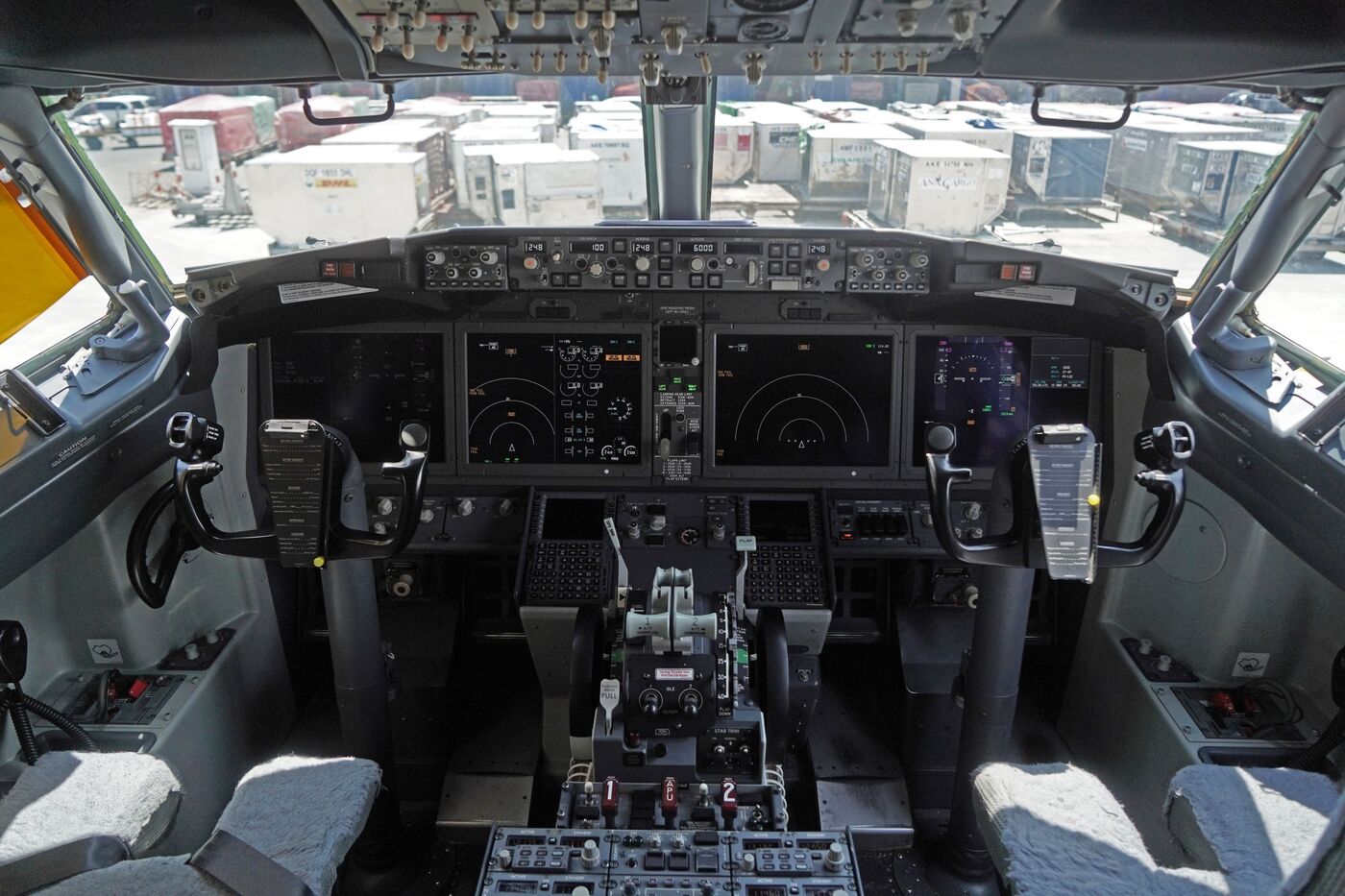
The cockpit of a 737 Max 8.
Photographer: Dimas Ardian/Bloomberg
The safety system, designed to keep planes from climbing too steeply and stalling, has come under scrutiny by investigators of the crash as well as a subsequent one less than five months later in Ethiopia. A malfunctioning sensor is believed to have tricked the Lion Air plane’s computers into thinking it needed to automatically bring the nose down to avoid a stall.
Boeing’s 737 Max was grounded March 13 by U.S. regulators after similarities to the Oct. 29 Lion Air crash emerged in the investigation of the March 10 crash of Ethiopian Airlines Flight 302. In the wake of the two accidents, questions have emerged about how Boeing’s design of the new 737 model were approved.
The Transportation Department’s inspector general is conducting a review of how the plane was certified to fly and a grand jury under the U.S. Justice Department is also seeking records in a possible criminal probe of the plane’s certification.
The FAA last week said it planned to mandate changes in the system to make it less likely to activate when there is no emergency. The agency and Boeing said they are also going to require additional training and references to it in flight manuals.
Boeing Reprograms 737 System Linked to Crashes
A software update will prevent a single sensor from activating the Maneuvering Characteristics Augmentation System. The data from both sensors will be considered.
“We will fully cooperate in the review in the Department of Transportation’s audit,” Boeing spokesman Charles Bickers said in an email. The company has declined to comment on the criminal probe.
After the Lion Air crash, two U.S. pilots’ unions said the potential risks of the system, known as the Maneuvering Characteristics Augmentation System, or MCAS, hadn’t been sufficiently spelled out in their manuals or training. None of the documentation for the Max aircraft included an explanation, the union leaders said.
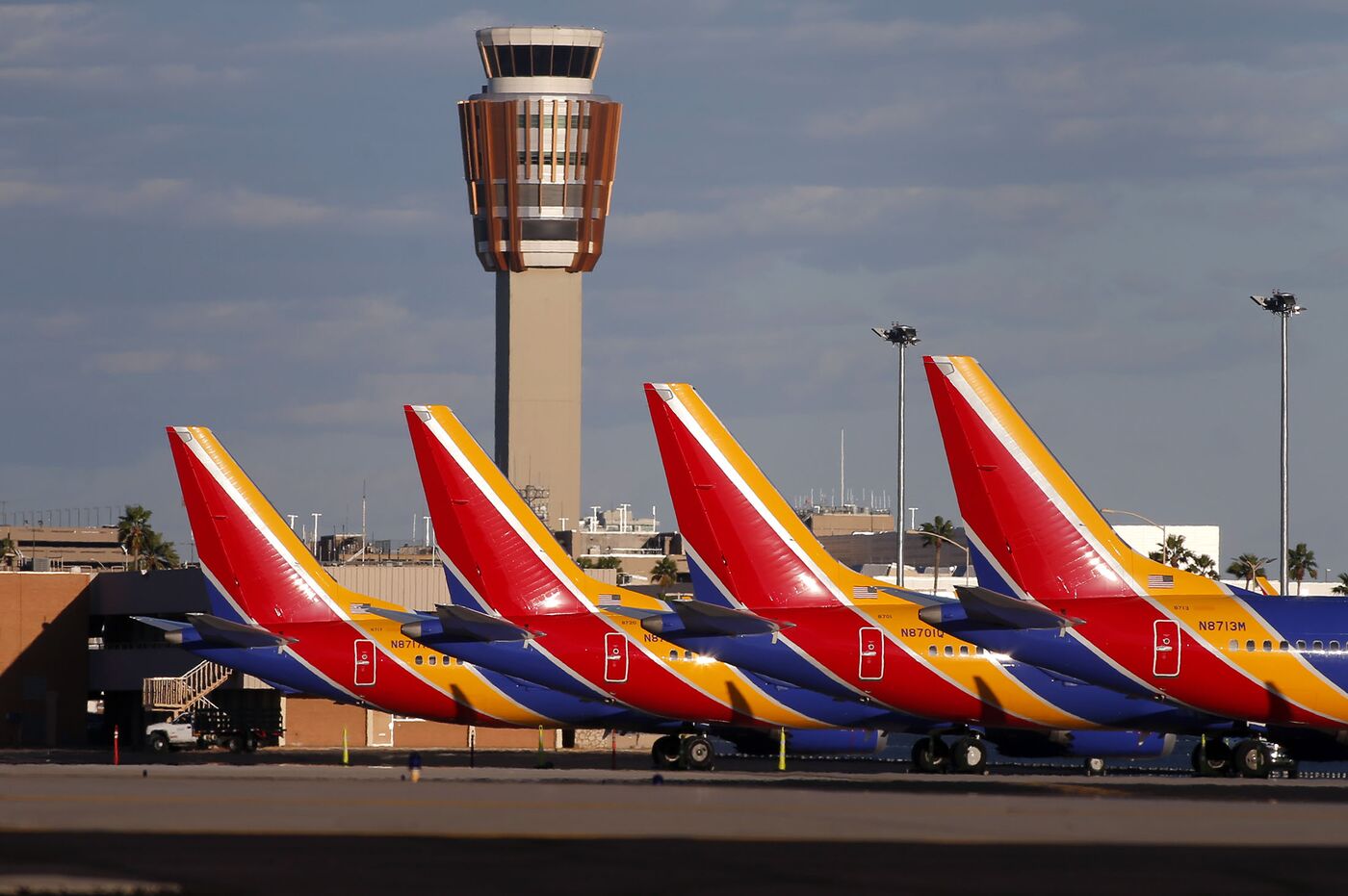
Boeing 737 Max 8 jets at Phoenix Sky Harbor International Airport on March 13.
“We don’t like that we weren’t notified,’’ Jon Weaks, president of the Southwest Airlines Pilots Association, said in November. “It makes us question, ‘Is that everything, guys?’ I would hope there are no more surprises out there.’’
Following the Lion Air crash, the FAA required Boeing to notify airlines about the system and Boeing sent a bulletin to all customers flying the Max reminding them how to disable it in an emergency.
Authorities have released few details about Ethiopian Airlines Flight 302 other than it flew a “very similar” track as the Lion Air planes and then dove sharply into the ground. There have been no reports of maintenance issues with the Ethiopian Airlines plane before its crash.
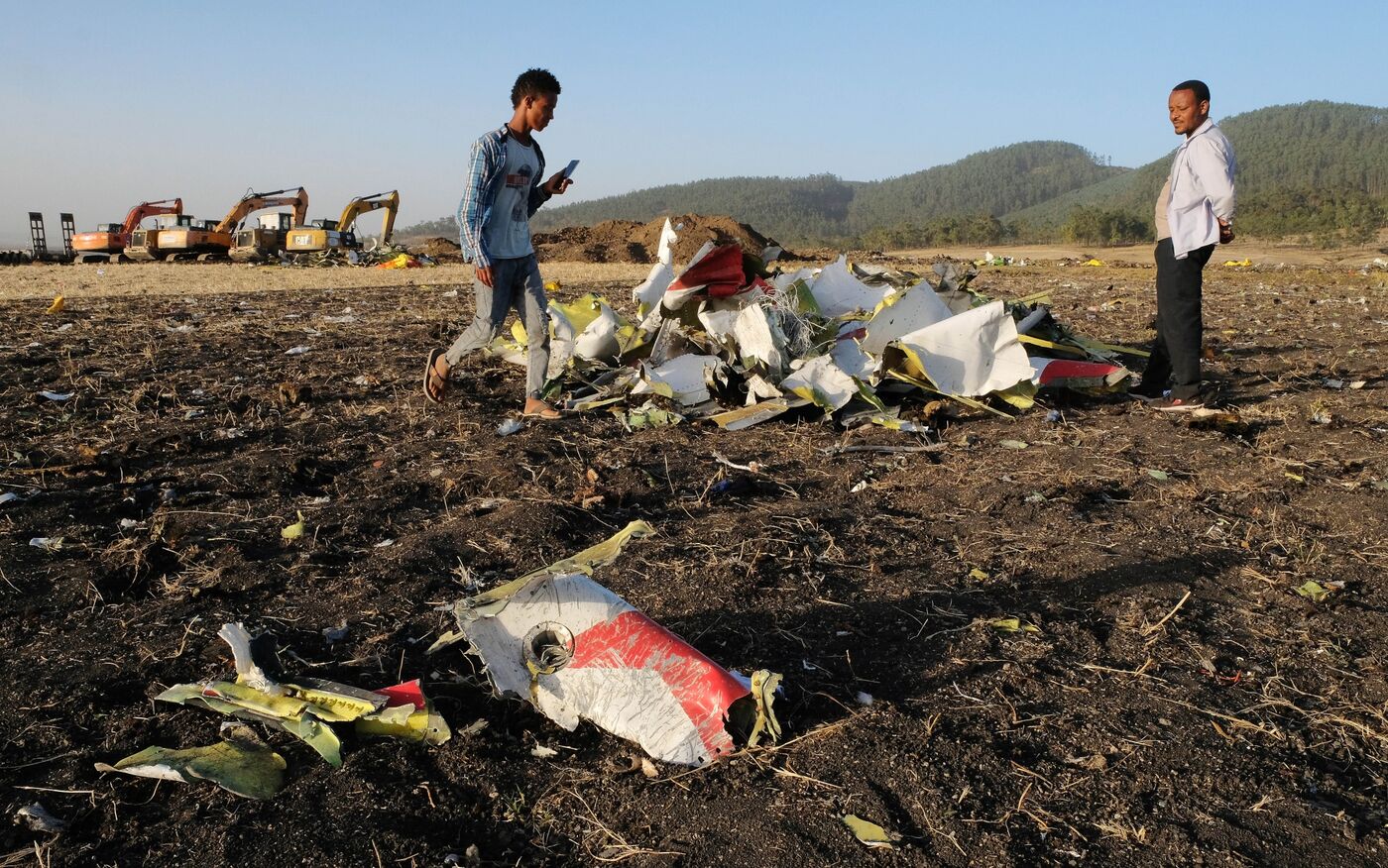
Wreckage recovered from the crash site of Ethiopian Airlines flight ET302 on Mar. 11.
If the same issue is also found to have helped bring down Ethiopian Airlines Flight 302, one of the most vexing questions crash investigators and aviation safety consultants are asking is why the pilots on that flight didn’t perform the checklist that disables the system.
“After this horrific Lion Air accident, you’d think that everyone flying this airplane would know that’s how you turn this off,” said Steve Wallace, the former director of the U.S. Federal Aviation Administration’s accident investigation branch.
The combination of factors required to bring down a plane in these circumstances suggests other issues may also have occurred in the Ethiopia crash, said Jeffrey Guzzetti, who also directed accident investigations at FAA and is now a consultant.
“It’s simply implausible that this MCAS deficiency by itself can down a modern jetliner with a trained crew,” Guzzetti said.
MCAS is driven by a single angle-of-attack sensor near the nose even though there are two of the sensors on the plane. Boeing is planning to alter the system to rely on both sensors to reduce the chances of a malfunction.
Senior China Airlines Captain has been filmed sleeping in command of Boeing 747
Video footage has emerged of a jumbo jet pilot taking a nap in the cockpit mid-flight.
The pilot is believed to be a senior officer for China Airlines, the national carrier of Taiwan. He is understood to have been flying a Boeing 747.
According to local media, he has been disciplined by China Airlines for breaching flight safety.
The pilot, with almost 20 years’ experience, was caught in the video fast asleep while the aircraft was mid-flight. It is not known when the snooze took place.
He was captured by a co-pilot, who filmed the incident and took photos. The co-pilot has also been disciplined for not waking the pilot up.
Earlier this month, a China Airlines pilot strike forced the cancellation of more than 100 flights, affecting almost 20,000 passengers, in an ongoing row about pilot fatigue.
Air India operations director stopped from piloting flight after failing breath tests
A senior pilot who is also director of operations for Air India, and has had responsibility for flight safety and training, said he was told by the carrier he failed two breathalyzer tests on Sunday before a flight to London from New Delhi.
It is the second time Arvind Kathpalia, who is also on the loss-making airline’s board, has been in trouble over alcohol tests. He was suspended for three months in 2017 for allegedly refusing to take breathalyzer tests.
Kathpalia told Reuters in an interview by phone that he would contest the results and claimed they were related to internal feuding within the state-owned company.
According to a description for the operation director’s job when Kathpalia got appointed in June 2017, he is responsible for flight operations, ground operations, and flight safety and training operations.
It is unclear if those remain the job specifications.
Air India declined to comment for this article.
Kathpalia failed two breathalyzer tests on Sunday and was declared unfit to fly, according to a pre-flight medical examination report for alcohol, posted on the website of news portal India Today.
Kathpalia, who denies he had been drinking, corroborated the results of the breathalyzer and said he was tested twice in a span of 20 minutes, adding that the second test’s reading was higher than the first.
“It was 1:30 in the afternoon, only a bloody stark raving alcoholic is bloody drunk at 1:30 in the afternoon,” Kathpalia said. “I am going to contest this.”
He said that at Air India “everyone is fighting with everyone,” and that he has been targeted.
In 2017, Kathpalia was suspended for three months when he had allegedly refused to take breathalyzer tests before and after his flight between Bengaluru and New Delhi and back in January 2017, according to a court document available on law portal Indiakanoon.
In August last year, the Indian Commercial Pilots Association, a trade union representing pilots of the state-owned carrier, filed a court case against Kathpalia requesting stern action against him over the missed breathalyzer tests and some other behavior.
Calls made to union representatives late on Sunday were not answered.
Kathpalia was executive director of flight operations during the earlier incident.
When he was promoted to operations director it was contested by the union in its petition to the court.
The court ordered the New Delhi police to file a first information report (FIR), the first step in India’s legal system that can lead to an investigation, against Kathpalia in August this year, according to reports in major Indian newspapers.
New Delhi police officials could not immediately confirm the status of the case.
The 2017 allegation “was a complete set-up,” said Kathpalia, who said it was the result of a scheduling issue rather than his refusal to take tests.
He claims that he is under attack partly because he is an employee of the original Air India, which was India’s international carrier, while the union is from the erstwhile Indian Airlines, which was a domestic carrier. The two airlines were merged into one in 2007.
“There is a lot of animosity after the merger. The animosity exists till today. They refuse to acknowledge each other,” said Kathpalia.
Reported by Reuter’s Promit Mukherjee; Edited by Martin Howell and Andrea Ricci on 12 November 2018.
The following table shows total firm orders and deliveries of Boeing 737 MAX aircraft by variant (where known) and customer, as of September 30, 2018.[5]
Lion Air crash fallout: DGCA alerts Boeing 737 Max pilots on malfunction issues
NEW DELHI: The Directorate General of Civil Aviation (DGCA)+ has asked Indian carriers using the Boeing 737 Max — Jet Airways and SpiceJet — to take corrective action on these planes facing a malfunction that could lead to a “possible impact with terrain”. The US aviation regulator, Federal Aviation Administration (FAA), and Boeing had issued a bulletin over last two days after analysing the crash of Lion Air’s brand new B737 Max on October 29 soon after takeoff from Jakarta, killing all the 189 people on board.
DGCA chief B S Bhullar said: “Based on initial investigation of Lion Air aircraft accident, FAA has issued Emergency Airworthiness Directive (AD) (on Wednesday) and Boeing has issued bulletin (on Tuesday). Both the documents address erroneous high angle of attack (AOA) sensor input and corrective action for the same as it has a potential for repeated nose-down trim commands of horizontal stabilizer. This condition, if not addressed, could cause the flight crew to have difficulty controlling the airplane, and lead to excessive nose-down attitude, significant altitude loss, and possible impact with terrain.”
“Within 3 days after receipt of FAA AD changes to Airplane Flight Manual have to be done, for procedures which have to be followed by flight crew. DGCA has ensured that all Indian operators are aware of the FAA AD and have taken appropriate corrective action,” Bhullar added.
The DGCA had a day after the Lion Air crash reviewed theperformance of the six B737+ Max with Indian carriers, Jet Airways and SpiceJet. It had then said that these “six B737Max 8 aircraft in India have accumulated about 4,000 hours since their induction starting this June. There are no significant technical issues encountered on these aircraft.”
However with US being the original equipment manufacturer (Boeing) country, word on corrective action, if any, was awaited from Boeing and FAA by airlines and regulators. Jet and SpiceJet have ordered 225 and up to 205 B737 Max, respectively. At the moment, Jet is flying five B737 Max and SpiceJet has one.
The last flight before the crash of Lion Air’s Max 8 (registration PK-LQP) was from Bali to Jakarta on Sunday. The aircraft flight maintenance log for this flight JT 43 reported some malfunctions like its indicated airspeed (IAS) and altitude (ALT) indicators had “disagree shown after take off”. This ill-fated Max had been inducted in Lion Air fleet on August 15, 2018, and had done less than 800 hours.
The flight operation manual bulletin issued by Boeing says an erroneous AOA can cause some or all of effects like “continous or intermittent stick shaker on the affected side only; increasing nose down control forces; inability to engage auto pilot; automatic disengagement of auto pilot; IAS disagree alert; ALT disagree alert.” The Bali-Jakarta flight of the ill-fated Lion Air B737 Max had reported at least two of these factors — IAS and ALT disagree.