Passengers are still onboard a cruise ship in the Atlantic Ocean, after three people died from what appears to be hantavirus—a rare type of zoonotic virus carried by rodents—as the World Health Organization works to evacuate two symptomatic crew members still on board.
As of May 4, 2026, a suspected hantavirus outbreak on the expedition cruise ship MV Hondius in the Atlantic has resulted in three deaths and multiple illnesses.
One case has been confirmed, while others are suspected, prompting the ship (carrying 149 people) to anchor near Cape Verde pending medical evaluations for crew members experiencing respiratory symptoms.
Outbreak Details and Status
Location: The MV Hondius is currently anchored off Praia, Cape Verde, after traveling from Argentina towards the Canary Islands.
Impact: Three passengers have died, and others have shown symptoms of severe respiratory illness. One British passenger was evacuated to South Africa, where they tested positive for a hantavirus variant.
Cases: As of the latest reports, one case was laboratory-confirmed, with five other suspected cases (including two crew members).
Response: Passengers were instructed to remain in cabins while the vessel underwent sanitization, according to reports.
Hantavirus Context
Transmission: Hantaviruses are typically transmitted to humans through contact with rodent droppings or urine, particularly when the material becomes airborne. While human-to-human transmission is rare, it has been mentioned as a potential factor in this scenario.
Symptoms: Initial symptoms are flu-like—fever, chills, body aches, and headaches—which can progress rapidly to serious respiratory failure.
Risk: The World Health Organization (WHO) stated that the risk to the general public remains low.
Severity: Hantavirus pulmonary syndrome is highly fatal, with studies indicating a roughly 40% death rate.
Omicron May Double Risk of Getting Infected on Planes, IATA Says
Business class likely safer than economy, airline advisor says
New strain dominates major markets on cusp of holiday season
Aircraft passengers are twice or even three times more likely to catch Covid-19 during a flight since the emergence of the omicron variant, according to the top medical adviser to the world’s airlines.
The new strain is highly transmissible and has become dominant in a matter of weeks, accounting for more than 70% of all new cases in the U.S. alone. While hospital-grade air filters on modern passenger jets make the risk of infection much lower on planes than in crowded places on the ground such as shopping malls, omicron is rapidly spreading just as more travelers take to the skies for year-end holidays and family reunions.
Business class may be safer than more densely packed economy cabins, said David Powell, physician and medical adviser to the International Air Transport Association, which represents almost 300 carriers worldwide. As before, passengers should avoid face-to-face contact and surfaces that are frequently touched, and people sitting near to each other should try not to be unmasked at the same time during meals, he said.
“The relative risk has probably increased, just as the relative risk of going to the supermarket or catching a bus has increased.”
Powell, former chief medical officer at Air New Zealand Ltd., spoke with Bloomberg News on Tuesday about flying during the pandemic. Here’s an edited transcript.
What are the risks of infection during a flight?
Whatever the risk was with delta, we would have to assume the risk would be two to three times greater with omicron, just as we’ve seen in other environments. Whatever that low risk — we don’t know what it is — on the airplane, it must be increased by a similar amount.
What should passengers do to minimize the risks?
Avoid common-touch surfaces, hand hygiene wherever possible, masks, distancing, controlled-boarding procedures, try to avoid face-to-face contact with other customers, try to avoid being unmasked in flight, for meal and drink services, apart from when really necessary. The advice is the same, it’s just that the relative risk has probably increased, just as the relative risk of going to the supermarket or catching a bus has increased with omicron.
What about masks at meal times?
For a two-hour flight, it’s pretty easy to say, ‘just keep your mask on the whole time.’ But if it’s a 10-hour flight, it becomes pretty unreasonable to ask people not to eat and drink. What most airlines have been doing is encouraging, but not insisting, on customers trying to stagger their mask-off periods a little bit.
In simple terms, two people masked have minimal transmission from one to the other. If one of you removes your mask, then that person’s at greater risk of transmitting and at slightly greater risk of receiving. But if both of you remove then obviously, there’s no barrier there and you can freely transmit one to the other.
Would it be safest not to fly at all?
The greatest protection you can give yourself is to be vaccinated and boosted. The protection that you give yourself from an extra mask or a different type of mask, or not flying at all, frankly, is probably less than the benefit you would get from just being fully boosted. There’s a sort of a rule of thumb starting to appear, that essentially omicron loses you one vaccine dose of benefit. So, two doses against omicron is about similar protection to one dose against delta. That’s not established in hard science, but it roughly seems to correlate with what’s coming out in studies.
Is it safe for healthy passengers if an omicron case is sitting on the plane?
It’s an enclosed space, but it’s a leaky box, and we pressurize it by putting a huge airflow on one end of it, and then having an exhaust valve out the other end. So you’re sitting in a very high-flow airflow environment. It is an enclosed space, but that doesn’t shout ‘risk’ to me. An Irish pub with a fan in the corner shouts ‘risk’ to me, or a gymnasium with a whole lot of people shouting and grunting and sweating. But any flight you take does involve airports as well, which are a little bit less controlled. So, there is risk there. What can you do? Vaccination, testing, mask-wearing, distancing. Are surgical masks better than cloth masks? Yes, probably. On average, maybe 10-20%.
Having said all that, still, it’s been our observation throughout the pandemic, that airline flights have been less conducive to spread than other indoor environments. Again, we’re not saying perfect, but compared with restaurants, buses, subways, you know, nightclubs, gyms, all of those that have been studied. The likelihood of transferring to another person is less on an aeroplane.
Most of the documented cases of spread in flight are from way back in March 2020 — before we had testing, before we had masks, before we had organized boarding procedures, before there was a high degree of awareness about not flying if you were unwell.
What about leaving middle seats on rows empty?
It’s incredibly appealing, intuitively. It does give a greater physical distance between you and the next person. But we haven’t seen that actually deliver a whole lot of benefit. But if there’s some cross airflow from the aisle to the window, or the window to the aisle, and you remove the person from the middle seat, you’ve helped the person who would have been in the middle seat. You probably haven’t helped the person in the next seat a whole lot, because it’s likely to drift across without the obstruction of that first person.
Should cabin crew wear full protective clothing, such as body suits and face shields?
Probably not. There hasn’t been a lot of passenger-to-crew transmission throughout Covid. There has been some, but it’s very, very small numbers. It’s tended to be passenger-to-passenger or crew-to-crew. And again, very small numbers of crew-to-passenger. Let’s just be stringent about the measures already in place, and wait until we have a bit more data on omicron.
What are the risks of infection at the airport?
The requirements for airflows on board are much more stringent than they are for airport buildings generally. The protections for the airline cabin are: everybody stays seated, facing the same direction, there are these physical barriers that are in the way, you have a high degree of airflow that’s by and large from ceiling to floor, minimal drift along the airplane, a little bit more drift across the airplane. Roughly 50% of the airflow is fresh from outside, 50% is recirculated, but when it’s recirculated, it’s HEPA-filtered, so it’s clean. Most of those aren’t present in the airport phase. You’ve got much more random movement, much more potential for face-to-face contact, you’ve got generally reduced airflows. Airport ventilation rates are a 10th, maybe, of what they are on the airplane.
What about children on the flight? How should families manage them?
The risk of severe illness to small children themselves from traveling is low, just because the risk of severe Covid is so low for children. It’s one of the unanswered questions with omicron. The risk is not so much to them. The risk is that they may be mildly infected, not know it, and potentially be spreading whilst they’re traveling. And so that is a risk. Getting them to keep a mask on is hard. The smaller they are, the harder that’s going to be.
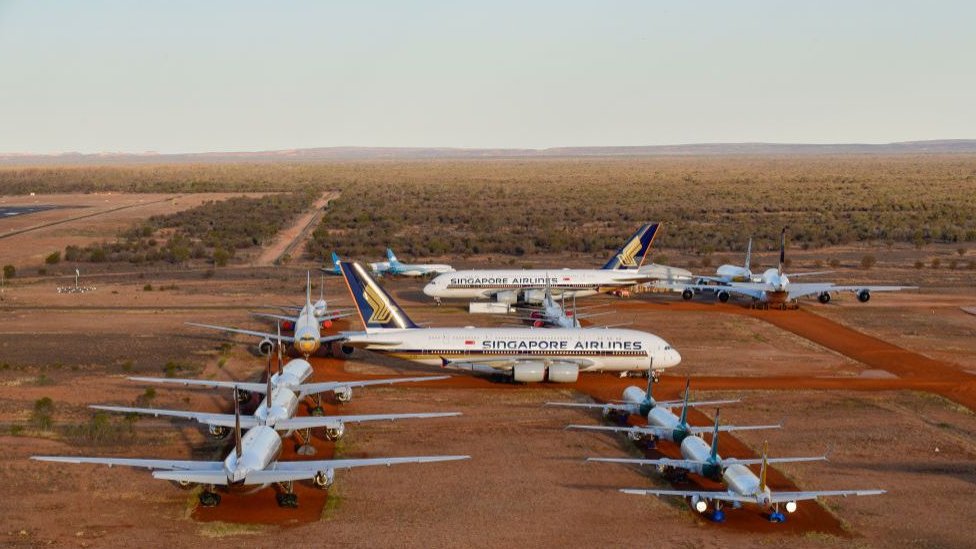
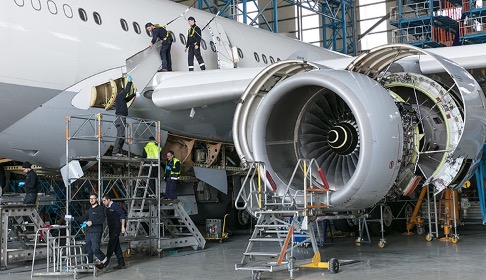
Experts are warning airlines to take extra care when reactivating planes left in storage during the pandemic.
Pilot rustiness, maintenance errors and even insect nests could be potential dangers for aircraft re-entering service.
Travel restrictions have caused a huge decline in flying, with many planes put in extended storage.
As a result, there has been a spike in the number of reported problems as planes return to service.
“Every aircraft is going to have a specific set of instructions for maintenance, but it has never been done on this scale before,” said Greg Waldron, Asia managing editor of aviation magazine FlightGlobal.
Along with regulators, insurers have also expressed concern. “We’ve got people returning to work who are quite rusty, which is a big issue,” said Gary Moran, head of Asia aviation at insurance broker Aon.
Not ‘like riding a bike’
One of the most worrying problems is an increase in the number of poorly-handled landing approaches.
The number of so-called “unstabilised approaches” has sharply increased this year, according to the International Air Transport Association (IATA).
They can result in hard landings, runway overshoots or even crashes.
In May, a Pakistan International Airlines jet crashed after an unstabilised approach, killing 97 people, while 18 died in an Air India Express crash on landing in August, also after an unstabilised approach.
Experts say that pilots might need to be more cautious than usual as they re-enter service.
“Flying an aircraft can be quite technical. If you haven’t been doing it for a while, it’s certainly not second nature like riding a bike,” Mr Waldron added.
However, he said airlines are aware of the issue and in many cases have booked extra time for their pilots in flight simulators.
Maintenance difficulties
Aircraft in storage typically undergo a routine maintenance schedule to ensure they’re ready to return to service when business improves.
Asia Pacific Airline Storage, which has a facility at Alice Springs that stores planes for Cathay Pacific and Singapore airlines, employs more than 70 maintenance crew.
Manufacturers also give very detailed instructions about how to store their aircraft. But there have still been some reported problems.
For example, the European Union Aviation Safety Agency (EASA) said there has been a surge in the number of reports of unreliable airspeed and altitude readings during the first flight after a plane leaves storage.
In some cases, take-offs have had to be abandoned or the aircraft has had to return to base.
Insect nests
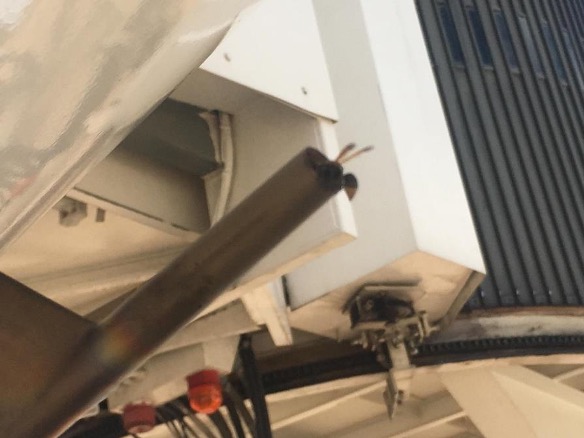
In many previous cases problems with airspeed readings have been due to insects or larvae in the aircraft’s pitot tubes, which are key components used to measure air speed.
These issues are well known within the aviation industry, and Mr Waldron said he thinks airline travel will remain safe.
But he added that there will be some issues, because planes have been stored for longer than before, and in some cases the planes in storage are new models, which means the potential issues are not as well documented.
Covid-19 has created a lot of unknowns in our industry. Amongst the noise of statistics and global media, it is important to remain vigilant to the risks specific to aviation that the virus has created. Most of us will have heard by now that aviation itself is not inherently dangerous, but terribly unforgiving of complacency. Never has this been more important than when returning 75% of the world’s fleet from storage to the skies.
The dramatic effect that Covid-19 has had on the aviation industry has grounded an unprecedented number of aircraft. They have been placed into storage whilst the world waits to recover. The pandemic emerged without warning, and some operators were likely not prepared for what was coming.
Now travel bans are lifting, airports are reopening, and airlines are scrambling to return aircraft to the skies.
EASA recently released a disturbing Safety Information Bulletin. There has been an alarming trend in the number of aircraft experiencing unreliable speed and altitude indications during first flights after storage, caused by contaminated air data systems.
The result has been multiple rejected take offs and airborne returns. Most of the events have been caused by nesting insects in the pitot static system – even after covers were installed.
Modern flight instruments provide large amounts of information to crew with great precision, while automation makes flying transport category aircraft almost routine. Flight envelope protections and aural/tactile warnings keep us safe even in most abnormal scenarios.
At the heart of all of this is the air data computer (ADC) – a small piece of hardware that needs accurate information from outside of the aircraft to work correctly. They are the “Achille’s heel” of modern electronic flight information systems. In a nutshell, these small computers obtain and process information from the aircraft’s pitot static system, and supply critical systems with information such as airspeed, altitude and temperature.
Like all computers, they don’t think for themselves. They are only as accurate as the information they receive. So, when the pitot static system is contaminated, they can only respond to what they sense. They can’t look out the window.
History has shown that unreliable airspeed events are dangerous:
February 6, 1996. Birgenair Flight 301, a Boeing 757, departed Puerto Plata in the Dominican Republic, on a routine flight. During the climb out, the Captain’s airspeed indicator began to increase dramatically. The autopilot reacted as designed, and increased pitch to reduce airspeed, while the auto-throttles reduced power.
In the meantime, the co-pilot’s ASI indicated a dangerously slow airspeed which was decreasing. Almost simultaneously, an overspeed warning was generated. The autopilot reached the limits of its programming and disengaged. The stick-shaker activated, warning the confused crew that the aircraft was flying critically close to a stall.
The Captain responded by applying full thrust. The excessively high angle of attack resulted in insufficient airflow to match demand and the left-hand engine flamed out. The right-hand engine developed full power and the aircraft entered a spin. Moments later the aircraft became inverted, before impacting the Atlantic Ocean. The three pilots had 43,000 hours of experience between them.
A Mud Dauber Wasp entering the pitot tube of a 737.
The cause of the accident was a blockage of a single pitot tube. The likely culprit was the black and yellow mud dauber – a small wasp known to nest in artificial cylindrical structures. The aircraft hadn’t flown in 20 days.
The threat of similar events is greatly increased by improper storage techniques and rushing to return to service.
Getting aircraft flying again is a complex process and presents major risks. It is up to operators to ensure adequate procedures are in place to accomplish it safely. They must anticipate the difficulties and rapid adaptation to internal procedures that this entails.
Don’t know where to start? We don’t blame you. Thankfully, EASA has published guidance which can help mitigate some of these risks. Here is a brief rundown of their recommendations:
Assemble your A-team. Everyone needs to be onboard. Flight operations, CAMOs, maintenance organisations, type certificate holders and aviation authorities are your first port of call. Find out what needs to be done for each individual tail number and communicate with human resources for manpower, supply chain for the tools, and flight ops for hangar spacing and crewing. Think about who you need to talk too and get started early.
Similar aircraft stored in similar conditions will invariably behave in the same way. Safe return to service begins with good data. It is vital that defects are reported and linked. If a nest is found in an aircraft’s pitot tube, the odds are there will be many more. The data needs to be analysed, and operating procedures (such as additional checks) need to be changed to reflect it.
Storage Procedures. It is possible that aircraft were not fully stored in accordance with manufacturer procedures. Implement a rock-solid audit programme to make sure things are being done properly. EASA recommend extra inspections, ground runs and flight testing of at least ten percent of aircraft before release to service.
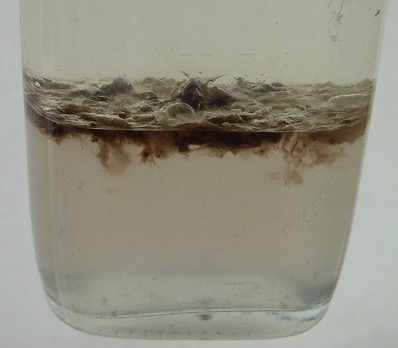
Storage Environment The storage environment presents significant hazards to airworthiness. Insects, sand, salt, dust and humidity can all damage aircraft. There may not have been enough protective covers to go around. Was there biocide in the fuel? Is it even useable? It is advised that extra checks be carried out on aircraft parts that are susceptible to contamination, particularly pitot/static systems. Get additional support to add those inspections.
Jet Fuel contaminated with bacterial growth.
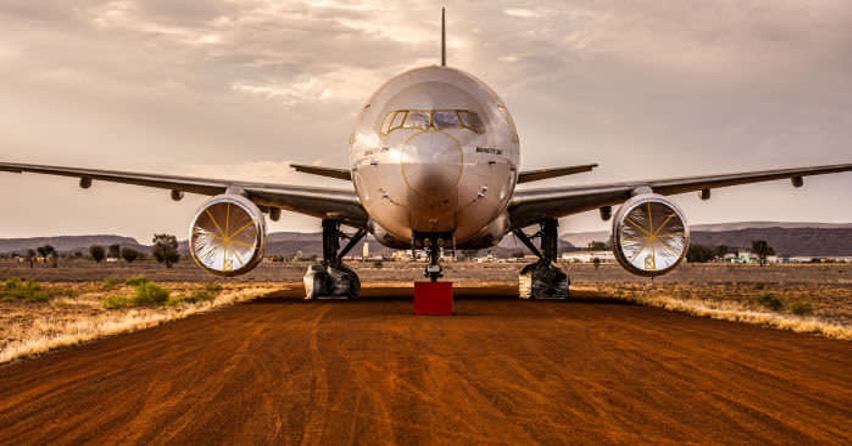
Remote Storage This presents unique challenges. Engineering services may be limited, and staff may become overwhelmed with the large number of aircraft waiting to become airworthy. You may need to send additional manpower or require ferry permits to move aircraft around. Is enough equipment on hand to complete extra checks?
A Boeing 777 in deep storage in the Australian outback.
Time. Nothing happens in a day. Commercial time pressure is a major risk factor. Getting an airplane airworthy can cause delays and rushing has a profound effect on safety. Plan ahead and make sure your deadlines are realistic. Communicate them with your staff to ensure confidence.
Inappropriate decision making. This is hazardous, particularly with unfamiliar procedures. Storage on this scale has never happened before and answers may not be in existing manuals. Key personal may not be immediately available to help. Remind staff not to act alone and create a team responsible for making decisions in this challenging scenario
Limited staff experience. Remember that this has never happened before and you may need the help of staff who are new to your organisation. Make sure they are aware of internal procedures that they need to know beforehand. It is a good idea to properly supervise them and assess their work.
Big teams: It takes a lot of people to get aircraft back in the air.
The elephant in the room. Covid-19. The virus has changed the way we can work. Staff can’t move around as freely and there may be restrictions on how many people can work together. You may need to plan ahead and establish isolated teams who work remotely if practical.
Overdue maintenance. Airworthiness directives, MELs, routine maintenance, inspections, ground runs, test flights. There is a lot to do. Start with comprehensive airworthiness reviews of each individual tail number.
They will be under the same pressure that you are. Communicate with them ahead of time and check their availability.
Pilot training. It is likely they are uncurrent, and operating aircraft which have just come out of long-term storage. Simulator training should berelevant to the challenges they will face in the current operating environment. Consider critical systems vulnerable to damage in storage and the affect that these might have on the first flight. In other words, expect the unexpected and provide them with the ability to react quickly and with confidence.
Coronavirus: Gas analysis conference at Grand Hyatt Singapore linked to infections
A 27-year-old Singaporean man who was at the business event at the Grand Hyatt Singapore is among those confirmed to have contracted the coronavirus.ST
The conference, held over three days from Jan 20, was organised by British firm Servomex, Chinese evening daily Lianhe Wanbao reported.
Singapore’s Ministry of Health had previously said that 109 company employees – 94 from overseas and 15 local – attended the conference.
A 27-year-old Singaporean man who was at the meeting is among those confirmed to have contracted the coronavirus, which originated from the central Chinese city of Wuhan. One foreign employee at the meeting was from Wuhan.
The company did not reply to queries from The Straits Times.
Two South Koreans, aged 36 and 38, and a 41-year-old Malaysian who were at the meeting also tested positive after returning home, sparking an investigation by the World Health Organisation.
On Friday (Feb 7), a middle-aged British man who attended the meeting was also confirmed to have the virus. He is the first British national to contract the virus.
He was taken to St Thomas’s Hospital in London and is currently being treated at a specialist infectious diseases unit.
A member of a lion dance troupe that had performed at the Servomex Sales Conference at the Grand Hyatt on Jan 20 said eight other troupe members performed onstage during the event.
The group learnt through news reports that it was the same business event where several attendees were later found to have contracted the coronavirus.
“We were a bit shocked. But the performance was only five to 10 minutes long and they left straight after,” said the troupe member, who did not take part in the performance.
He added that his colleagues neither had direct contact with the conference members nor ate any food there. None of those in the lion dance troupe has shown any symptoms of the virus or been asked to take a leave of absence, he said, adding that members are taking precautions, such as daily temperature monitoring.
Grand Hyatt Singapore’s general manager, Mr Willi Martin, said on Thursday that details about the three infections in the hotel were still sketchy.
“The Singapore Ministry of Health is still investigating the cases with the relevant authorities and has not advised details on how, where or when these individuals were infected with the virus,” he said.
The hotel has since engaged a government-appointed external agency to conduct a thorough sanitisation of potentially impacted rooms, said Mr Martin. Deep-cleaning measures have also been introduced in public areas, restaurants, meeting spaces, guestrooms and the hotel’s spa and fitness centre.
Also referred to as Wuhan Coronavirus, Wuhan Virus, Wuhan Pneumonia.
A new respiratory virus first detected in the Chinese city of Wuhan has infected hundreds of Chinese citizens and claimed a number of lives.
The fast-spreading infection, which causes pneumonia-like symptoms, has prompted Chinese authorities to quarantine several major cities and cancel some Lunar New Year events.
Here are six maps and graphics that will help you understand what is going on.
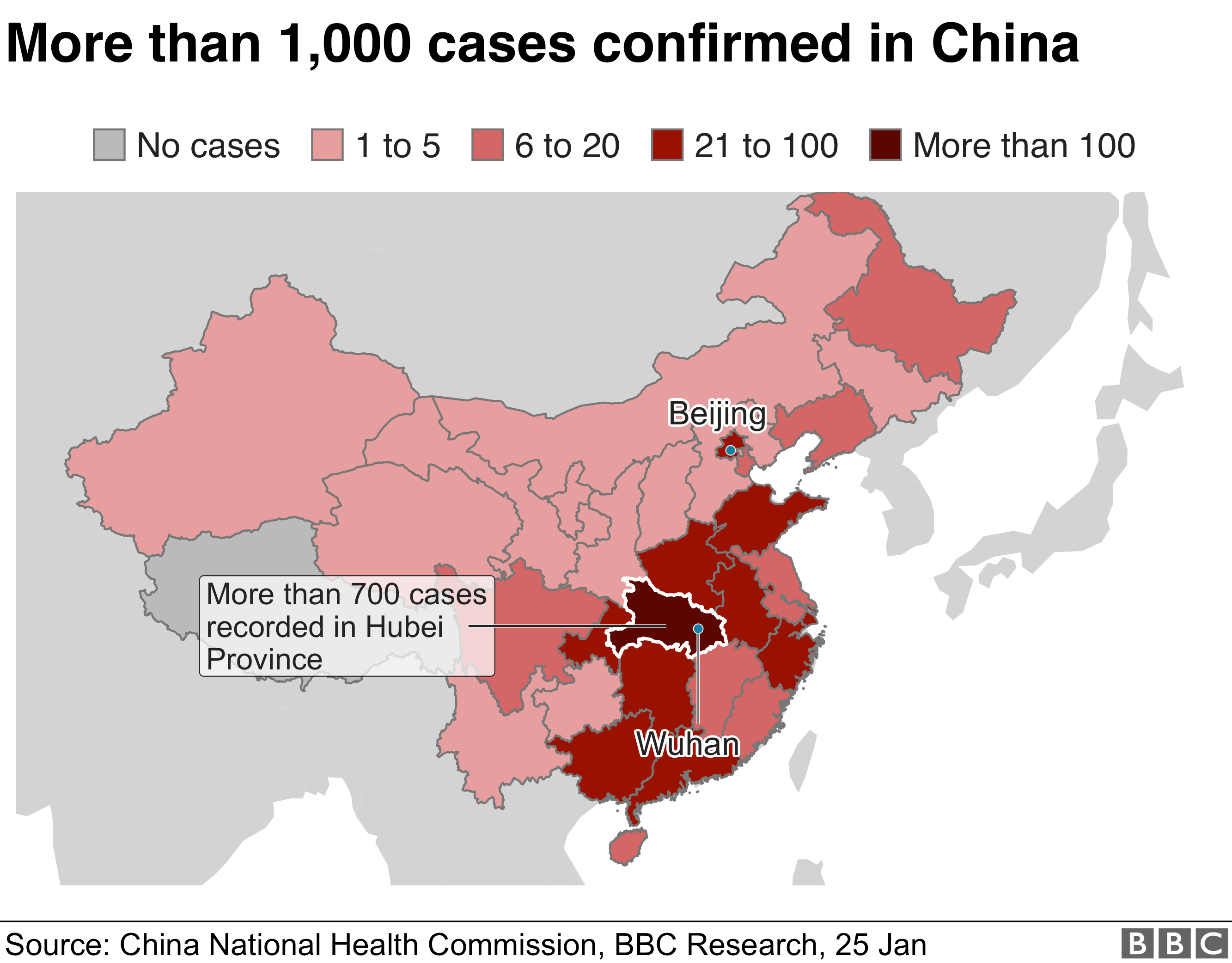
1. Cases have been mainly in China
Hundreds of patients have been infected with the virus across China, with central Hubei province the worst-affected.
The World Health Organisation (WHO) is warning the number of cases is likely to rise further, and Chinese authorities have introduced a number of measures to try to halt the virus’s spread.
The Chinese government has also closed a number of temples, the Forbidden City and part of the Great Wall.
The growing list of restrictions comes at the beginning of a week-long holiday celebrating Lunar New Year – one of the most important dates in the Chinese calendar – when millions of people travel home.
The WHO has not yet classed the virus as an “international emergency”, partly because of the low number of overseas cases, but said it “may yet become one”.
“Make no mistake, this is, though, an emergency in China,” said WHO director-general Dr Tedros Adhanom Ghebreyesus.
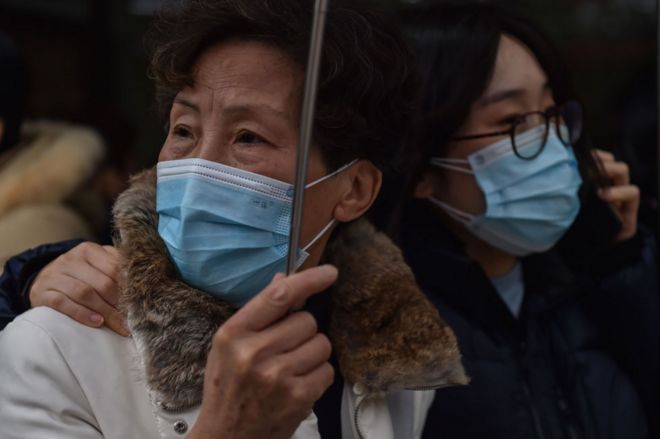
Image copyrightGETTY IMAGES
2. Hubei province has been particularly badly affected
More than 500 cases have been recorded in Hubei province – the centre of the virus outbreak.
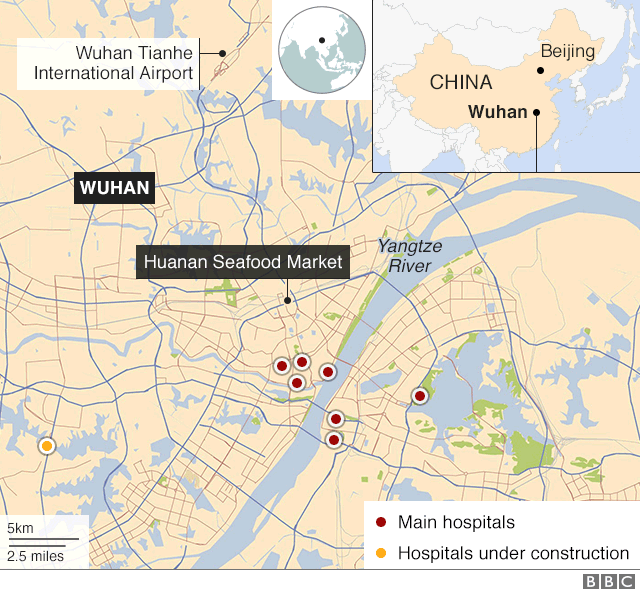
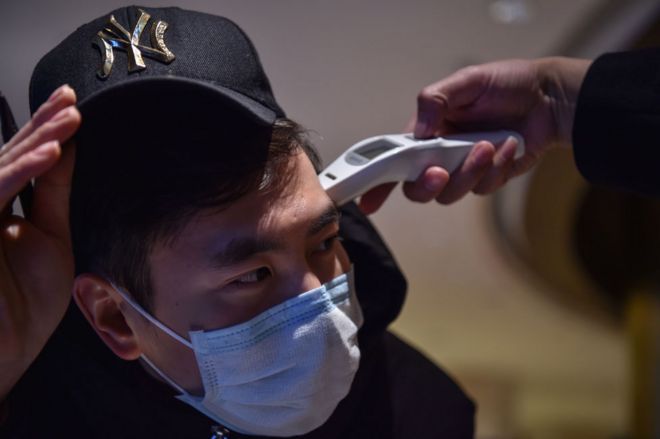
Restrictions on travel are affecting at least 20 million people across 10 cities – including the capital Wuhan, where the virus emerged.
Its origins have been linked to the city’s seafood market.
Wuhan – which has a population of 11 million people – has gone into lockdown, with authorities suspending flights and train services in and out of the city.
“My university is checking every student’s body temperature every day and are offering free masks. It also has its own hospital and ambulance,” Chongthan Pepe Bifhowjit, an Indian student at the Wuhan University of Technology, told the BBC.
Videos have been circulating on social media, reportedly taken by Wuhan residents, showing long queues at local hospitals.
In a bid to tackle the increased demand for medical services, the authorities are building a new 1,000-bed hospital in the capital.
State-owned news outlet Changjiang Daily said the hospital could be ready by 3 February. A total of 35 diggers and 10 bulldozers are currently working on the site.
Image copyrightGETTY IMAGES
3. There have been some cases elsewhere
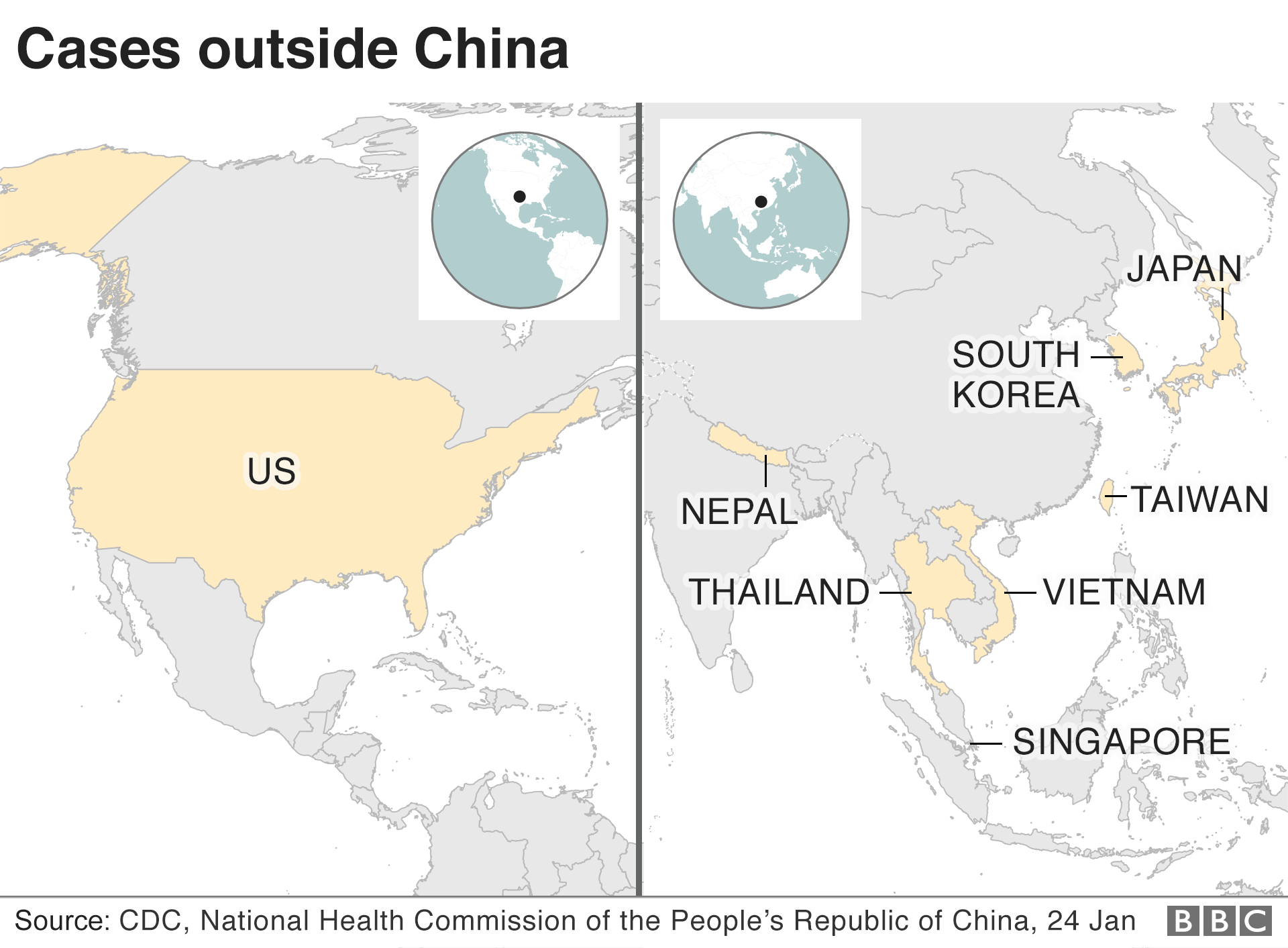
Outside China, confirmed cases have been recorded in Thailand, Vietnam, Taiwan, South Korea, Singapore, Nepal, Japan, the US and France.
Other nations are investigating suspected cases, including the UK and Canada.
Many authorities have announced screening measures for passengers from China, including the major airport hubs of Dubai and Abu Dhabi.
Taiwan has banned people arriving from Wuhan, and the US state department warned its nationals to exercise increased caution in China.
4. The symptoms are respiratory
Coronaviruses are common, and typically cause mild respiratory symptoms, such as a cough or runny nose.
But some are more serious – such as the deadly Sars (Severe Acute Respiratory Syndrome) and Middle East Respiratory Syndrome (Mers).
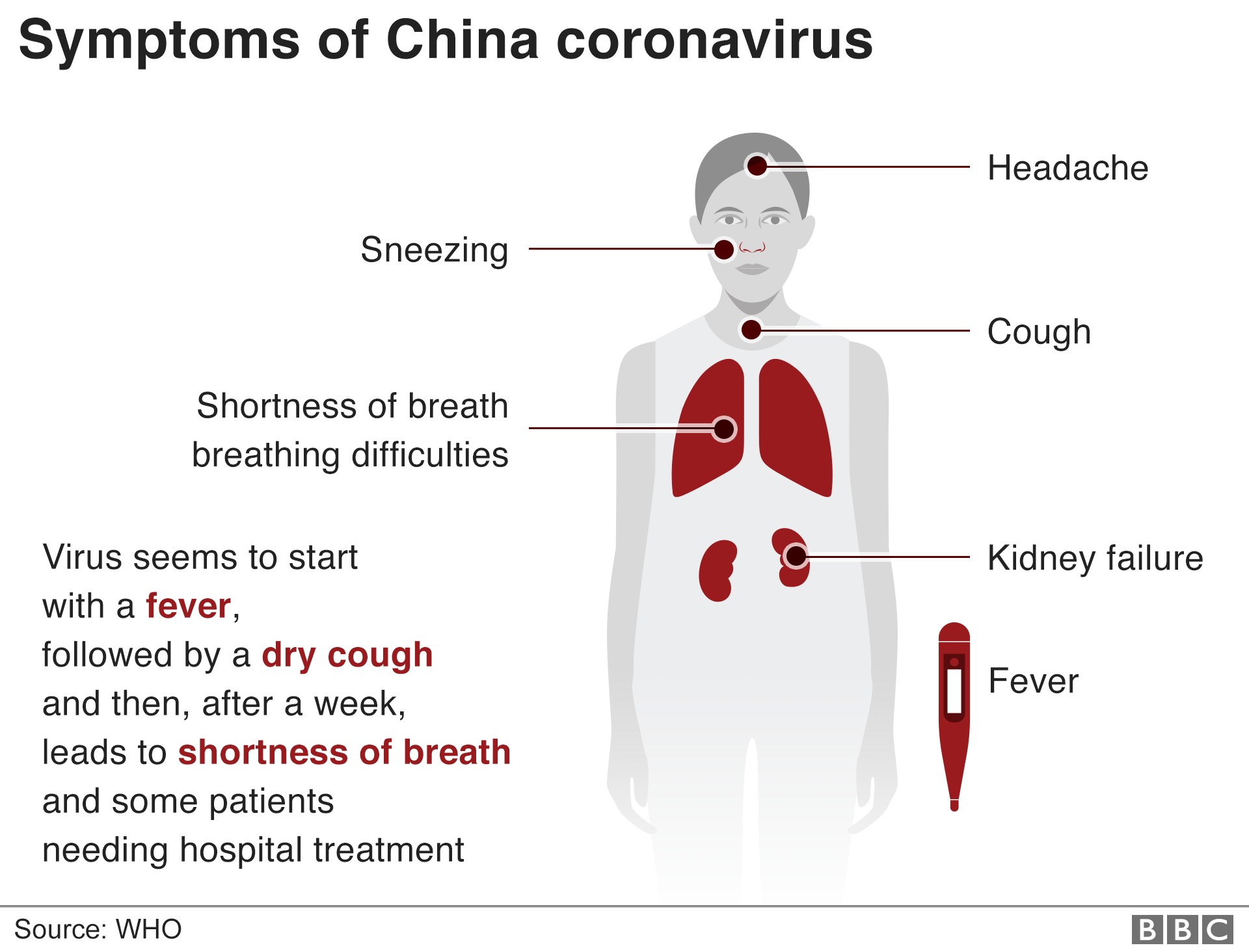
It seems to start with a fever, followed by a dry cough and then, after a week, leads to shortness of breath.
But in more severe cases, infection can cause pneumonia, severe acute respiratory syndrome, kidney failure and even death.
Most victims have been elderly people, suffering from other chronic diseases including Parkinson’s and diabetes.
Peter Piot, professor of global health and director of the London School of Hygiene & Tropical Medicine, said the “good news” was that data suggested the virus may have a lower mortality than Sars.
There was also a diagnostic test and greater global sharing of information than previously, he said.
“And that is essential because you cannot deal with a potential pandemic in one country alone.”
There is not yet a specific anti-viral treatment for the infection, so people with the virus are currently being treated for their symptoms.
Image copyrightGETTY IMAGES
5. You can do things to reduce your chances of catching it
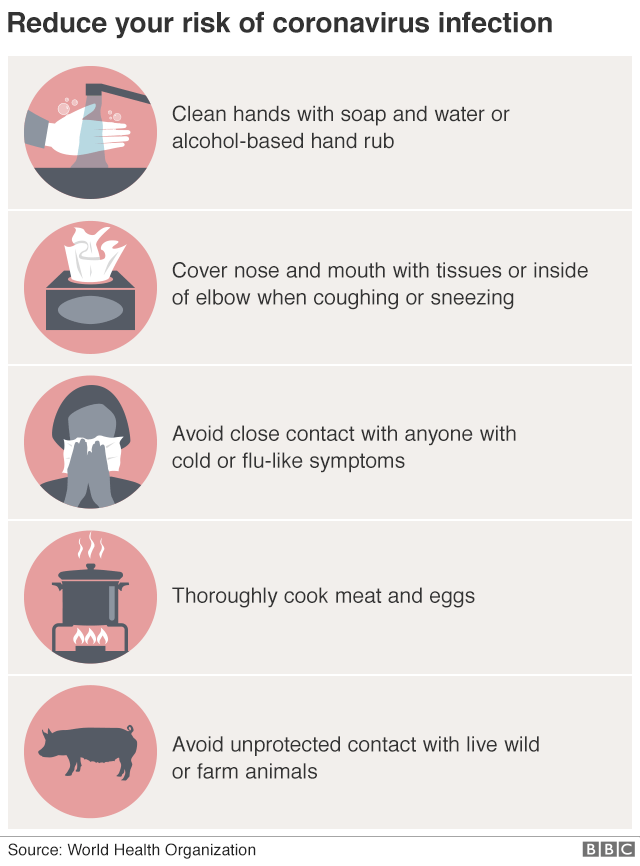
They include hand and respiratory hygiene as well as safe food practices.
People are advised to avoid close contact with people suffering from acute respiratory infections; wash hands regularly, especially after direct contact with ill people or their environment; and avoid unprotected contact with farm or wild animals.
Avoiding eating raw or undercooked animal products is also advised.
Those with symptoms of coronavirus should practise “cough etiquette”, including maintaining distance, covering coughs and sneezes with disposable tissues or the inside of an elbow, and washing hands.
The WHO has said that while there is evidence of transmission between people in close contact, such as families or those in healthcare settings, there is not yet evidence of onward transmission.
Image copyrightGETTY IMAGES
6. If a case is suspected, there are processes to follow
The Chinese government has classified the outbreak in the same category as the Sars epidemic.
This means people diagnosed with the virus in the country must be isolated and can be placed in quarantine.
The WHO advises that patients should be assessed quickly and treated for the level of severity of the disease they have – mild, moderate, or severe.
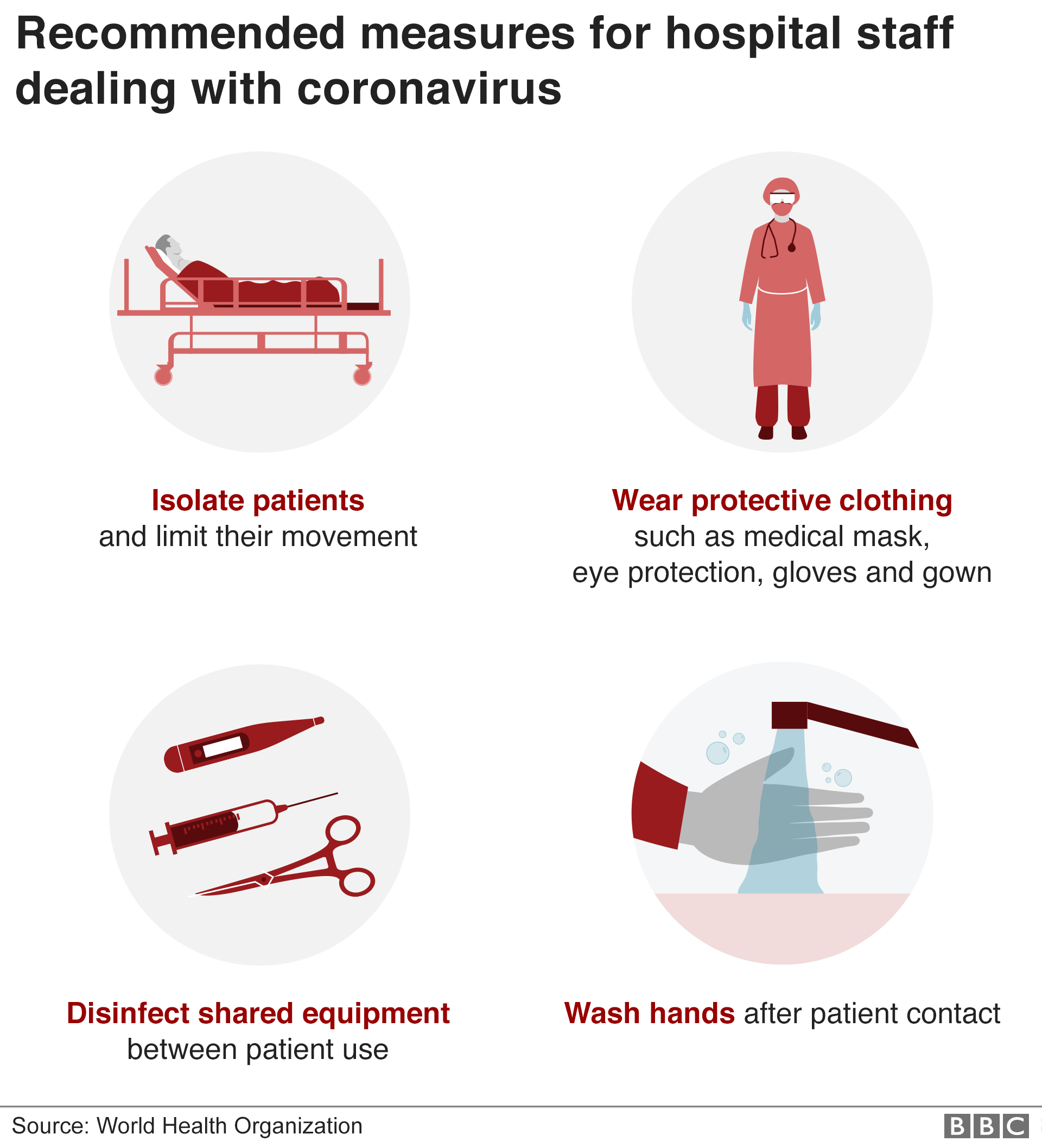
It also recommends immediately implementing infection prevention measures. These include staff wearing protective clothing and limiting patient movement around the hospital.
In the UK, family doctors – GPs – are being advised to place patients suspected of having coronavirus in isolation and avoid physical examinations.
Official guidance from Public Health England (PHE) says patients should remain in a room away from other patients and staff and be prevented from using communal toilets.
The UK government’s emergency committee, Cobra, has held a meeting to discuss the outbreak.
A particularly aggressive strain of a virus is ravaging Mecca
some of the passengers on the Emirates flight were recently in mecca
A plane from Dubai landed at John F. Kennedy International Airport and was held away from the terminal after several passengers on board reported feeling sick.
The Emirates Airbus A380 arrived at Terminal 4 after 13 hours in the air and was met by the Centers for Disease Control and Port Authority police. After interviews and inspections, 10 crew members and passengers were transported to a Jamaica Hospital in Queens. Nine others showed symptoms but refused medical treatment.
Emirates Flight 203 landed in New York Wednesday shortly after 9 a.m. with about 520 people on board, including rapper Vanilla Ice, who took to Twitter to document the ordeal.
The flight was direct from Dubai and did not make a stop in Mecca as the New York mayor’s office erroneously reported earlier.
Shortly before 10:30 a.m., Emirates Airlines said only about 10 passengers from Dubai had taken ill. Passengers said the number was in dozens, and the CDC issued a statement that 100 people were sick.
A government source briefed on situation said there was no evidence of a security or terror issue. Emirates‘ home office told U.S. officials it believes this incident was caused by food poisoning, but passengers also suggested a nasty flu virus could also be to blame.
“Even well before the flight when we were on line getting on board (in Dubai), there were people that were obviously very sick that should not have been allowed to get on board in the first place,” said passenger Erin Sykes.
“Passengers who are not ill will be allowed to continue with their travel plans, and if necessary will be followed up with by health officials,” said the CDC in a statement.
Mahesh Varavooru says his wife was not one of numerous passengers who fell ill, but she did see several people vomiting during the flight.
“She was scared, obviously, because it didn’t taxi yet and she was hoping the fight was going taxi and she couldn’t get out and was the middle of runway and cops all around,” Varavooru said about his wife’s experience on the plane.
All ten patients taken to the hospital were tested for the flu. The results of that test are expected sometime Thursday. As for the rest of the people on board who may have been exposed to the mystery illness, they’ve been told to follow up with their doctor if they feel sick at all in the coming week.
Photos From The Scene
Emergency vehicles surround Emirates Flight 203 in a holding area at John F. Kennedy Airport in New York on Sept. 5, 2018. (credit: CBS2)
Emergency vehicles surround Emirates Flight 203 in a holding area at John F. Kennedy Airport in New York on Sept. 5, 2018. (credit: CBS2)
Emergency vehicles surround Emirates Flight 203 in a holding area at John F. Kennedy Airport in New York on Sept. 5, 2018. (credit: CBS2)
Emergency vehicles surround Emirates Flight 203 in a holding area at John F. Kennedy Airport in New York on Sept. 5, 2018. (credit: CBS2)