Dozens die as dengue surges in Malaysia while vaccine uptake stalls
With 55 dead, medical experts warn that high costs, rather than vaccine hesitancy, are keeping uptake low amid the outbreak
Dengue infections in Malaysia have surged 56.2 per cent this year, with 58,079 cases and 55 deaths recorded so far, even as take-up of the dengue vaccine remains low.
Dr Shanmuganathan TV Ganeson, president of the Federation of Private Medical Practitioners’ Associations, Malaysia, said cost was one factor behind the low vaccine uptake.
A two-dose regime could cost between 420 and 500 ringgit (US$104 to US$124), depending on the facility, and was generally cheaper in general practitioner clinics, he said, adding that GPs also lag larger facilities in terms of publicity.
The dengue vaccine also had to compete with other vaccines that were more affordable, he said, especially the flu vaccine.
“People here tend to opt for flu protection, especially travellers, which costs less than 100 ringgit, rather than an expensive dengue vaccine,” Shanmuganathan said.
He explained that the dengue vaccine could not be given to pregnant women, breastfeeding mothers or immunocompromised patients and was recommended only for those aged between four and 60.
Dengue Prevention Advocacy Malaysia co-chairman Professor Zamberi Sekawi said there was some hesitancy, as with other vaccines, but cautioned against reading the low uptake as anti-vaccine sentiment.
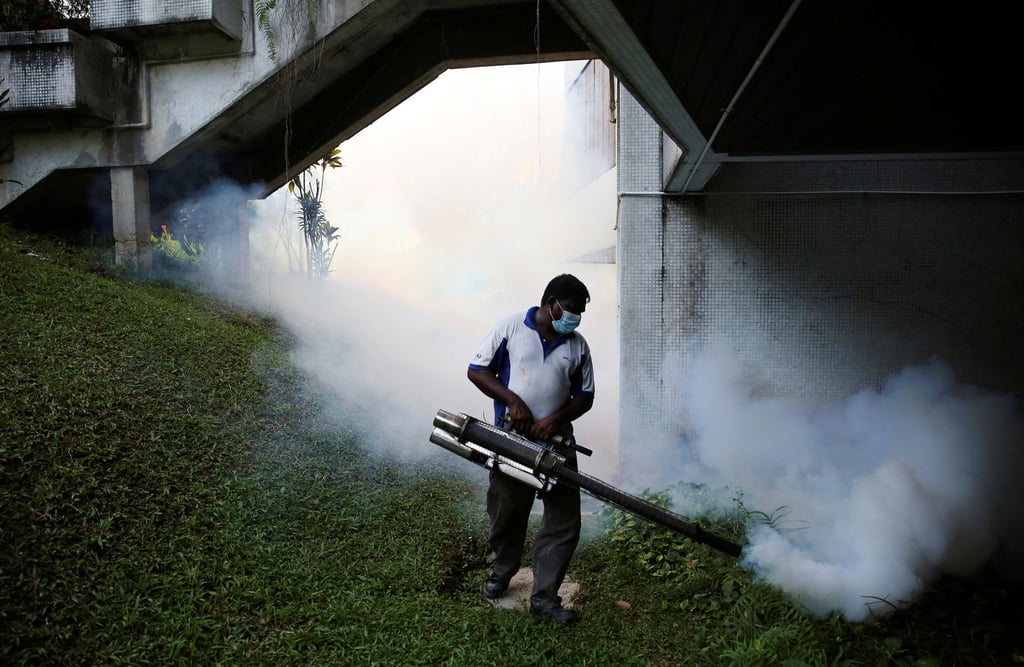
A pest control worker sprays insecticide to help control the spread of dengue fever carried by mosquitoes in Kuala Lumpur, Malaysia, in 2014. Photo: Reuters
“The evidence suggests that many Malaysians are undecided rather than opposed. They want to know how effective the vaccine is, its long-term safety, and the recommendation of their doctor,” he said, adding that public awareness of the vaccine was limited.
“Cost and access must not be mistaken for hesitancy. Since we have to pay for it, it creates an additional barrier.”
He said studies had shown that acceptance of the vaccine improved when people understood its risks and when doctors themselves recommended the jab.
“We need better public education and, importantly, doctors who are confident enough to have personalised conversations about dengue prevention and vaccination,” he said.
Checks by local reporters on prices at various private facilities found that two doses of the dengue vaccine can cost up to 480 ringgit.
The Health Ministry said last year that it had no immediate plans to include the vaccine in the National Immunisation Programme.
High-risk regions
In a statement issued on Friday, the Health Ministry said the increase in cases was initially concentrated in the Klang Valley region, particularly Selangor state, as well as the federal territories of Kuala Lumpur and Putrajaya.
“The risk of dengue transmission remains high and the national situation remains worrying following increases in cases now also detected in several other states,” it said.
Intensive, targeted prevention and control measures, including early case detection, vector control, outbreak management and personnel mobilisation, had since begun to show positive results, the ministry noted.
The northern state of Perlis recorded the highest percentage increase, up 207 per cent from 55 cases between January and August last year to 169 this year.
Johor’s cases more than doubled, climbing 109 per cent from 4,140 to 8,639, while Kuala Lumpur and Putrajaya recorded a 106 per cent increase, from 5,013 to 10,316 cases.
Selangor continued to be the worst-affected state in absolute terms, with 25,090, up 61 per cent from 15,610 cases. Sabah recorded 3,753 cases, up 34 per cent from 2,806 previously.
Only Penang, Melaka and Kedah recorded reductions, with cases falling by 26 per cent, 36 per cent and 60 per cent, respectively.
The ministry attributed the rise in dengue cases to several factors, including weather favourable to mosquito breeding.
Student’s alleged torture death by Cambodia scammers sparks turmoil in South Korea
South Korean president urges ‘all-out’ efforts to protect citizens after number of kidnappings in Cambodia soars in recent months.
South Korean president Lee Jae Myung has called for “all-out” diplomatic efforts to protect citizens in Cambodia after a university student was lured there by a scam ring and allegedly tortured to death.
At a cabinet meeting on Tuesday, Lee said “protecting the lives and safety of citizens is the government’s greatest responsibility” and called for all those caught up in the scams to be “swiftly repatriated”.
The number of kidnappings of South Koreans in Cambodia has soared in recent months, prompting national security adviser Wi Sung-lac to form an emergency task force for the swift repatriation of citizens affected by scams.
Victims of scams are typically lured with promises of high-paying jobs before being confined in compounds and forced to participate in online fraud operations, particularly voice phishing scams, according to multiple sources, including Yonhap News. Those who refuse face beatings with pipes and electric shock devices, according to rescued victims who spoke to lawmaker Park Chan-dae, Yonhap News reported.
The body of the alleged victim, identified by Cambodian authorities as 22-year-old Park Min-ho, remains in Cambodia more than two months after his death. In a media interview, family members described the situation as “killing him twice”, with his remains still in cold storage. South Korea is seeking to conduct a joint autopsy.
Three Chinese nationals have been charged with murder and online fraud in connection with Park’s death, according to Cambodian prosecutors. Two additional suspects remain at large.
Park’s family last saw him in mid-July, when he left home, reportedly telling his family he was attending an exhibition during a summer holiday. A week later, his family received a ransom call demanding 50m won (£26,000), with the caller claiming Park had “caused trouble”, according to Yonhap News.
Contact ceased after several days, and two weeks later, his body was found near Bokor Mountain in Kampot province, an area known for crime compounds and human trafficking.
According to Cambodia’s interior ministry, the student died from “severe torture” and showed bruising in many places on the body, based on authorities’ investigation and preliminary autopsy.
A witness who was confined with Park and later rescued told Democratic party lawmaker Park Chan-dae’s office that the student had been so severely beaten he could not walk or breathe. He reportedly died in a vehicle while being taken to hospital.
Amid rising diplomatic tensions between the two countries, South Korea is seeking to send police to Cambodia to establish a “Korean desk” so officers can work directly with Cambodian police rather than operate via embassy officials. Both sides are scheduled to meet next week.
Cambodia’s interior ministry has disputed some media reports, stating it did not receive complaints from Park’s family or the Korean embassy before police discovered his body in a vehicle during a patrol. The ministry said it was cooperating with Korean officials on the investigation.
Lee Un-ju, a senior Democratic party lawmaker, wrote on Facebook that if Cambodia responded inadequately, strong action “should be considered” to protect Korean nationals.
The case has exposed an explosion of kidnappings involving Koreans in Cambodia. Reported cases jumped from 17 in 2023 to 220 last year, with 330 recorded by August this year, according to data the foreign ministry provided to parliament.
South Korea has raised travel warnings for Phnom Penh and areas including Sihanoukville and Bokor Mountain to special advisories, urging citizens to cancel or postpone non-essential travel.
Amnesty International recently identified 53 large-scale scam compounds in Cambodia and accused the government of enabling the operations through inaction.
After the discovery of suspected explosive devices in popular tourist areas, Australia has issued a travel warning for Thailand. Regions around Phuket, Krabi, and Phang Nga are considered potential targets for attacks. Travelers are urged to exercise increased vigilance.
The Australian Department of Foreign Affairs warns its citizens of an increased risk of terrorist attacks in Thailand. This follows recent discoveries of suspected explosive devices near Phuket International Airport and in other tourist centers such as Krabi and Phang Nga. The Australian government advises avoiding crowds and demonstrations and recommends arriving at airports much earlier.
Security Situation in Thai Tourist Areas Tense
According to Thai police, a total of eleven improvised explosive devices were placed in the regions of Phuket, Krabi, and Phang Nga. The devices were discovered and defused, and two suspected perpetrators were arrested. Thai authorities attribute the incidents to the “Barisan Revolusi Nasional” (BRN), a separatist group previously active mainly in the southernmost provinces of Pattani, Yala, and Narathiwat. As a result, Australia has issued a travel warning for Thailand.
According to the Australian Broadcasting Corporation (ABC), the governor of Phuket, Sophon Suwannarat, attempted to downplay the situation, stating that none of the found items had yet been identified as explosive devices. Nevertheless, authorities have implemented heightened security measures, particularly at Phuket Airport. Travelers should anticipate longer wait times.
Political Unrest Increases Risk
In addition to the potential terrorist threat, Thailand frequently experiences political protests, especially in Bangkok. In the past, such protests have repeatedly led to violent clashes with security forces. Currently, thousands of demonstrators are demanding the resignation of Prime Minister Paetongtarn Shinawatra. The Australian Department of Foreign Affairs explicitly warns against attending demonstrations and advises avoiding large crowds.
Travel Advisories for Border Regions and Transport Routes
In addition to the general warning, travel to the southern provinces of Yala, Pattani, and Narathiwat is still discouraged. These regions are considered high-risk areas due to ongoing activities by armed groups. The situation remains tense in the border area with Cambodia: In early June, military clashes resulted in one fatality. The border crossings are currently closed.
What the Foreign Office Says
The Foreign Office has not yet issued a general travel warning for Thailand. In its current security advisories for the country, it advises against non-essential travel to the border area with Cambodia. It further states: “Travel to the provinces of Narathiwat, Yala, and Pattani, as well as parts of Songkhla (districts of Chana, Na Thawi, Thepha, and Saba Yoi) in southern Thailand, is strongly discouraged.” These areas regularly experience attacks and armed clashes. In tourist centers such as Phuket, Koh Samui, and Pattaya, there are increasing reports of violent crimes and fraud cases—sometimes involving corrupt police forces. Travelers should avoid busy places, demonstrations, and large crowds.
Additionally, there are warnings about natural hazards such as floods and tropical storms during the rainy season, as well as health risks like dengue fever, chikungunya, malaria, and methanol poisoning.
Bahamas travel warning issued in wake of 18 murders so far this year
Travellers have been warned to think twice about visiting this tropical paradise after 18 murders so far this year and “frequent” sexual assaults.
Think twice about a tropical getaway to the Caribbean this winter.
The US embassy in the Bahamas has released a security warning and travel advisory that the island nation is currently unsafe for tourists amidst 18 murders — “primarily” motivated by gang violence — in January alone, the NY Post reports.
Safety concerns have reached a point of severity where US officials say people shouldn’t even try to “physically resist” being robbed.
“Murders have occurred at all hours including in broad daylight on the streets,” the embassy wrote in a release, also recommending the use of “extreme caution” on the eastern side of the Bahamas’ capital city of Nassau.
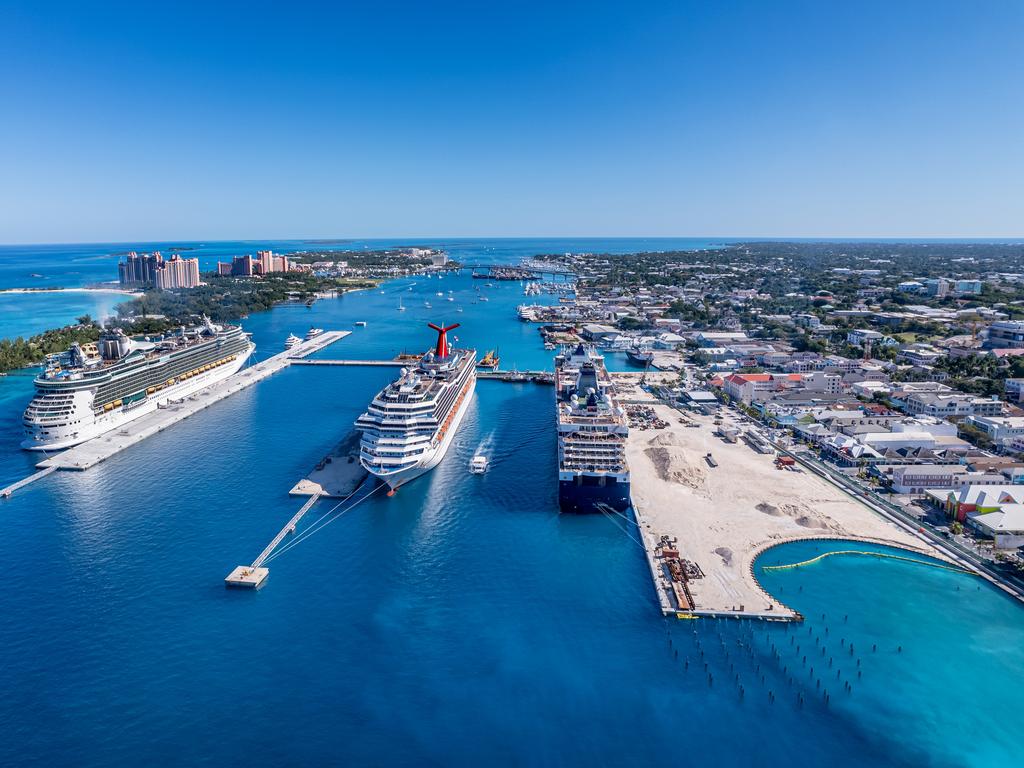
The port of Nassau, capital of the Bahamas. Picture: iStock
The embassy also says that Americans should be especially vigilant at night-time and “keep a low profile” always.
The US State Department, which on Friday put the Bahamas on an “exercise increased caution” warning, noted that the danger persists in tourist and non-tourist areas.
Prime Minister Philip Brave Davis addressed the frightening violence last week, saying that there will be roadblocks and covert police action initiated to contain the crisis, according to the Nassau Guardian.
“This may make you late for your appointments, or delay plans you have, but this is a small price to pay for the collective benefit of having our streets made safer, and our lives less blighted by murder and other violent crimes,” he said.
There is also concern over unregulated recreational watercraft activities, which according to the state department may not be properly regulated or maintained for safety, and improper judgment has been used in the past by boaters.
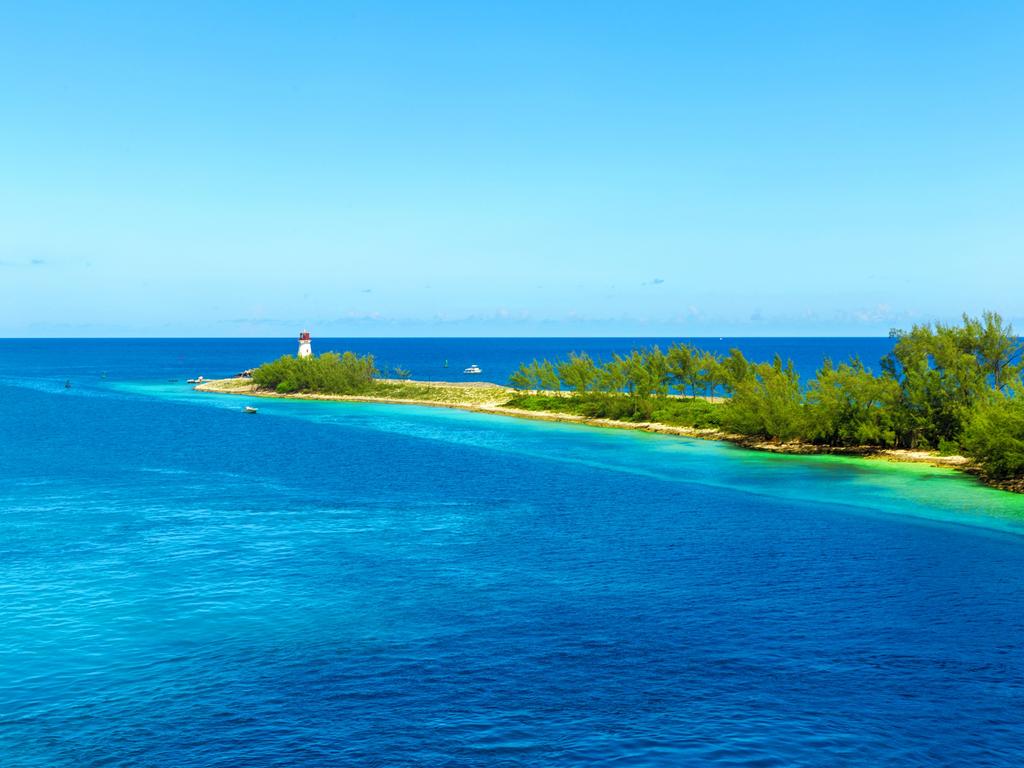
Travellers have been warned of the high threat of violent crime. Picture: iStock
“Commercial watercraft operators have discretion to operate their vessels regardless of weather forecasts; injuries and fatalities have occurred.”
Earlier this week, the State Department also put nearby Jamaica on a level three of four “reconsider travel” advisory — the only higher threat being a “do not travel” warning.
“Violent crimes, such as home invasions, armed robberies, sexual assaults, and homicides, are common,” the department warns.
“Sexual assaults occur frequently, including at all-inclusive resorts.”
Australia’s Department of Foreign Affairs and Trade advises travellers to “exercise a high degree of caution in the Bahamas due to the threat of violent crime”.
“Travellers may be victims of violent crime, including in resorts,” reads DFAT’s most recent advice as of October 26.
“Be aware of your surroundings and keep valuables out of sight. Armed robberies, burglaries, bag snatchings, theft, fraud and sexual assaults are the most common crimes committed against travellers in Freeport and Nassau. Be aware of your surroundings, even in areas usually considered safe.”
It adds, “Sexual assault frequently occurs in the Bahamas. Don’t visit deserted beaches or walk alone, especially after dark. Food and drink spiking is a risk in tourist resorts. Never leave your food or drink unattended.
‘Do not travel’: Destinations Aussies are warned to avoid
There are currently 22 places that the Smartraveller website is urging Australians not to visit.
Lebanon
Smartraveller advises Australians not to travel to Lebanon due to the volatile security situation and the risk of the security situation deteriorating further.
Daily military action is occurring in southern Lebanon, including rocket and missile fire, as well as airstrikes. The situation could escalate quickly or spread to other areas in Lebanon, including Beirut.
If the security situation in Lebanon deteriorates, it’s likely that Beirut airport would close, and you may be unable to leave for an extended period.
Yemen
While you may be tempted to check out the famous dragon blood trees of Socotra, Yemen (pictured above), you’ll need to put that plan on ice for the time being. Not only have most international airlines ceased flights to Yemen, it is also on Smartraveller’s “do not travel” list due to the dangerous security situation and the threat of armed conflict, kidnapping and terrorism.
The website says: “Do not travel to Yemen due to the ongoing civil and international conflict. Fighting continues in most parts of the country, and while there are currently no military airstrikes, they may recommence without warning. There’s extreme political instability, risk of injury from landmines and unexploded ordinance, and a very high threat of kidnapping and terrorism. You may also be unable to get enough food, water or medical care”.
Weapons are readily available. Yemenis are often heavily armed. Armed carjacking is common.
Always drive with your doors locked and windows up. Petty crime is increasing against foreigners, especially if cash or valuables are visible.
There’s a high threat of piracy in Yemeni waters and the Gulf of Aden
Somalia
Terrorist attacks are an ongoing problem in this part of Africa.
Possible targets include the international airport, government officials and buildings, hotels, restaurants, foreigners and foreign interests, and UN workers. The most recent incidents have caused hundreds of fatalities and injuries.
The kidnapping risk is also very high in all parts of Somalia. Several active terrorist groups have the intent and capability to kidnap foreigners. Make sure your movements aren’t predictable.
Pirate attacks in and around Somalia’s waters, the Indian Ocean and the Gulf of Aden are a serious threat. This includes far off the Somali coast.
Residential areas and markets in south-central Somalia have experienced shootings and grenade attacks.
On top of that, Somalia has extreme weather, including severe droughts, heatwaves and floods. It’s also prone to tsunamis.
Iran
Foreigners in Iran are at a high risk of arbitrary detention or arrest (in recent times Australians have been detained without due process of law).
Iran also does not recognise dual nationality which means the Australian government’s ability to provide consular support to dual Australian-Iranian nationals is extremely limited.
Localised protests continue in parts of Iran. Security forces’ response has been severe, and many protesters and bystanders have been injured, killed or detained. There’s been an increase in the number of foreign nationals arrested during the protests.
Kidnap for ransom is a risk for travellers, and regional tensions are high and could escalate rapidly. There is ongoing hostility between Iran and Israel, and military tensions between Iran, the US and other countries in the Middle East. The Iran-Iraq, Iran-Afghanistan, and Iran-Pakistan border areas are extremely dangerous.
Women in particular can face unwanted attention and harassment.
Ukraine
Smartraveller continues to advise that Australians do not travel to Ukraine due to the Russian invasion of Ukraine.
Heavy fighting continues in parts of eastern and southern Ukraine. Missile strikes and attacks are ongoing in some locations across the country, including in major cities. There have been many casualties. Foreigners have been killed and may be targeted. Large amounts of unexploded ordnance and landmines are present in conflict and post-conflict areas.
Chad
Chad is considered extremely dangerous due to the risk of terrorism, kidnapping, civil unrest and violent crime.
Armed robbery and carjacking has increased, including in daylight. Local security forces, or people posing as them, may also try to extort money from foreigners.
Russia
Smartraveller warns Australians against travel to Russia due to the security situation and the impacts of the military conflict with Ukraine.
Russian authorities have made strong, negative comments regarding Western countries. Local authorities may adopt a more negative attitude towards foreigners in Russia and enforce local laws in an arbitrary manner.
Security incidents, such as drone attacks and explosions, often occur in southern and western areas of Russia, including regions bordering Ukraine, Moscow, and St Petersburg.
Burkina Faso
The security situation in this part of Africa continues to be volatile.
There’s an ongoing high threat of terrorism and kidnapping. Extremist militant groups continue to attack targets across Burkina Faso. Further attacks are highly likely, including in the capital Ouagadougou.
The Australian High Commission in Accra has very limited capacity to provide consular assistance in Burkina Faso.
Yellow fever, malaria and other insect-borne diseases are common and the rate of HIV/AIDS infection is high.
Syria
The security situation in Syria remains extremely volatile. There is an ongoing threat of armed conflict, air strikes, terrorism and kidnapping. Foreigners, especially aid workers and journalists, have been kidnapped and chemical weapons have been used in the conflict. Protests can turn violent and authorities have arrested people near demonstrations, regardless of their citizenship.
Crime in general has increased, including violent robberies, kidnappings and carjackings. For any Australians who are in Syria despite government advise, Smartraveller advises that you keep your vehicle doors locked and windows up, even when moving.
Iraq
In Iraq there is a risk of violence, armed conflict, kidnapping and terrorist attacks.
Organised criminal gangs, militia and tribal groups are significant threats and there is a high threat of kidnapping throughout the country. Large protests and political rallies occur regularly across Iraq and these can quickly turn violent.
Venezuela
The political and economic situation continues to be unstable in this section of South America. There are high levels of violent crime, and shortages of food, water, medicine and petrol.
Common violent crime includes murder, armed robbery, drive-by shootings, sexual assault and carjackings.
Shortages of basic goods can result in long line-ups at stores. This can lead to fighting, looting and theft.
Natural disasters are also a risk – severe weather, earthquakes, hurricanes, tropical storms, flooding and landslides can occur.
Afghanistan
There’s an ongoing and very high threat of terrorist attacks throughout Afghanistan.
Terrorists continue to target foreigners, NGOs and humanitarian operations. Foreign nationals, including Australians, also face a serious threat of kidnapping or detention. There are no Australian officials in Afghanistan, and the Australian government’s ability to provide consular and passport assistance to Australians in Afghanistan is severely limited.
Niger
The security situation in this part of Africa remains highly volatile. There’s ongoing political instability. Protests and civil unrest are expected to continue and can turn violent without warning.
There’s also a high risk of kidnapping for foreigners, and terrorism. Terrorists may target places visited by foreigners, including hotels, cafes and restaurants as well as government buildings, security facilities, international organisations, diplomatic buildings and police stations.
Myanmar
Since the Myanmar military assumed control of the country, there has been a significant increase in the level of violence, with many deaths and injuries. Violence, including explosions and attacks, can occur anywhere and anytime. Attacks may be planned against locations that foreigners frequent, including public spaces and civilian infrastructure.
There’ve been widespread detentions, including of foreigners. Australians may be at risk of arbitrary detention.
Australians are also warned to be aware of offers of employment that appear ‘too good to be true’. Foreign nationals have been trafficked into Myanmar (either directly into Yangon or via a neighbouring country) and forced to work in fraudulent activity, with poor pay and living conditions, restrictions on movement, and severe mistreatment.
Sudan
A civil war is occurring in Sudan, with Khartoum and Darfur among the worst affected areas.
Thousands have been killed and millions displaced. Law and order and government services have broken down in many parts of Sudan. Water, electricity, telecommunications, and banking services may not be available. Most hospitals are not functioning. Civilians have been killed in airstrikes and artillery bombardment. Residents have been evicted from homes by armed groups, and looting is common.
Landmines and unexploded remnants of war are a risk.
There’s a threat of terrorism. Terrorist attacks could occur at any time. Kidnapping is a serious risk in Sudan, including in Khartoum. Kidnappers often target foreigners.
Central African Republic
There are ongoing military operations throughout the CAR and outbreaks of intercommunal violence and armed conflict can happen without warning. Tensions are high. Armed groups operate across the country. They’ve killed foreigners, including aid workers and peacekeepers. The Lord’s Resistance Army (LRA) regularly attacks civilians in the southeast of the CAR, especially Haut-Mbomou province.
Kidnapping and violent crime occur. Kidnappers can target foreigners and bandit groups are common.
Yellow fever is widespread and medical facilities in the CAR are limited. Many medications are unavailable. If you’re seriously ill or injured, you may need to be evacuated.
Belarus
The security environment in Belarus is volatile and could deteriorate at short notice. The volatile security environment is caused by the Russian military presence along Belarus’ border with Ukraine and military conflict. Russian forces are conducting military operations from Belarus, and this has heightened tensions in the region.
Belarus has laws incurring jail sentences for ‘terrorism propaganda’ and ‘discrediting’ the Belarusian armed forces and military organisations. Penalties may be severe, including the death penalty for high treason.
Large protests occur in Minsk and other cities in Belarus. Harassment of foreigners is possible. You may not be able to trust the police and other local officials. People have reported harassment, mistreatment and extortion by officials.
There’s also a radiation exclusion zone around nearby Chernobyl. Authorities may restrict travel in this region. Food may have high levels of radiation so it is advised to avoid eating local food.
South Sudan
The political and security situation in South Sudan is volatile and can worsen without warning. Fighting and instability continue across the country. The Australian government’s ability to provide consular services in South Sudan is extremely limited.
Kidnapping, murder, shootings, home invasions, armed robbery, carjacking and sexual assault are common throughout South Sudan, including in Juba. Petty crime, such as theft and fraudulent currency exchange, is common.
Libya
Violent fighting is widespread and ongoing in Libya. The security situation is very unstable. There’s a high threat of terrorist attack, kidnapping and crime.
On 10 September 2023, Storm Daniel struck eastern Libya. Severe flooding in eastern Libya has resulted in significant loss of life and extensive damage to critical infrastructure, further limiting access to essential services (including hospitals).
Waterborne, foodborne, parasitic and other infectious diseases are common. They include typhoid, hepatitis, tuberculosis, plague and measles.
Mali
There’s an ongoing and very high threat of terrorism throughout Mali. Terrorists have primarily targeted security forces facilities, resulting in casualties, including civilians. Attacks can occur in places visited by foreigners, including airports, public transport and transportation hubs, tourist attractions, restaurants, bars, coffee shops, shopping centres, markets and hotels.
Armed robbery and carjackings also occur, particularly in the north. Several groups target foreigners. Ransoms paid to kidnappers fund terrorism.
Avoid speaking out against the government. Local authorities could see this as provocative or anti participation. Severe penalties, including the death penalty, may occur.
Haiti
Smartraveller advises Australians not to travel to Haiti due to the dangerous security situation, threat of violent crime, kidnapping and severe shortages of basic necessities including fuel, water and food.
Kidnappings are common in Haiti. Since September 2020, hundreds of foreign nationals have been abducted. Victims have included missionaries, aid workers and children. Most of the victims have been released in exchange for ransom. In some cases, victims have disappeared or been killed.
Cholera is also an ongoing risk in parts of Haiti.
North Korea
Australians are warned against attempting entry to North Korea “due to the very different laws affecting visitors and the uncertain security situation”.
North Korea and South Korea are technically still at war, and tensions have increased in recent times. North Korea frequently conducts missile tests or other provocations, raising regional tensions.
The Smartraveller site also says: “the North Korean Government restricts information, especially about domestic politics and international relations. You can usually access international satellite TV channels at tourist hotels. However, if the government shuts these down in a crisis, you may not know what’s happening”.
British couple died on holiday after adjoining room fumigated for bed bugs
The Steigenberger Aqua Magic hotel in Egypt’s Red Sea resort of Hurghada, where the couple fell ill.
A British couple died from carbon monoxide poisoning while on holiday at a luxury resort in Egypt after the room next door was sprayed with pesticide to kill bed bugs, a coroner has found.
John and Susan Cooper were staying at the Steigenberger Aqua Magic Hotel in the Red Sea resort of Hurghada in August 2018, when the room next to theirs was fumigated with a pesticide, ‘Lambda’, for a bug infestation, the UK’s PA Media reported. In some countries, Lambda is diluted with the substance dichloromethane, which causes the body to metabolize or ingest carbon monoxide.
The fumigated room, which was sealed with masking tape around the door, was connected to theirs with an adjoining door, according to PA.
The married couple returned to their room for the night but were found seriously ill the next day by their daughter. John Cooper, 69, was declared dead in the room, while his wife Susan, 63, died hours later in hospital.
Kelly Ormerod called the past few years “the most traumatic and emotional time” following her parents’ deaths.
Dr. James Adelely, senior coroner for the English county of Lancashire, ruled that the deaths were caused by carbon monoxide poisoning as a result of inhaling the vapor from spraying the pesticide which contained dichloromethane, PA reported.
“To this day, our family struggle to comprehend what happened,” the couple’s daughter Kelly Ormerod, who was on holiday with her parents at the time, said in a statement following the inquest.
“It should have never been allowed to happen”.
She said that “nothing would make up for the pain and loss we felt since that day,” adding: “The last few years have been the most traumatic and emotional time for all of us involved.”
Thousands of Russians scramble to leave Thailand as sanctions hit
More than 5,000 Russian tourists have found themselves stranded in Thailand, as international sanctions following the war in Ukraine hit worried holidaymakers.
Thousands of Russian tourists in Thailand are struggling to find a route home, officials said Sunday, as international sanctions imposed over the war in Ukraine hit holidaymakers.
Russia’s invasion in February provoked a host of international measures targeting businesses and banks, with some Russian carriers cancelling flights and global payment firms suspending services.
Russians tourists have been among the largest group of visitors to return to Thailand’s beachside resorts since pandemic restrictions eased, but many now find themselves without a return ticket.
Chattan Kunjara Na Ayudhya, the deputy governor of the Tourism Authority of Thailand (TAT), said 3,100 Russians were stuck in Phuket, while just over 2,000 were in Samui, and smaller numbers were in Krabi, Phangnga and Bangkok.
The agency was working on helping those who wanted to return home, he said, including “discussion on return flights which could be regular or special flights”.
Russian tourist and mother-of-three Evgenia Gozorskaia said her family discovered their return Aeroflot tickets had been cancelled.
“We are very nervous because the children are very small, we don’t have enough money to live here,” said the 41-year-old psychologist who arrived from Moscow with her husband and children — aged seven, four and two — on Feb 27.
“We want to go tomorrow to the airport, but I don’t know what the situation will be,” she said from Phuket, adding that they were supposed to fly home March 28.
She said while some people had their tickets replaced others — including her family — had not been so lucky.
“They say that they cannot do it and put the phone off,” she said.
While Thailand has not banned Russian flights, international airspace restrictions have seen some firms — such as Russia’s flagship Aeroflot — cancelling services, leaving tourists to seek alternative routes, such as through the Middle East with different carriers.
Many tourists have also been hit by Visa and Mastercard suspending operations.
“We have seen instances of difficulty in card payments by Russians in Phuket due to how Mastercard and Visa have suspended services in Russia,” said Bhummikitti Ruktaengam, president of the Phuket Tourist Association.
He said officials were considering adopting the Mir system — a Russian electronic fund transfer structure — as well as digital currencies.
Local communities across Thailand were also stepping in.
“We will pay for water, electric, everything for them,” said Archimandrite Oleg, representative of the Orthodox Church in Thailand, who said they were helping at least one family with four children stranded in Koh Samui.
Pandemic travel curbs have hammered the kingdom’s tourism-dominated economy, but 2022 saw a surge of visitors as restrictions eased.
Around 23,000 Russians travelled to Thailand in January this year, according to the TAT.
Tourists from Russia previously accounted for the seventh-largest share of visitors to the kingdom, with around 1.5 million travelling to Thailand in 2019.
While Bangkok has backed a United Nations resolution calling for the withdrawal of Russian troops from Ukraine, it has stopped short of imposing sanctions.
Coronavirus: Gas analysis conference at Grand Hyatt Singapore linked to infections
A 27-year-old Singaporean man who was at the business event at the Grand Hyatt Singapore is among those confirmed to have contracted the coronavirus.ST
The conference, held over three days from Jan 20, was organised by British firm Servomex, Chinese evening daily Lianhe Wanbao reported.
Singapore’s Ministry of Health had previously said that 109 company employees – 94 from overseas and 15 local – attended the conference.
A 27-year-old Singaporean man who was at the meeting is among those confirmed to have contracted the coronavirus, which originated from the central Chinese city of Wuhan. One foreign employee at the meeting was from Wuhan.
The company did not reply to queries from The Straits Times.
Two South Koreans, aged 36 and 38, and a 41-year-old Malaysian who were at the meeting also tested positive after returning home, sparking an investigation by the World Health Organisation.
On Friday (Feb 7), a middle-aged British man who attended the meeting was also confirmed to have the virus. He is the first British national to contract the virus.
He was taken to St Thomas’s Hospital in London and is currently being treated at a specialist infectious diseases unit.
A member of a lion dance troupe that had performed at the Servomex Sales Conference at the Grand Hyatt on Jan 20 said eight other troupe members performed onstage during the event.
The group learnt through news reports that it was the same business event where several attendees were later found to have contracted the coronavirus.
“We were a bit shocked. But the performance was only five to 10 minutes long and they left straight after,” said the troupe member, who did not take part in the performance.
He added that his colleagues neither had direct contact with the conference members nor ate any food there. None of those in the lion dance troupe has shown any symptoms of the virus or been asked to take a leave of absence, he said, adding that members are taking precautions, such as daily temperature monitoring.
Grand Hyatt Singapore’s general manager, Mr Willi Martin, said on Thursday that details about the three infections in the hotel were still sketchy.
“The Singapore Ministry of Health is still investigating the cases with the relevant authorities and has not advised details on how, where or when these individuals were infected with the virus,” he said.
The hotel has since engaged a government-appointed external agency to conduct a thorough sanitisation of potentially impacted rooms, said Mr Martin. Deep-cleaning measures have also been introduced in public areas, restaurants, meeting spaces, guestrooms and the hotel’s spa and fitness centre.
The triatomine bug mainly sucks blood from victims’ faces and often defecates in the wound, especially around the eyes and lips where the skin is thinner
‘Disease like AIDS’ can follow bug bites
By Zheng Caixiong in Guangzhou
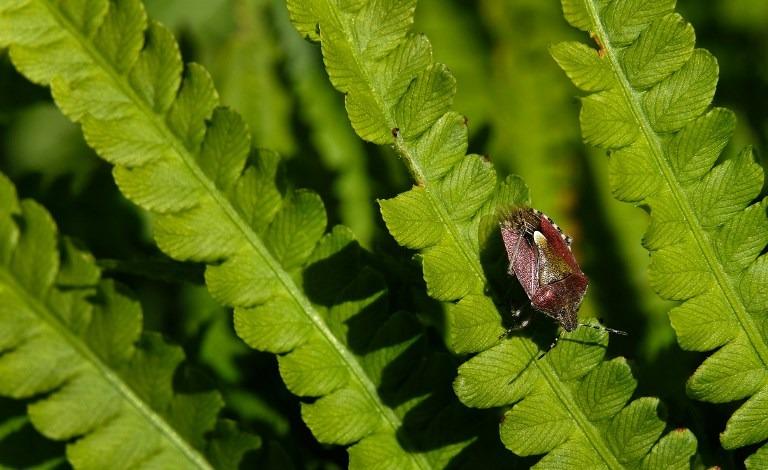
A forest bug clambers on a fern in a garden outside Moscow on June 27, 2017. (YURI KADOBNOV / AFP)
The Guangzhou Center for Disease Control and Prevention has posted a reward for the capture of triatomine bugs as it works to prevent an outbreak of Chagas’ disease by identifying cases early.
Chagas’ disease, which has an incubation period of between 20 and 30 years, is “a new disease like AIDS”, the center said.
Chagas’ disease, which has an incubation period of between 20 and 30 years, is “a new disease like AIDS”
“The campaign is expected to offer early diagnosis and better treatment to patients in the coming months,” the center said in a statement published on its WeChat account on Thursday.
Those who provide the center with triatomine bugs – dead or alive – will receive a reward of 8 yuan (US$1.20) per specimen, it said.
Chagas’ disease most often causes flu-like symptoms like fever, facial swelling, body aches and vomiting. However, 20-30 percent of those infected with the disease can contract chronic conditions, including inflammation of the heart, enlargement of the esophagus and colon, blood clotting and even sudden death. It can lie dormant in a human body for decades.
An official from the center said no Chagas’ disease cases have been reported in Guangzhou so far, but the city is a place for investigating the Chagas’ disease in Guangdong province.
The triatomine bug mainly sucks blood from victims’ faces and often defecates in the wound, especially around the eyes and lips where the skin is thinner, the center said in its statement. An adult bug is usually about 2.5 centimeters long.
The bug is a carrier of the disease, which claims thousands of lives each year in Central and South America. With increasing globalization, cases of the disease have been reported in North America, Europe, Oceania and Japan in recent years, the statement said.
“Chagas’ disease might break out in the city if many bugs are present, so it is important to find the bugs and identify victims early to help control infection rates,” it said.
“Currently there is no vaccine to prevent Chagas’ disease, and there are no specific medicines effective to cure the disease when it reaches a late stage,” the statement said.
Triatomine bugs mainly live in cracks in walls and stones, but have also been found in forests, fields, animal pens and chicken coops. The bugs usually emerge at night to feed.
People who capture the bugs are urged to put them in sealed bottles before taking them to a CDC office in the city.
Asbestos exposure, a hidden risk for budget tourists in Asia
We are just beginning to realise that exposure to asbestos is a hidden travel risk in Asia, particularly for those on a low budget who stay in cheap deteriorating buildings or next to demolition sites.
It’s a small but real risk.
Asbestos is a popular building material in many parts of Asia and given that it only takes a few fibres to cause a fatal cancer, tourists may unknowingly be facing a health risk.
The longer and higher the level of exposure, the greater the dose. This explains why asbestos workers are at higher risk of developing disease. But others get it too and some are totally disbelieving when they get the diagnosis because they can’t recall ever being exposed.
Although asbestos may be locked into insulation, floor tiles and coating, walls and roofing material, as buildings decay fibres can be freed.
These fibres can be 1000 times thinner than a human hair and can be inhaled without detection.
Some travel blogs suggest opting for new hotels and avoiding construction or renovation sites where fibres may be in the air, the soil or on nearby surfaces.
Professor Ken Takahashi, director of the Asbestos Diseases Research Institute (ADRI) says the travel risks have not previously been considered by researchers.
“But in the case of travel, one can assume that the exposure level is low and the duration of exposure is short. Therefore, the risk would be small,” he says.
“A practical recommendation would thus be to avoid going near places where asbestos may be obviously present, the most typical of which is asbestos factories or mines.
“Of course, presence of asbestos is not always obvious, such as in the case of exposure to buildings containing asbestos or exposure to asbestos-containing products.
“It then becomes a matter of practicality whether one should avoid travel in view of the small risk.
He strongly believes Australia has a responsibility to raise awareness of asbestos in Asia, provide education on protection against it and hopefully, help to get rid of it completely “for the sake of workers and residents of the country itself, much more than for the sake of travellers”.
He says more than 60 per cent of the world consumption of asbestos occurs in parts of Asia where commercial convenience and the need for development and housing outweigh public health concerns.
Causing persistent damage
While Japan and South Korea have banned it, China, India, Thailand, Indonesia and Vietnam are among the top 10 consumers in the world.
The small country of Laos has the highest per capita consumption of asbestos on the planet.
For almost 50 years, it has been known that inhaled asbestos fibres can cause cancer of the lungs or can pass through the lungs into a cell layer that surrounds all internal organs.
This layer is called the called the mesothelium and where malignant mesothelioma forms.
While the asbestos itself is chemically harmless, its long-pointed fibres lodge in the body and cause a series of micro-injuries.
As the body is unable to clear these fibres, they remain stuck and cause persistent damage to the tissue.
About 30 years ago, scientists observed that a single dose of asbestos fibres damages the mesothelium tissue.
Asbestos can also cause asbestosis, a non-malignant disease that results in irreversible lung damage, difficulty breathing, a cough and, in severe cases, an enlarged heart.
Australia should ‘share knowledge’
Professor Takahashi says Australia is the only country in the world that has a dedicated federal agency to deal with the legacy of the asbestos industry.
In other countries, if it is managed at all, it is done so within health, labour or environmental ministries.
“Australia should be taking a lead in the global effort to ban asbestos in developing countries that continue to use it at a very high level because it is cheap, widely available and has many advantageous characteristics.”
He says Australia should share its knowledge and technology about substitutes for asbestos within the Asian neighbourhood.
“These countries are hesitant to make the transition because they prioritise economy over health and added to that is the fact that there are many pro-asbestos lobbies trying to maintain the global trade.
“And there is corruption among officials of ministries of developing countries, so they are not fully motivated to make the transition.
“I believe Australia should assist these counties in developing their own expertise to detect the disease and also develop systems so that workers and consumers are not exposed to asbestos while they are using it.
“Until these countries stop the manufacture and export of products containing asbestos, Australia will have to deal with illegal imports for a long time.”
Occupational exposure
Professor Takahashi says this as the epidemic of asbestos-related disease in Australia has begun peaking.
Although Australia implemented a complete asbestos ban in 2003, classic asbestos cancer – mesothelioma – can take up to 40 years to develop, which means new cases will continue to occur and people will be dying from it for many years to come.
In the 1950s and 1960s, Australia had the world’s highest per capita rate of asbestos consumption. Today it has among the highest rates of mesothelioma.
In 2016, about 700 people – the great majority male – were newly diagnosed with this fatal disease.
Apart from those involved in mining or manufacturing asbestos, many more people have been affected because vast numbers of houses built before 1990 had materials containing asbestos.
Tradesmen, such as plumbers and electricians, working in such residential properties had a high degree of occupational exposure.
Mesothelioma has been characterised by nihilism in the past but an international research effort is making some inroads into the disease.
Last month, Swiss researchers unmasked an underlying mechanism that helps explain why asbestos causes cancer.
Detecting disease earlier
They say that until now, this cancer was “a black box” and they are hopeful their discovery may lead to detecting the disease much earlier in its development.
This may then lead to a means of slowing it.
They say over time the immune system can’t cope with the changes induced by the presence of the fibres.
“The immune system goes out of balance and is no longer strong enough to combat tumour formation,” said lead researcher Dr Emanuela Felley-Bosco, of the Swiss National Science Foundation.
Published in the journal Oncogene, the study proposes that immunotherapy, a treatment that triggers the body’s own immune system to fight disease, may work in this cancer.
Using mice, the researchers showed that micro-injuries caused by asbestos triggered an immune reaction.
Tissue-repair pathways were activated that promote cell proliferation and favoured the growth of tumours
The team also found an accumulation of mutations in RNA (a kind of working copy of DNA), which they thought weakened the tissue-repair immune response.
As a result, tumour formation was no longer effectively combated and cancer developed.
Immune imbalance
An analysis of data from a human gene bank revealed that human mesothelioma tumours also produce large amounts of the enzyme that causes the mutations in the RNA.
It’s hoped this will be useful in recognising early signs of inflammation and in developing a specific immunotherapy against mesothelial cancer.
A clinical study of immunotherapy at the advanced stage of this disease is under way at hospitals in Switzerland, Spain and Britain.
Dr Yuen Cheng, a molecular biologist at ADRI, says the Swiss research has taken the science of mesothelioma a step forward.
While it was known an immune imbalance occurred, the importance and the potential triggers for it were not known.
The Swiss have shown immune imbalance plays a major role and have provided list of genes that were previously not considered.
While these genes were found in the animal model, they were also found in mesothelioma tumours in human gene banks.
The problem is that the banks have samples from fewer than 100 tumours and hundreds of thousands are needed to confirm the finding.
“They’ve clearly shown a link, something different to what other researchers have done, but we don’t know for certain until we have done a large sample,” Dr Cheng says.
The next step, which is not difficult, is to confirm this in humans. If proved correct, it could be useful in the clinical setting.
*Jill Margo is an adjunct associate professor at The University of NSW.