TravelRisk: Aircraft Instrument Failure

Screens Go Black: UPS Boeing 767 Lands In Denver Amid Dramatic Instrument Failure

UPS 767 Takeoff

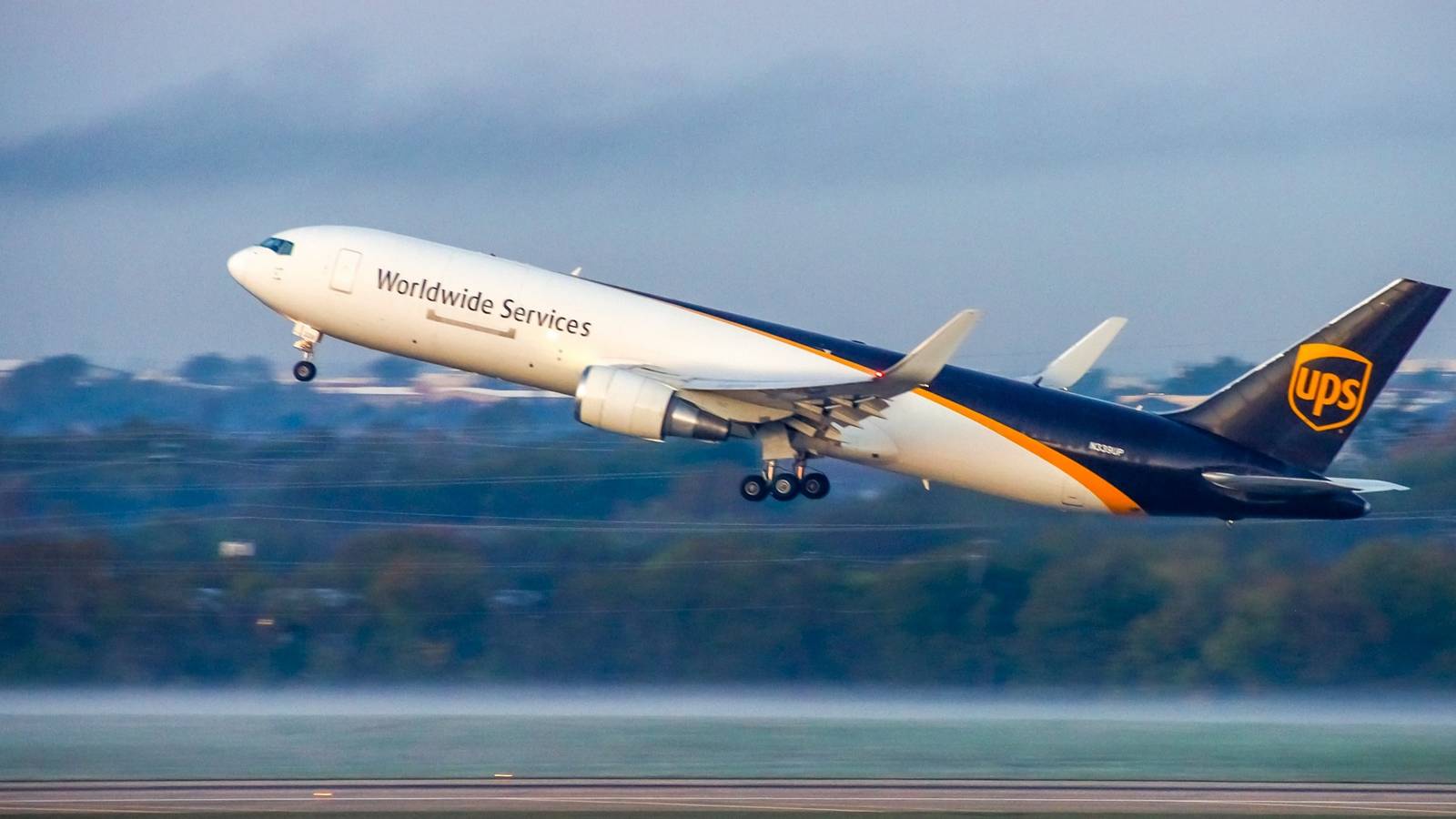
Over the weekend, a Boeing 767-300 Freighter operating a domestic cargo flight for UPS Airlines had a more dramatic arrival into Denver than its crew might have been bargaining for, following a total instrument failure on approach to the Colorado hub. This forced the pilots to defer to the jet’s standby instruments, with which they were indeed able to successfully carry out a safe landing at Denver Airport.

Even so, this incident was clearly considered to be a serious one, given that, two days later, the aircraft involved in the instrument failure, N312UP, has yet to take off from Denver once again. While N312UP is one of UPS Airlines’ older examples of the Boeing 767-300 Freighter, the type as a whole is actually one of the newer models in the carrier’s fleet, and it continues to take deliveries of them today.

A Dramatic Descent Into Denver

UPS OKC DEN Flight MapCredit: Flightradar24

As seen in the map above, the flight involved was a domestic service from Will Rogers International Airport (OKC) in Oklahoma City, Oklahoma to Denver International (DEN) in the US state of Colorado. According to reporting on the matter by The Aviation Herald, it was numbered as 5X5806, with data made available by Flightradar24 showing that it left late and arrived even later due to a longer routing.

UPS Airlines Flight 5X5806 On Saturday, August 15, 2026
Per Flightradar24 Departure From Oklahoma City Arrival In Denver
Planned 7:48 PM 8:11 PM
Actual 8:19 PM 8:59 PM

The Aviation Herald’s coverage of the incident highlights the fact that the jet was on approach to Denver when it experienced a total instrument failure, with all of its Large Display Screens failing. These included the Primary Flight Display, Navigation Display, and the Engine Indicating and Crew Alerting System. Thankfully, with the help of the jet’s standby instruments, the pilots executed a safe landing.

Still On The Ground

UPS 767 LandingCredit: Shutterstock

UPS Airlines flight 5X5806 touched down on the 12,000-foot (3,658 m) concrete-paved runway 35L at Denver International Airport at 8:59 PM on Saturday, August 15, 2026, one hour and 40 minutes after its initial departure from Oklahoma City. Almost two days later, the jet is yet to have operated another flight, with the instrument failure clearly being enough of a concern to remove it from service for now.

This represents a marked contrast compared to N312UP’s activity in the days leading up to its total instrument failure on approach to Denver International Airport. Indeed, UPS Airlines flight 5X5806 was its fourth flight of the day on Saturday, with the jet having already flown from Louisville (SDF) to Salt Lake City (SLC) early in the morning, followed by a service from Louisville to Oklahoma City later on.

Generally speaking, such a day at work is about standard, in terms of how N312UP’s operations have looked in the last week. For instance, August 11 was also a four-flight day, with the jet flying from Louisville to Richmond (RIC), Richmond to Philadelphia (PHL), Philadelphia to Ontario (ONT), and Ontario back to Louisville. August 12, 13, and 14 also each saw N312UP operate four internal flights.

The Aircraft In Question

UPS 767 InflightCredit: Flickr

As previously noted, the Boeing 767-300 Freighter operating UPS Airlines flight 5X5806 on Saturday, August 15, 2026, when it had a dramatic total instrument failure on approach to Denver, bore the registration N312UP. According to fleet data made available by ch-aviation, this widebody twinjet cargo aircraft is 29.83 years old, having first flown in October 1996. It was delivered to UPS the next month.

Since then, the jet has spent its entire working life with UPS under the same registration, with ch-aviation noting that its market value today sits just below the $26.5 million mark.

The Boeing 767-300F remains an important part of the UPS Airlines fleet today, with 95 units present at a relatively low average age of 14.9 years old (vs a fleet-wide mean of 26.3 years old). Another 12 units are set to be delivered to UPS.

Reported by SimpleFlying on 17 August 2026.

TravelRisk: cars burst into flames

They were told to park outside. Then their cars burst into flames.

Modern vehicles don’t need to be moving — or even turned on — to catch fire. That’s fueling lots of safety recalls and tough choices.

Late last year, when Sarah Lammersen learned her 2022 Jeep Wrangler plug-in hybrid was being recalled because the high-voltage battery could catch fire at any time — even when the vehicle was parked — she jokingly texted the dealership, “I hope the car doesn’t catch on fire while we wait to schedule an appointment.”

Days later, the Jeep burst into flames. No one was injured in the blaze, which occurred while Lammersen’s daughter drove the vehicle, but the Jeep was destroyed, according to a lawsuit over the incident.

That recall, covering more than 320,000 Jeep Wranglers and Grand Cherokees, notified owners about a fire risk so severe that they were “advised to park outside and away from structures and not to charge their vehicles until the remedy is completed.”

These “park outside” warnings have surged in recent years, growing from rare occurrences to include millions of vehicles.

An estimated 3.2 million vehicles nationwide currently have an outstanding “park outside” recall, according to vehicle history provider Carfax, which described the surging numbers as “concerning.”

The recalls also create new headaches for drivers, who suddenly wonder where it is safe to park their vehicles.

“Was it inconvenient? Sure. Ludicrous? Absolutely. It was a huge hassle,” said Steve Hawley of Lafayette, California, after he got a park-outside notice for his Jeep Grand Cherokee 4xe.

Sean Kane, president of Safety Research and Strategies, which specializes in auto safety analysis, said he sees more vehicles are getting hit with the warnings.

“For consumers, there seems to be no easy choices,” Kane said. “Where are you going to park it?”

Standard safety recalls, which still make up the vast majority of formal notices, are usually thought of as being dangers tied to driving — brakes failing or air bags exploding.

But the risks covered by park-outside recalls don’t stop when the car is off.

They can pop up anytime.

That makes them a distinctive danger, experts said.

“It can be a giant disaster when cars catch fire and no one is there to see it,” said Michael Brooks, executive director of the Center for Auto Safety.

Elliot Conn, an attorney in San Francisco, said he usually deals with one vehicle-fire lawsuit at a time. Now, he has at least seven.

In December, a man walked into his garage in Fargo, North Dakota, and found his parked Hyundai Santa Fe was on fire. He later learned about a park-outside recall for his vehicle.

No one was hurt in that incident, but the National Highway Traffic Safety Administration said it was aware of several injuries in recent years that appeared to be related to vehicle fires like this.

The rise in park-outside recalls is being driven by the growing number of electronics and batteries packed into modern vehicles, involving ordinary wiring, seat motors, starter relays, high-voltage batteries and more, according to experts.

They’re known as “key-off fires,” said Frank Borris, a former NHTSA investigator who now works as a safety consultant.

“The engine is off, but the circuits are still hot, and they stay hot all the time,” Borris said.

“There is a lot more electronics in vehicles today,” he added, “and that means more stuff can go wrong.”

Kane said vehicles today also run hotter and have more components packed tightly under the hood, providing more opportunities for fires to start.

“If something goes wrong, even if you park the car, the temperatures stay higher for longer than they used to,” he said.

This summer has been with flooded with park-outside recalls compared with previous years. Eight campaigns were announced in June and July alone, such as when NHTSA issued a notice, “Urgent Park Outside Warning Issued for 1 Million Jeeps,” blaming an electrical connection issue tied to power-steering pumps.

In the first seven months of 2026, there were 17 park-outside campaigns covering about 1.7 million vehicles, making this year among the busiest since NHTSA first created the park-outside designation more than a decade ago.

NHTSA created the park-outside designation in 2015 to grab people’s attention because the risk of an unexpected fire occurring in a building is “particularly severe,” the agency said in a statement.

It went further in 2022, adding a “park outside” warning box to its online recall lists to stress “the importance of the warning and increase completion rates,” the agency said.

But automakers can take months to offer up and distribute a recall solution, experts said.

That means some drivers could be living under park-outside warnings for a long time.

“What if you live in a condo with a parking garage? What are you going to do?” Kane said.

And then there are the vehicles with multiple problems.

Millions of Hyundai vehicles have been hit by park-outside recalls in recent years — and some of them were the same vehicles known to be especially easy to steal because they lacked anti-theft technology.

Kane said he heard from some Hyundai owners facing an impossible choice.

“I don’t want my house to burn down,” he recalled them telling him. “But I don’t want my car to get stolen. What am I supposed to do?”

Reported by The Washington Post on 17 August 2026.

TravelRisk: Flight Diversion – Emirates Passengers Stranded for over 10 hours in China

373 Passengers Stranded For 10+ Hours Without AC On Emirates A380 After Late-Night Diversion

An Emirates Airbus A380 carrying 373 passengers was diverted to Hangzhou Xiaoshan International Airport (HGH) after severe weather prevented its scheduled arrival at Shanghai Pudong International Airport (PVG), leaving those on board stranded inside the aircraft for more than 10 hours without functioning air conditioning.

The incident, involving Emirates Flight EK302 from Dubai, has drawn widespread attention after passengers described sweltering cabin conditions, lengthy delays in deplaning, and limited information while the aircraft remained parked overnight.

According to reports, the A380 landed safely in Hangzhou at approximately 9:00 PM local time on July 22 after thunderstorms disrupted operations at Shanghai Pudong International Airport. Although the diversion itself was not unusual, passengers remained on board until around 7:30 AM the following morning because border control and airport coordination delayed the deplaning process. Emirates has since apologized to affected customers, saying passenger welfare remained its priority throughout the event.

Weather Diversion Led To Overnight Delay

Flight tracking information shows EK302 diverted to Hangzhou after adverse weather made landing in Shanghai unsafe. Diversions are common during periods of intense thunderstorms, particularly at major international airports where runway capacity can quickly become constrained. After landing, however, the aircraft was unable to continue its journey or immediately disembark passengers.

Reports indicate Chinese border inspection procedures and airport operational requirements prevented the doors from being opened until immigration personnel arrived several hours later. Around 6:00 AM, passengers were informed they would need to remain on board until border officials completed the necessary arrangements, with deplaning beginning roughly three hours later. While extended ground delays following international diversions are uncommon, they can occur when airports are not prepared to process an unexpected international arrival outside normal operating procedures.

Passengers Describe Hot Cabin Conditions

Many passengers said the lengthy wait became increasingly uncomfortable because the aircraft’s air conditioning was reportedly not operating effectively while parked on the ground. Videos and photographs shared online showed travelers using handheld fans, fanning themselves with magazines, and gathering near open cabin areas in an effort to stay cool.

Several passengers told local media that cabin temperatures rose significantly during the overnight delay, with one traveler reportedly fainting before receiving assistance. Others criticized the limited communication during the wait, saying they received few updates about when they would be allowed to leave the aircraft. Although modern airliners can typically maintain cabin ventilation on the ground using auxiliary power units or airport ground equipment, prolonged delays, operational limitations, or equipment issues can affect cabin comfort depending on local circumstances.

The Operational Challenges Of Unplanned Diversions

Emirates A380 flying across clear skiesCredit: Shutterstock

Emirates apologized to customers affected by the disruption, acknowledging the extended delay and inconvenience experienced following the weather diversion. The airline reiterated that severe weather initially forced the flight away from its intended destination and that operational requirements at the diversion airport influenced how quickly passengers could be processed and continue their journeys.

The incident has also renewed discussion about lengthy onboard ground delays following international diversions. While airlines must comply with local customs, immigration, and airport procedures, extended periods without deplaning can create difficult conditions for passengers, particularly when cabin environmental systems are unable to maintain a comfortable temperature.

For Emirates, the diversion underscores how severe weather can trigger operational challenges that extend well beyond the flight itself. Although the Airbus A380 landed safely and the airline ultimately transported passengers onward, the more than 10-hour delay aboard the aircraft has become the focus of the incident and may prompt renewed scrutiny of contingency planning and passenger care during prolonged international diversions.

Reported on 28 July 2026 by Simpleflying.

TravelRisk: Window seats behind the engine

Ryanair Passenger Sucked Toward Broken Window After Midair Engine Failure

A Ryanair Boeing 737-800 flying from Thessaloniki Airport (SKG) in Greece to Memmingen Airport (FMM) in Germany had to return to its point of departure on Friday after debris from a dramatic engine failure caused damage to the aircraft’s window. The incident injured one of the plane’s passengers, with some reports suggesting that they were even partially sucked out of the broken window.

Despite the dramatic turn of inflight events, the flight’s pilots were able to safely land the aircraft back in Thessaloniki. Ryanair has since confirmed that the injured passenger received medical assistance upon arrival back in Greece, and the carrier also arranged a replacement aircraft in order to get the flight’s other guests back on their way with as little delay as possible.

A Dramatic Departure

Ryanair FR1879 MapCredit: Flightradar24

FR1879 is a regularly scheduled international commercial passenger flight that operates five times a week from Thessaloniki to Memmingen. According to tracking data from Flightradar24, Friday’s iteration was operated by a Malta Air Boeing 737-800 bearing registration 9H-QEU. It left Thessaloniki at 6:12 AM local time, 17 minutes after its scheduled departure of 5:55 AM.

However, as seen above, things took a dramatic turn when, as reported by Euronews, debris from an inflight engine failure hit and shattered a passenger window. This, The Mirror reports, injured the neck of a male passenger, whose head and shoulders were said to have been partially sucked out of the broken window. This prompted the flight to burn fuel and return to Thessaloniki. Ryanair confirmed the incident in a statement.

“A Ryanair flight from Thessaloniki to Memmingen returned to Thessaloniki shortly after takeoff when a passenger window dislodged inflight. The aircraft landed normally, and passengers returned to the terminal.”

A Replacement Aircraft Took Passengers To Memmingen With A Four-Hour Delay

A deeper dive into the data for this flight shows that it had reached an altitude of around 16,000 feet before it began to descend, at around 6:23 AM local time. It landed around 45 minutes later, at 7:08 AM, having burned off excess fuel to avoid an overweight landing. At this point, the injured passenger has been taken to the hospital, and the relevant authorities have now launched an investigation into the incident.

As the incident’s potential severity became clear, the flight’s pilots reportedly declared an emergency, prompting emergency services to meet the jet when it landed back in Thessaloniki. The plane ultimately landed safely, although oxygen masks did have to be deployed. The Aviation Herald also notes that passengers sitting in the row with the broken window had to be relocated.

As noted, Ryanair ultimately arranged a replacement aircraft to take the remaining passengers onward to Memmingen. A quick look at additional tracking data from Flightradar24 shows that this flight ultimately departed Thessaloniki at 10:03 AM and landed in Memmingen at 11:00 AM, just under four hours after the planned 7:10 AM arrival. The return leg was also delayed by around four hours.

Such Incidents Are Rare But Not Unheard Of

Southwest 737 Taxiing

While undoubtedly alarming, it is important to remember that such incidents are few and far between. Another notable example occurred in the US back in 2018, when debris from an engine failure burst a cabin window on Southwest Airlines flight 1380. This incident, which sadly resulted in the death of a female passenger, followed a similar engine failure on another Southwest flightin 2016

Of course, it isn’t just cabin windows that can be blown out inflight. Looking further back in time, a 1990 British Airways BAC 1-11 flight from Birmingham to Malaga made headlines worldwide after improperly installed bolts caused a cockpit window to blow out. The flight’s captain was sucked out of the cockpit and pinned to the nose for 20 minutes, but, incredibly, survived the ordeal.

Reported by Simpleflying on 10 July 2026.

Travel Risk Virus on Cruise – Passengers Stranded On Cruise Ship After Suspected Hantavirus Outbreak

Passengers are still onboard a cruise ship in the Atlantic Ocean, after three people died from what appears to be hantavirus—a rare type of zoonotic virus carried by rodents—as the World Health Organization works to evacuate two symptomatic crew members still on board.
CAPE VERDE-HEALTH-TOURISM
As of May 4, 2026, a suspected hantavirus outbreak on the expedition cruise ship MV Hondius in the Atlantic has resulted in three deaths and multiple illnesses.
One case has been confirmed, while others are suspected, prompting the ship (carrying 149 people) to anchor near Cape Verde pending medical evaluations for crew members experiencing respiratory symptoms.
Outbreak Details and Status

Location: The MV Hondius is currently anchored off Praia, Cape Verde, after traveling from Argentina towards the Canary Islands.

Impact: Three passengers have died, and others have shown symptoms of severe respiratory illness. One British passenger was evacuated to South Africa, where they tested positive for a hantavirus variant.

Cases: As of the latest reports, one case was laboratory-confirmed, with five other suspected cases (including two crew members).

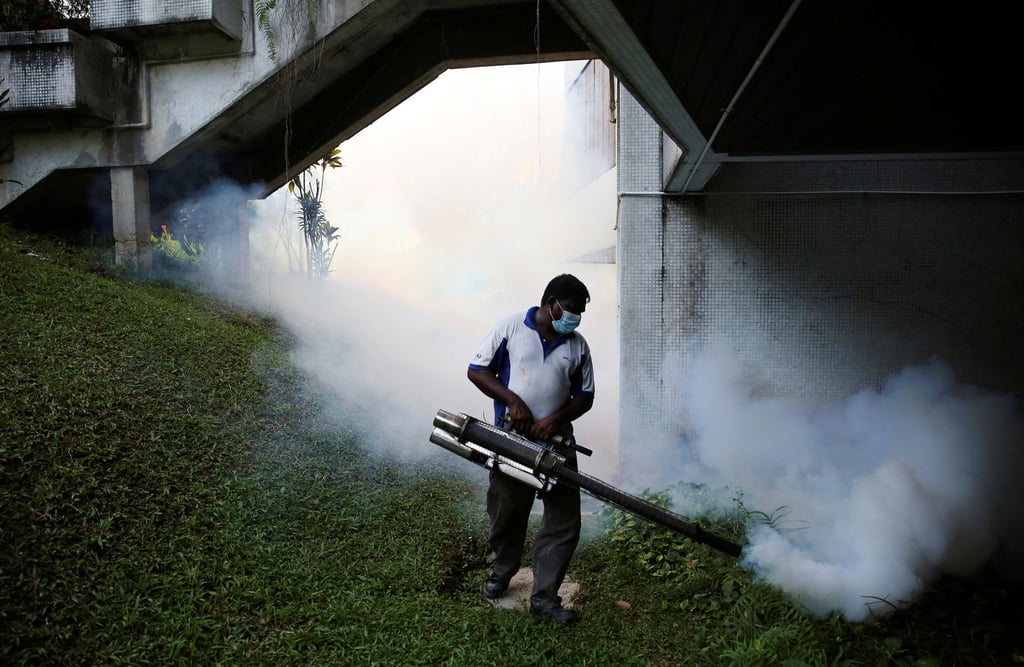
Response: Passengers were instructed to remain in cabins while the vessel underwent sanitization, according to reports.

Hantavirus Context

Transmission: Hantaviruses are typically transmitted to humans through contact with rodent droppings or urine, particularly when the material becomes airborne. While human-to-human transmission is rare, it has been mentioned as a potential factor in this scenario.

Symptoms: Initial symptoms are flu-like—fever, chills, body aches, and headaches—which can progress rapidly to serious respiratory failure.

Risk: The World Health Organization (WHO) stated that the risk to the general public remains low.

Severity: Hantavirus pulmonary syndrome is highly fatal, with studies indicating a roughly 40% death rate.

Reported by Forbes on 4 May 2026.

Turbulence hits Delta flight during landing at Sydney Airport

Several injured as turbulence hits Delta flight into Sydney

Photo by James D. Morgan/Getty Images A Delta Airlines Airbus A-350 aircraft taxis on Sydney Airport's runwayPhoto by James D. Morgan/Getty Images
Delta Airlines said the Airbus A350 experienced “brief turbulence” as it landed at Sydney Airport

Several people have been injured after a Delta Airlines flight from Los Angeles to Sydney was hit by turbulence on Friday morning.

Delta Flight 41 “encountered brief turbulence” as it landed at Sydney Airport, an airline spokesperson told the BBC. Four flight attendants were injured, and no passengers were hurt, the airline said.

The New South Wales Ambulance Service said it assessed five patients in total, and took three to hospital with minor injuries that included back pain and headaches. The patients’ ages ranged from their 30s to 70s.

It is the latest incident of planes being hit by turbulence, with experts saying climate change is a major factor.

There were 245 passengers and 15 crew members on the Airbus A350, the Delta spokesperson said, adding that the plane landed “safely and normally” at Sydney Airport at 06:48 local time on Friday (19:48 GMT on Thursday).

The NSW Ambulance Service said it received a call just three minutes before the plane landed, and emergency vehicles were waiting on the tarmac.

Last year, 25 people were injured when a Delta Airlines flight, travelling from Salt Lake City to Amsterdam, hit “significant” turbulence just two hours into the long-haul flight, and had to make an emergency landing.

In 2024, passengers and crew on a Singapore Airlines flight experienced a terrifying five seconds of severe turbulence. One passenger died and dozens were injured, as those without seatbelts rose out of their seats and fell back down.

Turbulence is not uncommon during flights, and while cases of strong or severe turbulence seem to be rising, they are still very rare.

Estimates show that there are around 5,000 incidents of severe-or-greater turbulence every year, out of a total of more than 35 million flights that now take off globally.

Severe turbulence is defined as when the up and down movements of a plane going through disturbed air exert more than 1.5g-force on your body – enough to lift you out of your seat if you weren’t wearing a seatbelt.

As climate change shifts atmospheric conditions, experts warn that air travel could become bumpier: temperature changes and shifting wind patterns in the upper atmosphere are expected to increase the frequency and intensity of severe turbulence.

Reported by BBC on 20 March 2026

Melbourne Airport 2 Near Misses – “luck” that we didn’t have an impact

Malaysia Airlines A330, and Bamboo Airways 787 in near misses at Melbourne airport in 2023. Both aircraft took off only a few metres above runway workers at Melbourne airport.

Incidents were caused by flight crews’ insufficient understanding of take-off conditions, safety investigator says.

Incidents were caused by flight crews’ insufficient understanding of take-off conditions, safety investigator says. Photo Credit: Australian Transport Safety Bureau.

A failure of flight crews to fully understand take-off conditions almost led to two major accidents at Melbourne Airport in 2023, a safety investigation has found.

A Malaysia Airlines A330 bound for Kuala Lumpur, with 247 people on board, and a Bamboo Airways 787 departing for Ho Chi Minh City, with 212 people on board, both overran a shortened runway during take-off.

Both aircraft lifted off only metres above where night work was being carried out on the runway.

The safety inspector said the separate incidents were “very serious”, and were caused by flight crews’ insufficient understanding of take-off conditions.

“It was by luck in this case that we didn’t have an impact,” the Australian Transport Safety Bureau (ATSB) said.

The runway had been shortened to accommodate resurfacing work and flight crew of both aircraft had been given the necessary take-off instructions, the safety investigator said.

Each aircraft reportedly took off past the limit of a shortened runway, resulting in “jet blast affecting … objects and people in the work area”, the ATSB noted.

The incidents took place within weeks of each other in September 2023.

ATSB said while the two airlines’ flight dispatchers had accounted for the reduced runway length in their calculations, they did not highlight the shortened runway to the flight crews for input into the plane’s flight management computers.

In both cases, flight crews used take-off calculations that expected a full runway length.

The Malaysia Airlines flight cleared the work crew by seven metres, while Vietnam’s Bamboo Airways flight passed over by 4.5 metres.

Reported on 12 November 2025 By Travel Weekly Asia

Kidnappings in Cambodia soar in recent months

Student’s alleged torture death by Cambodia scammers sparks turmoil in South Korea

South Korean president urges ‘all-out’ efforts to protect citizens after number of kidnappings in Cambodia soars in recent months.

South Korean president Lee Jae Myung has called for “all-out” diplomatic efforts to protect citizens in Cambodia after a university student was lured there by a scam ring and allegedly tortured to death.

At a cabinet meeting on Tuesday, Lee said “protecting the lives and safety of citizens is the government’s greatest responsibility” and called for all those caught up in the scams to be “swiftly repatriated”.

The number of kidnappings of South Koreans in Cambodia has soared in recent months, prompting national security adviser Wi Sung-lac to form an emergency task force for the swift repatriation of citizens affected by scams.

Victims of scams are typically lured with promises of high-paying jobs before being confined in compounds and forced to participate in online fraud operations, particularly voice phishing scams, according to multiple sources, including Yonhap News. Those who refuse face beatings with pipes and electric shock devices, according to rescued victims who spoke to lawmaker Park Chan-dae, Yonhap News reported.

The body of the alleged victim, identified by Cambodian authorities as 22-year-old Park Min-ho, remains in Cambodia more than two months after his death. In a media interview, family members described the situation as “killing him twice”, with his remains still in cold storage. South Korea is seeking to conduct a joint autopsy.

Three Chinese nationals have been charged with murder and online fraud in connection with Park’s death, according to Cambodian prosecutors. Two additional suspects remain at large.

Park’s family last saw him in mid-July, when he left home, reportedly telling his family he was attending an exhibition during a summer holiday. A week later, his family received a ransom call demanding 50m won (£26,000), with the caller claiming Park had “caused trouble”, according to Yonhap News.

Contact ceased after several days, and two weeks later, his body was found near Bokor Mountain in Kampot province, an area known for crime compounds and human trafficking.

According to Cambodia’s interior ministry, the student died from “severe torture” and showed bruising in many places on the body, based on authorities’ investigation and preliminary autopsy.

A witness who was confined with Park and later rescued told Democratic party lawmaker Park Chan-dae’s office that the student had been so severely beaten he could not walk or breathe. He reportedly died in a vehicle while being taken to hospital.

Amid rising diplomatic tensions between the two countries, South Korea is seeking to send police to Cambodia to establish a “Korean desk” so officers can work directly with Cambodian police rather than operate via embassy officials. Both sides are scheduled to meet next week.

Cambodia’s interior ministry has disputed some media reports, stating it did not receive complaints from Park’s family or the Korean embassy before police discovered his body in a vehicle during a patrol. The ministry said it was cooperating with Korean officials on the investigation.

Lee Un-ju, a senior Democratic party lawmaker, wrote on Facebook that if Cambodia responded inadequately, strong action “should be considered” to protect Korean nationals.

The case has exposed an explosion of kidnappings involving Koreans in Cambodia. Reported cases jumped from 17 in 2023 to 220 last year, with 330 recorded by August this year, according to data the foreign ministry provided to parliament.

South Korea has raised travel warnings for Phnom Penh and areas including Sihanoukville and Bokor Mountain to special advisories, urging citizens to cancel or postpone non-essential travel.

Amnesty International recently identified 53 large-scale scam compounds in Cambodia and accused the government of enabling the operations through inaction.

Reported by The Guardian on 14 October 2025.

Why plane turbulence is becoming more frequent – and more severe

Andrew Davies was on his way to New Zealand to work on a Doctor Who exhibition, for which he was project manager. The first leg of his flight from London to Singapore was fairly smooth. Then suddenly the plane hit severe turbulence.

“Being on a rollercoaster is the only way I can describe it,” he recalls. “After being pushed into my seat really hard, we suddenly dropped. My iPad hit me in the head, coffee went all over me. There was devastation in the cabin with people and debris everywhere.

“People were crying and [there was] just disbelief about what had happened.”

Mr Davies was, he says, “one of the lucky ones”.

Other passengers were left with gashes and broken bones. Geoff Kitchen, who was 73, died of a heart attack.

Death as a consequence of turbulence is extremely rare. There are no official figures but there are estimated to have been roughly four deaths since 1981. Injuries, however, tell a different story.

Severe turbulence on the Singapore Airlines flight caused the plane to drop 178ft (54m) in 4.6 seconds

In the US alone, there have been 207 severe injuries – where an individual has been admitted to hospital for more than 48 hours – since 2009, official figures from the National Transportation Safety Board show. (Of these, 166 were crew and may not have been seated.)

But as climate change shifts atmospheric conditions, experts warn that air travel could become bumpier: temperature changes and shifting wind patterns in the upper atmosphere are expected to increase the frequency and intensity of severe turbulence.

“We can expect a doubling or tripling in the amount of severe turbulence around the world in the next few decades,” says Professor Paul Williams, an atmospheric scientist at the University of Reading.

“For every 10 minutes of severe turbulence experienced now, that could increase to 20 or 30 minutes.”

So, if turbulence does get more intense, could it become more dangerous too – or are there clever ways that airlines can better “turbulence-proof” their planes?

The bumpy North Atlantic route

Severe turbulence is defined as when the up and down movements of a plane going through disturbed air exert more than 1.5g-force on your body – enough to lift you out of your seat if you weren’t wearing a seatbelt.

Estimates show that there are around 5,000 incidents of severe-or-greater turbulence every year, out of a total of more than 35 million flights that now take off globally.

Of the severe injuries caused to passengers flying throughout 2023 – almost 40% were caused by turbulence, according to the annual safety report by the International Civil Aviation Organization.

The route between the UK and the US, Canada and the Caribbean is among the areas known to have been affected. Over the past 40 years, since satellites began observing the atmosphere, there has been a 55% increase in severe turbulence over the North Atlantic.

But the frequency of turbulence is projected to increase in other areas too according to a recent study – among them, parts of East Asia, North Africa, North Pacific, North America and the Middle East.

The knock-on effect of climate change

There are three main causes of turbulence: convective (clouds or thunderstorms), orographic (air flow around mountainous areas) and clear-air (changes in wind direction or speed).

Each type could bring severe turbulence. Convective and orographic are often more avoidable – it is the clear-air turbulence that, as the name might imply, cannot be seen. Sometimes it seemingly comes out of nowhere.

Avoiding turbulence-producing storms can crowd airspace, as more planes are forced to change routes, according to experts

Climate change is a major factor in driving up both convective and clear-air turbulence.

While the relationship between climate change and thunderstorms is complex, a warmer atmosphere can hold more moisture – and that extra heat and moisture combine to make more intense thunderstorms.

Linking this back to turbulence — convective turbulence is created by the physical process of air rising and falling in the atmosphere, specifically within clouds. And you won’t find more violent up and downdrafts than in cumulonimbus, or thunderstorm clouds.

This was the cause of the severe turbulence on Andrew Davies’s journey back in 2024.

A report by Singapore’s Transport Safety Investigation Bureau found that the plane was “likely flying over an area of developing convective activity” over south Myanmar, leading to “19 seconds of extreme turbulence that included a drop of 178 feet in just under five seconds”.

A 2014 US study found that for every 1°C rise in global temperature, lightning strikes increase by 12%

One study from the US published in the Science journal in 2014 showed that for 1C increase in global temperature, lightning strikes increase by 12%.

Captain Nathan Davies, a commercial airline pilot, says: “I have noticed more large storm cells spreading 80 miles plus in diameter in the last few years, something you’d expect to be rare.”

But he adds: “The large cumulonimbus clouds are easy to spot visually unless embedded within other clouds, so we can go around them.”

Clear-air turbulence could also soon rise. It is caused by disturbed air in and around the jet stream, (a fast-moving wind at around six miles in the atmosphere, which is the same height as where planes cruise).

Wind speeds in the jet stream travelling from west to east across the Atlantic can vary from 160mph to 250mph.

There is colder air to the north and warmer air to the south: this temperature difference and change in winds is useful for airliners to use as a tailwind to save time and fuel. But it also creates the turbulent air.

“Climate change is warming the air to the south of the jet stream more than the air to the north so that temperature difference is being made stronger,” explains Prof Williams. “Which in turn is driving a stronger jet stream.”

‘It should worry us all’

The increase in severe turbulence – enough to lift you out of your seat – could potentially bring more incidents of injury, or possibly death in the most severe cases. And some passengers are concerned.

For Mr Davies, the prospect of more turbulence is worrying. “A lot. Not just for me, but my children too,” he explains.

“I’m pleased there hasn’t been an incident as severe as mine but I think it should worry us all”.

More than a fifth of UK adults say they are scared of flying, according to a recent YouGov survey, and worsening turbulence could make journeys even more of a nightmare for these people.

As Wendy Barker, a nervous flyer from Norfolk, told me: “More turbulence to me equals more chance of something going wrong and less chance of survival.”

Aircraft wings are, however, designed to fly through turbulent air. As Chris Keane, a former pilot and now ground-school instructor says, “you won’t believe how flexible a wing is. In a 747 passenger aircraft, under ‘destructive’ testing, the wings are bent upwards by some 25 degrees before they snap, which is really extreme and something that will never happen, even in the most severe turbulence.”

For airlines, however, there is a hidden concern: that is the economic costs of more turbulence.

The hidden cost of turbulence

AVTECH, a tech company that monitors climate and temperature changes – and works with the Met Office to help warn pilots of turbulence – suggests that the costs can range from £180,000 to £1.5 million per airline annually.

This includes the costs of having to check and maintain aircraft after severe turbulence, compensation costs if a flight has to be diverted or delayed, and costs associated with being in the wrong location.

Climate change is one factor in making turbulence worse, increasing both storm-related and clear-air turbulence

Eurocontrol, a civil-military organisation that helps European aviation understand climate change risks, says that diverting around turbulence-producing storms can have a wider impact – for example, if lots of aircraft are having to change flight paths, airspace can get more crowded in certain areas.

“[This] increases workload for pilots and air traffic controllers considerably,” says a Eurocontrol spokesperson.

Having to fly around storms also means extra fuel and time.

In 2019 for example, Eurocontrol says bad weather “forced airlines to fly one million extra kilometres, producing 19,000 extra tonnes of CO2.”

With extreme weather predicted to increase, they expect flights will need to divert around bad weather such as storms and turbulence even more by 2050.

“Further driving up the costs to airlines, passengers and [increasing] their carbon footprint.”

How airlines are turbulence-proofing

Forecasting turbulence has got better in recent years and while it is not perfect, Prof Williams suggests we can correctly forecast about 75% of clear-air turbulence.

“Twenty years ago it was more like 60% so thanks to better research that figure is going up and up over time,” he says.

Aircraft have weather radar that will pick up storms ahead. As Capt Davies explains, “Before a flight, most airlines will produce a flight plan that details areas of turbulence likely throughout the route, based on computer modelling.”

It is not 100% accurate, but “it gives a very good idea combined with other aircraft and Air Traffic Control reports once we are en-route”.

RUNGROJ YONGRIT/EPA - EFE/REX/Shutterstock Singapore Airlines plane park at tarmac for maintenance after emergency landingRUNGROJ YONGRIT/EPA – EFE/REX/Shutterstock
An Austrian start-up, Turbulence Solutions, says it has developed turbulence-cancelling tech for light aircraft

Southwest Airlines in the US recently decided to end cabin service earlier, at 18,000ft instead of the previous 10,000ft. By having the crew and passengers seated with belts on ready for landing at this altitude, Southwest Airlines suggests it will cut turbulence-related injuries by 20%.

Also last year, Korean Airlines decided to stop serving noodles to its economy passengers as it had reported a doubling of turbulence since 2019, which raised the risk of passengers getting burned.

From owls to AI: extreme measures

Some studies have taken turbulence-proofing even further, and looked at alternative ways to build wings.

Veterinarians and engineers have studied how a barn owl flies so smoothly in gusty winds, and discovered wings act like a suspension and stabilise the head and torso when flying through disturbed air.

The study published in the Royal Society proceedings in 2020 concluded that “a suitably tuned, hinged-wing design could also be useful in small-scale aircraft…helping reject gusts and turbulence”.

Separately, a start-up in Austria called Turbulence Solutions claims to have created turbulence cancelling technology for light aircraft, where a sensor detects turbulent air and sends a signal to a flap on the wing which counteracts that turbulence.

These can reduce moderate turbulence by 80% in light aircraft, according to the company’s CEO.

Turbulence forecasting has improved in recent years, helping pilots avoid bumpy areas

Then there are those arguing that AI could be a solution. Fourier Adaptive Learning and Control (FALCON) is a type of technology being researched at the California Institute of Technology that learns how turbulent air flows across a wing in real-time. It also anticipates the turbulence, giving commands to a flap on the wing which then adjusts to counteract it.

However Finlay Asher, an aerospace engineer and member of Safe Landing, a community of aviation workers calling for a more sustainable future in aviation, explained that these types of technology are some time away.

“[They’re] unlikely to appear on large commercial aircraft within the next couple of decades.”

But even if turbulence does become more frequent, and more severe, experts argue this isn’t cause for worry. “It’s generally nothing more than annoying,” says Captain Davies.

But it might mean more time sitting down, with the seat-belt fastened.

Andrew Davies has already learnt this the hard way: “I do get a lot more nervous and don’t look forward to flying like I used to,” he admits. “But I won’t let it define me.

“The moment I sit down, my seat belt goes on and if I do need to get up, I pick my moment – then I’m quickly back in my seat, buckled up again.”

BBC InDepth is the home on the website and app for the best analysis, with fresh perspectives that challenge assumptions and deep reporting on the biggest issues of the day. And we showcase thought-provoking content from across BBC Sounds and iPlayer too. You can send us your feedback on the InDepth section by clicking on the button below.

Reported by BBC on 30 July 2025

Boeing Dreamliner software can cut fuel without pilot input, and it has happened twice.

Boeing Dreamliner has a system capable of cutting fuel to the engines on its own

Aviation attorney and former US Department of Transportation Inspector General Mary Schiavo has cautioned against rushing to blame the pilots in the Air India crash. She pointed out that the Boeing Dreamliner has a system capable of cutting fuel to the engines on its own.

Pointing to past incidents involving Boeing 787s, she said known software-triggered engine issues — including systems that can cut fuel flow mid-air — must be thoroughly examined before drawing conclusions.

“In about 75% of the cases, the pilots are blamed — and in many cases, we’ve been able to disprove that,” Schiavo said in an interview with Barkha Dutt. “It is not only unfair but simplistic and harmful to blame the pilots… there are too many suspicious things to say, ‘Oh, it’s the pilots’.”

Schiavo pointed to prior incidents involving the same aircraft model where onboard systems, without pilot input, cut fuel to the engines mid-air. She cited a 2019 All Nippon Airways incident where a Boeing 787’s system mistakenly shut off fuel mid-air after misjudging that the aircraft had already landed. “That system — TCMA — has already been faulted in a prior incident. It can and will cut the thrust to both engines if it malfunctions,” she said.

“There have already been two interesting somewhat similar situations on the All Nippon Airways flight back in 2019,” she said. “As the plane was coming into land, the fuel control cut off occurred. The plane itself cut off the fuel to the engines. The plane came in like a very heavy glider, but because it was landing, not taking off, there was no crash.”

She also referred to a more recent case involving a United Airlines Dreamliner flight between Washington DC and Nigeria. “The plane itself put the plane into a nose dive. There was a thrust issue, there was an engine issue, and the plane experienced some deviations,” she said.

What happened in the All Nippon case?

Explaining the ANA case in detail, Schiavo said the Boeing 787 is equipped with several automated systems, including one mandated by the US Federal Aviation Administration (FAA) to help distinguish between flight and ground conditions. “This particular system wanted the plane to have the ability all by itself — pilots didn’t have to do this — to sense whether it’s in the air or on the ground,” she said. “And what happened in the ANA flight back in 2019 is the plane thought it was already on the ground and it was still in the air, and it cut the fuel.”

Such misjudgements can have serious consequences, she noted, particularly during takeoff, when aircraft have only seconds to achieve a stable rate of climb. “On takeoff, you don’t have that luxury,” she said.

What is TCMA? 

At the centre of her concern is the Dreamliner’s Thrust Control Malfunction Accommodation (TCMA) system, a software protocol mandated by the US Federal Aviation Administration (FAA), which can command the aircraft to cut engine power under certain conditions. “The TCMA is a system that the FAA mandated so that the plane itself can assess when it needs to cut back the power. And that is tied in with the flight controllers, which are on both of the engines,” she explained. “This system, which has already been faulted in a prior incident, can and will cut the thrust to the engines both if it malfunctions and says it’s time to cut the thrust. And that has happened before.”

‘Not enough evidence to blame the pilots’

Schiavo criticised the rush to pin the Air India crash on the pilots, pointing out that such conclusions often come too early and derail a full investigation. “Just having one pilot allegedly say to the other, ‘Why did you do cut off?’ and the other one say, ‘I didn’t,’ that’s not nearly enough,” she said.

“There are experts whose job it is literally to listen for tiny inflections in the pilot’s voice, to listen for every click in the cockpit, to listen for everything that happens. Until that is done, and until we know whether the aircraft itself could have cut those switches — as it did in All Nippon Airways — it is unfair and simplistic to blame the pilots.”

Schiavo also invoked past examples where pilots were wrongly blamed. “In about 75% of the cases the pilots are blamed and in many cases… we’ve been able to disprove that,” she said. “Everyone remembers MH370. There was not a shred of evidence that the pilots did that intentionally and yet they got blamed.”

She cautioned that such investigations can take years. “The flight data recorder will have literally millions of lines of code and reported information. It’s the most advanced flight data recorder out there. Each of those will have to be examined,” she said. “In the case of a takeoff… pilots simply do not have the time and the altitude. Altitude is time. The higher you are, the more time you have to react.”

Until all these angles are explored, Schiavo says, “it is not only unfair, but it’s simplistic and harmful to blame the pilots.”

Reported on 17 July 2025 by Business Today.