TravelRisk: Aircraft Instrument Failure

Screens Go Black: UPS Boeing 767 Lands In Denver Amid Dramatic Instrument Failure

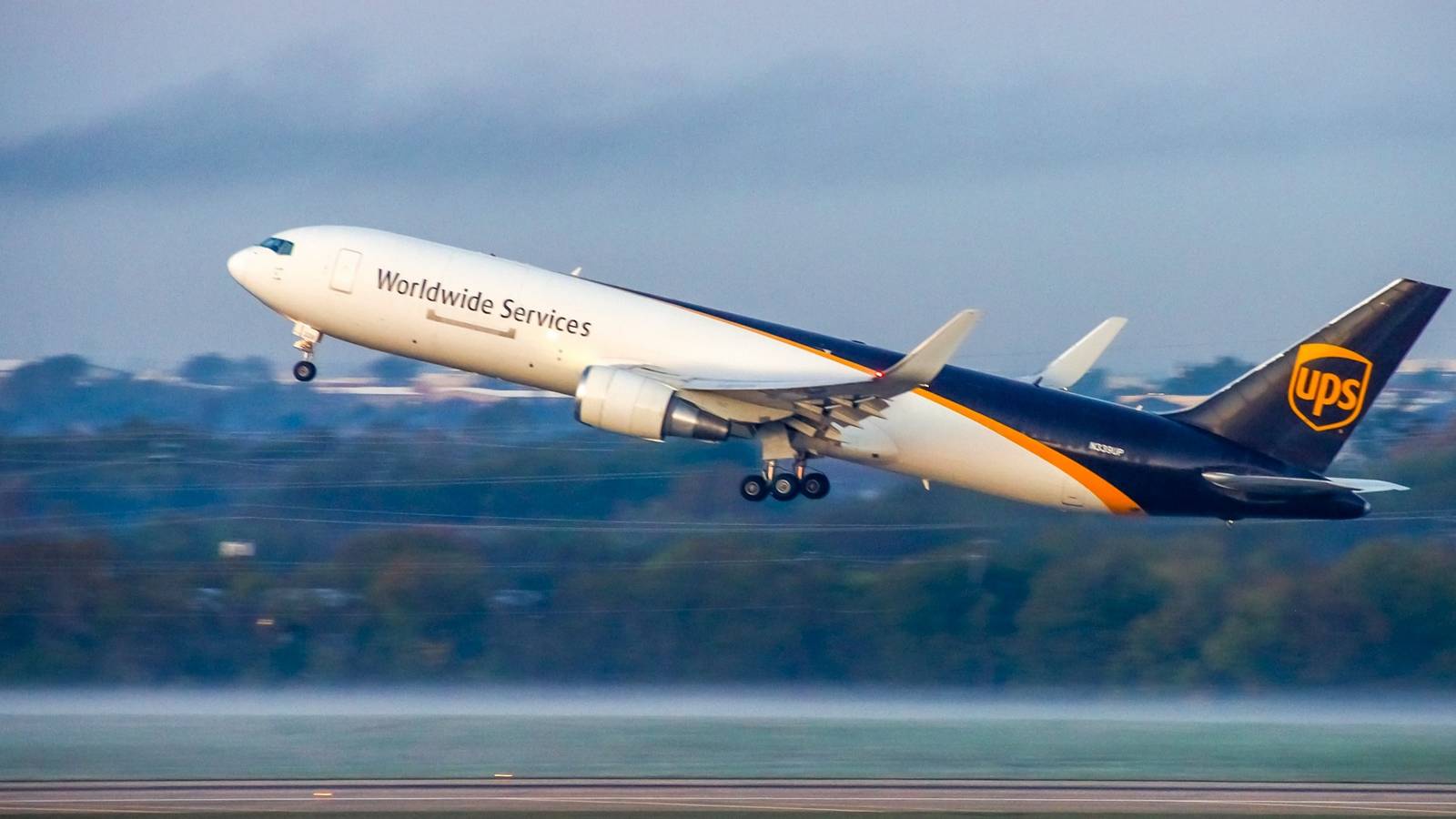
UPS 767 Takeoff

Over the weekend, a Boeing 767-300 Freighter operating a domestic cargo flight for UPS Airlines had a more dramatic arrival into Denver than its crew might have been bargaining for, following a total instrument failure on approach to the Colorado hub. This forced the pilots to defer to the jet’s standby instruments, with which they were indeed able to successfully carry out a safe landing at Denver Airport.

Even so, this incident was clearly considered to be a serious one, given that, two days later, the aircraft involved in the instrument failure, N312UP, has yet to take off from Denver once again. While N312UP is one of UPS Airlines’ older examples of the Boeing 767-300 Freighter, the type as a whole is actually one of the newer models in the carrier’s fleet, and it continues to take deliveries of them today.

A Dramatic Descent Into Denver

UPS OKC DEN Flight MapCredit: Flightradar24

As seen in the map above, the flight involved was a domestic service from Will Rogers International Airport (OKC) in Oklahoma City, Oklahoma to Denver International (DEN) in the US state of Colorado. According to reporting on the matter by The Aviation Herald, it was numbered as 5X5806, with data made available by Flightradar24 showing that it left late and arrived even later due to a longer routing.

UPS Airlines Flight 5X5806 On Saturday, August 15, 2026
Per Flightradar24 Departure From Oklahoma City Arrival In Denver
Planned 7:48 PM 8:11 PM
Actual 8:19 PM 8:59 PM

The Aviation Herald’s coverage of the incident highlights the fact that the jet was on approach to Denver when it experienced a total instrument failure, with all of its Large Display Screens failing. These included the Primary Flight Display, Navigation Display, and the Engine Indicating and Crew Alerting System. Thankfully, with the help of the jet’s standby instruments, the pilots executed a safe landing.

Still On The Ground

UPS 767 LandingCredit: Shutterstock

UPS Airlines flight 5X5806 touched down on the 12,000-foot (3,658 m) concrete-paved runway 35L at Denver International Airport at 8:59 PM on Saturday, August 15, 2026, one hour and 40 minutes after its initial departure from Oklahoma City. Almost two days later, the jet is yet to have operated another flight, with the instrument failure clearly being enough of a concern to remove it from service for now.

This represents a marked contrast compared to N312UP’s activity in the days leading up to its total instrument failure on approach to Denver International Airport. Indeed, UPS Airlines flight 5X5806 was its fourth flight of the day on Saturday, with the jet having already flown from Louisville (SDF) to Salt Lake City (SLC) early in the morning, followed by a service from Louisville to Oklahoma City later on.

Generally speaking, such a day at work is about standard, in terms of how N312UP’s operations have looked in the last week. For instance, August 11 was also a four-flight day, with the jet flying from Louisville to Richmond (RIC), Richmond to Philadelphia (PHL), Philadelphia to Ontario (ONT), and Ontario back to Louisville. August 12, 13, and 14 also each saw N312UP operate four internal flights.

The Aircraft In Question

UPS 767 InflightCredit: Flickr

As previously noted, the Boeing 767-300 Freighter operating UPS Airlines flight 5X5806 on Saturday, August 15, 2026, when it had a dramatic total instrument failure on approach to Denver, bore the registration N312UP. According to fleet data made available by ch-aviation, this widebody twinjet cargo aircraft is 29.83 years old, having first flown in October 1996. It was delivered to UPS the next month.

Since then, the jet has spent its entire working life with UPS under the same registration, with ch-aviation noting that its market value today sits just below the $26.5 million mark.

The Boeing 767-300F remains an important part of the UPS Airlines fleet today, with 95 units present at a relatively low average age of 14.9 years old (vs a fleet-wide mean of 26.3 years old). Another 12 units are set to be delivered to UPS.

Reported by SimpleFlying on 17 August 2026.

TravelRisk: cars burst into flames

They were told to park outside. Then their cars burst into flames.

Modern vehicles don’t need to be moving — or even turned on — to catch fire. That’s fueling lots of safety recalls and tough choices.

Late last year, when Sarah Lammersen learned her 2022 Jeep Wrangler plug-in hybrid was being recalled because the high-voltage battery could catch fire at any time — even when the vehicle was parked — she jokingly texted the dealership, “I hope the car doesn’t catch on fire while we wait to schedule an appointment.”

Days later, the Jeep burst into flames. No one was injured in the blaze, which occurred while Lammersen’s daughter drove the vehicle, but the Jeep was destroyed, according to a lawsuit over the incident.

That recall, covering more than 320,000 Jeep Wranglers and Grand Cherokees, notified owners about a fire risk so severe that they were “advised to park outside and away from structures and not to charge their vehicles until the remedy is completed.”

These “park outside” warnings have surged in recent years, growing from rare occurrences to include millions of vehicles.

An estimated 3.2 million vehicles nationwide currently have an outstanding “park outside” recall, according to vehicle history provider Carfax, which described the surging numbers as “concerning.”

The recalls also create new headaches for drivers, who suddenly wonder where it is safe to park their vehicles.

“Was it inconvenient? Sure. Ludicrous? Absolutely. It was a huge hassle,” said Steve Hawley of Lafayette, California, after he got a park-outside notice for his Jeep Grand Cherokee 4xe.

Sean Kane, president of Safety Research and Strategies, which specializes in auto safety analysis, said he sees more vehicles are getting hit with the warnings.

“For consumers, there seems to be no easy choices,” Kane said. “Where are you going to park it?”

Standard safety recalls, which still make up the vast majority of formal notices, are usually thought of as being dangers tied to driving — brakes failing or air bags exploding.

But the risks covered by park-outside recalls don’t stop when the car is off.

They can pop up anytime.

That makes them a distinctive danger, experts said.

“It can be a giant disaster when cars catch fire and no one is there to see it,” said Michael Brooks, executive director of the Center for Auto Safety.

Elliot Conn, an attorney in San Francisco, said he usually deals with one vehicle-fire lawsuit at a time. Now, he has at least seven.

In December, a man walked into his garage in Fargo, North Dakota, and found his parked Hyundai Santa Fe was on fire. He later learned about a park-outside recall for his vehicle.

No one was hurt in that incident, but the National Highway Traffic Safety Administration said it was aware of several injuries in recent years that appeared to be related to vehicle fires like this.

The rise in park-outside recalls is being driven by the growing number of electronics and batteries packed into modern vehicles, involving ordinary wiring, seat motors, starter relays, high-voltage batteries and more, according to experts.

They’re known as “key-off fires,” said Frank Borris, a former NHTSA investigator who now works as a safety consultant.

“The engine is off, but the circuits are still hot, and they stay hot all the time,” Borris said.

“There is a lot more electronics in vehicles today,” he added, “and that means more stuff can go wrong.”

Kane said vehicles today also run hotter and have more components packed tightly under the hood, providing more opportunities for fires to start.

“If something goes wrong, even if you park the car, the temperatures stay higher for longer than they used to,” he said.

This summer has been with flooded with park-outside recalls compared with previous years. Eight campaigns were announced in June and July alone, such as when NHTSA issued a notice, “Urgent Park Outside Warning Issued for 1 Million Jeeps,” blaming an electrical connection issue tied to power-steering pumps.

In the first seven months of 2026, there were 17 park-outside campaigns covering about 1.7 million vehicles, making this year among the busiest since NHTSA first created the park-outside designation more than a decade ago.

NHTSA created the park-outside designation in 2015 to grab people’s attention because the risk of an unexpected fire occurring in a building is “particularly severe,” the agency said in a statement.

It went further in 2022, adding a “park outside” warning box to its online recall lists to stress “the importance of the warning and increase completion rates,” the agency said.

But automakers can take months to offer up and distribute a recall solution, experts said.

That means some drivers could be living under park-outside warnings for a long time.

“What if you live in a condo with a parking garage? What are you going to do?” Kane said.

And then there are the vehicles with multiple problems.

Millions of Hyundai vehicles have been hit by park-outside recalls in recent years — and some of them were the same vehicles known to be especially easy to steal because they lacked anti-theft technology.

Kane said he heard from some Hyundai owners facing an impossible choice.

“I don’t want my house to burn down,” he recalled them telling him. “But I don’t want my car to get stolen. What am I supposed to do?”

Reported by The Washington Post on 17 August 2026.