Pilot error results in AirAsia flight bound for Malaysia to land in Melbourne!

AirAsia flight bound for Malaysia landed in Melbourne after pilot error
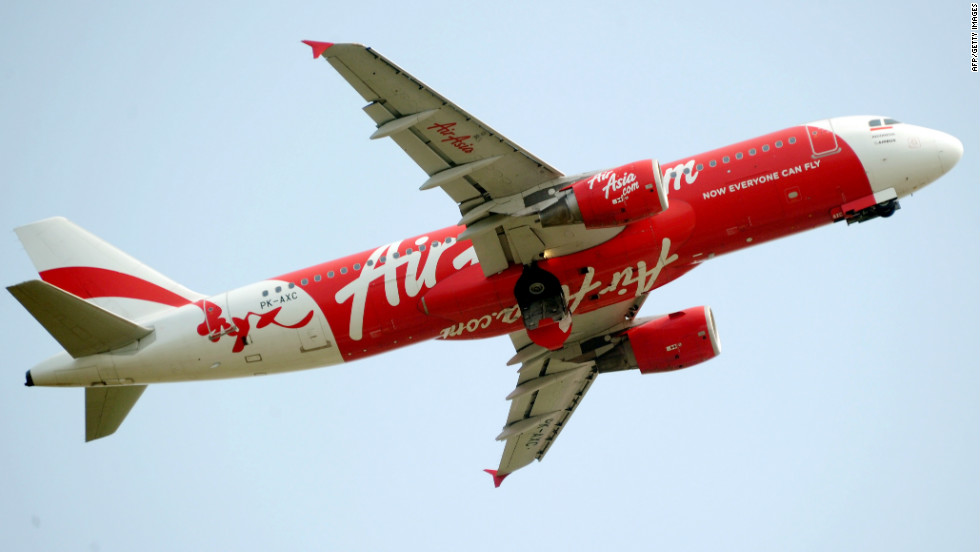
A flight to Malaysia from Sydney was diverted to Melbourne after its pilot entered incorrect coordinates of the plane’s starting position, an Australian aviation investigation report has found.

Carrying 212 passengers, the AirAsia flight bound for Kuala Lumpur on March 10, 2015, was flying in the wrong direction after takeoff from Sydney, because the pilot had manually entered the wrong coordinates of the plane’s position into the flight’s onboard navigation systems.
It was the first of several errors the flight crew made that day, according to the report (PDF) the Australian Transport Safety Bureau published Wednesday.
Faulty earmuffs prompted the captain and the first officer to swap their preflight duties. The captain usually conducts an external inspection, while the first officer remains in the cockpit to complete preparation procedures.
When manually entering the coordinates of the plane’s position, the pilot incorrectly entered the longitude from a sign outside the cockpit window as 01519.8 east (15 degrees 19.8 minutes east) instead of 15109.8 east (151 degrees 9.8 minutes east), the report said.
“This resulted in a positional error in excess of 11,000 kilometers (6,835 miles), which adversely affected the aircraft’s navigation systems and some alerting systems,” the report said.
The crew had “a number of opportunities to identify and correct the error,” the report said, but didn’t notice the problem until after the plane became airborne and started tracking in the wrong direction. Several message alerts and sounds suggested the error before takeoff, but the crew ignored them, according to the report.
Once the captain and the first officer realized the mistake, they tried to fix the system. But it was too late.
“Attempts to troubleshoot and rectify the problem resulted in further degradation of the navigation system, as well as to the aircraft’s flight guidance and flight control system,” the report said.
As systems failed further, the crew asked to return to Sydney and conduct a landing without the use of navigation systems. However, weather conditions in Sydney forced the plane to land in Melbourne instead.
The plane spent three hours on the ground in Melbourne before eventually departing for the Malaysian capital.
In a statement obtained by CNN, AirAsia X said all aircraft have been equipped with upgraded flight management systems since the incident.
“AirAsia X would like to stress that we have in place robust management systems to monitor and prevent similar incidents from reoccurring,” a representative said.
“We also wish to reiterate that we have regularly passed safety and security audits conducted by various international regulators. … We remain committed to ensuring our compliance to all safety and security regulations.”
Source: By Bianca Britton, for CNN on 7 September 2016

Southwest Plane Engine Blows Apart at 10,000 feet

Passengers post pictures of plane’s engine ‘blown apart’

@smillerddd3 tweeted pictures of the plane's engine

A plane in the US had to make an emergency landing after a major problem with one of its two engines.

The Southwest Airlines flight was travelling from New Orleans to Orlando when passengers noticed a problem with the engine.

Pictures posted online appear to show that part of the engine had blown apart.

A Southwest spokesperson said there was no explosion.

Stephanie Miller was onboard Flight 3472 and spoke to ABC News.

“We heard a loud boom at about 10,000 feet.

“Sounded like an 18 wheeler tire blowing and we started smelling smoke.”

Flight data showed that the plane descended from an altitude of 30,000 feet to 10,000 feet in just over eight minutes.

The flight was diverted to Pensacola in Florida where it landed safely.

None of the 99 passengers or five crew members on board were injured.

The aircraft has now been taken out of service.

Investigators from the National Transportation Safety Board are now looking into what happened.

Airline consultant Michael Boyd said it’s rare for Southwest or any other major airline to have such serious engine trouble.

“It’s a one-off, almost unheard of.

“Southwest has an outstanding safety record because it spends a lot of money on maintenance.”

Source: BBC on 28 August 2016

Drunk Pilot suspended by Sri Lanka Airlines just before flight from Frankfurt to Colombo

In what may have prevented yet another tragic flight crash, Sri Lanka’s national carrier Sri Lanka Airlines suspended a “visibly drunk” airplane captain who failed a breathalyser test just before he was due to fly 274 passengers and crew from Frankfurt to Colombo, the airline said Sunday.

“Upon receiving the results (of the test) SriLankan Airlines took immediate steps to suspend the services of the said captain and took alternative measures to operate the flight to Colombo,” the airline said in a statement.

An airline source, speaking on condition of anonymity, said Flight UL554 was held up at Frankfurt airport for more than 15 hours on Friday as staff scrambled to find another captain for the Airbus A330, according to France 24.

The crew raised the alarm after noticing that the captain was visibly drunk, the source, who has direct knowledge of the matter, told AFP. The airline said an internal investigation was underway into the incident and it would cooperate with any probe by German authorities.

The cash-strapped airline is due to stop its flights to Frankfurt from October as it slashes routes to European destinations. It is also planning to lease out some of its A330 planes to other airlines in an attempt to raise cash. Suffering from an accumulated $1-billion loss, it is seeking a foreign partner to take over its management.

Source: Zero Hedge on 21 August 2016

Delta Airlines Cyber Attack – all Delta systems are down everywhere – a system failure worldwide, all planes grounded. No passengers being checked in.

Suspected computer bug cripples Delta airline: another case of cyber attacks beating cyber security?

As technology continues to become a constant and dominating global presence, the regularity and crippling effect of cyber attacks will increase

A suspected system wide computer bug has brought the US airline Delta (and resulting other airlines) to its knees.

“Delta experienced a computer outage that has impacted flights scheduled for this morning,” it said in a statement.

Thousands of passengers are stranded.

On Twitter, Delta told passengers: “Our systems are down everywhere.”

The airline has said en route flights are unaffected, but passengers awaiting departure are currently delayed.

The bug has had such an effect that it is not possible to rebook passengers on other airline carriers.

It is a system wide failure.

This is the latest security breach following a year where smart city transport, seismic sensors, healthcare providers and a host of other ‘secure’ systems have been hacked (or have proven to be susceptible to hacks).

As technology continues to become a constant and dominating global presence, the regularity and crippling effect of cyber attacks will increase.

The digital economy and computer-controlled transport systems are two examples of how society is becoming more reliant on technology.

As we become more reliant, the effects of malware will become exponentially more severe.

The mayhem following the computer bug at Delta, which has affected many other airlines, is the latest example of this.

Source:  http://www.information-age.com/technology/security/123461807/suspected-computer-bug-cripples-delta-airline-another-case-cyber-attacks-beating-cyber-security


Royal Brunei Boeing 787-800 departing from Manila had engine shut down in flight with both engines damaged

On Oct 21st 2015, a Royal Brunei Airlines Boeing 787-800, registration V8-DLB performing flight BI-684 from Manila (Philippines) to Bandar Seri Begawan (Brunei) with 152 passengers, was climbing out of Manila when the crew stopped the climb at FL280 reported the left hand engine (Trent 1000) had failed and was shut down. The aircraft returned to Manila for a safe landing on runway 24 about 50 minutes after departure.

The flight was cancelled.

The airline confirmed the Dreamliner’s crew received abnormal indications for one engine prompting the captain to turn back to Manila for technical checks. A number of passengers have already been rerouted onto other flights, the remaining passengers were taken to hotels.

Philippines’ Civil Aviation Authority reported the crew informed air traffic control the left hand engine had failed and declared emergency.

On Oct 28th 2015 the airline reported that while preparing the change of the left hand engine a boroscopic inspection of both engines confirmed, that BOTH engines had sustained similiar damage.

The airline wrote: “Rolls Royce has conducted a detailed boroscope inspection of both engines as part of preparations to replace the affected engine, with a spare which has already been transported to MNL from BWN. However, in recent hours information has been conveyed to the airline by Rolls Royce that the second on wing engine on this aircraft has itself being the subject of similar damage. The boroscope inspection has now revealed evidence of damage to a number of blades on both engines, for reasons which are as yet unknown. At this point, there is no evidence that an external event such as a bird strike has caused this damage to both engines. Efforts to establish the cause of the damage by Rolls Royce are continuing, fully supported by the RB Engineering team.”

The airline continued that as result of this finding all Dreamliners in their fleet are to undergo boroscopic inspections now, too, causing “very severe” disruptions of flight schedule in the coming days.

Source: The Aviation Herald